Karen Peetz, A Powerful American Banker

Karen Peetz has tough advice for bankers struggling to adapt to the harsher regulatory environment.  “People really need to get it through their thick heads that it is here to stay. You have to adjust your operating model and get on with it, versus fighting, fighting, fighting.”

That’s vintage Peetz, who has honed the art of managing-and leading- through times of change.  After the 2008 financial crisis, she played a key role in helping the government execute its Troubled Asset Relief Program. Then she guided her alma mater, Pennsylvania State University, through a devastating period, taking over as chairman of the board of trustees during the Jerry Sandusky sex abuse scandal. And now Peetz is helping reform the controversial tri-party repo market.

Peetz was promoted to president of BNY Mellon, overseeing global client management and regional management for Europe, the Middle East and Africa, Asia and Latin America. She also has responsibility for human resources and BNY Mellon’s treasury services business, two areas in which she has particular expertise, having been personally involved in both over the course of her career.

Peetz, who has been in banking for three decades and at BNY Mellon for the past 15 years, was the company’s first female vice chairman and has sat on its executive committee since July 2007.

Peetz, who led BNY Mellon’s financial markets and treasury services group before her promotion in January, says big problems require new thinking and a good-sized serving of humble pie.

“It really took our industry a long time to realize that the game had changed,” Peetz says. “We need humility as leaders, because we haven’t done everything right. Many of our actions precipitated the financial crisis, collectively, and we have to take responsibility.”

“Culture is at the core of the industry’s future,” Peetz says. “When I think of how I was trained … that’s what we do: risk management. But we, as an industry, got away from training people properly as they come in the door. If you don’t build that culture of risk, this is the kind of thing that happens.”

To that end, BNY Mellon is creating a virtual university with six separate areas of learning, from sales and client service to risk and compliance to professional development. Peetz says the idea for the university-dubbed BKU, the firm’s ticker symbol-came from Chairman and CEO Gerald Hassell, who asked her to spearhead it.

Karen Peetz

SEC Fines Barclays for Failing to Set Up Compliance Policies

The SEC has been busy keeping banking in line.  Investment advisers are required to adopt and implement written compliance policies and procedures reasonably designed to prevent violations of the Investment Advisers Act and its rules. An SEC examination and subsequent investigation found that Barclays failed to enhance its compliance infrastructure to integrate and support the acquisition and rapid growth of the advisory business from Lehman. The deficiencies in its compliance systems contributed to other securities law violations by Barclays.

To settle the SEC’s case, Barclays agreed to pay a $15 million penalty and to undertake remedial measures, including engaging an independent compliance consultant to conduct an internal review. Said Julie M. Riewe, Co-Chief of the SEC Enforcement Division’s Asset Management Unit:

When a firm acquires an advisory business, it must devote the attention and resources necessary to build a robust compliance system. Barclays failed to establish this critical compliance foundation when it acquired Lehman’s advisory business, and as a result subjected its clients to a host of improper practices and inadequate disclosures.

According to the SEC’s order instituting a settled administrative proceeding, Barclays failed to adopt and implement written policies and procedures and maintain certain required books and records to prevent the other violations. For instance, Barclays executed more than 1,500 principal transactions with its advisory client accounts without making the required written disclosures or obtaining client consent. Barclays also earned revenues and charged commissions and fees that were inconsistent with its disclosures for 2,785 advisory client accounts. Barclays also violated custody provisions of the Advisers Act, and underreported its assets under management by $754 million when it amended its Form ADV on March 31, 2011. The violations resulted in overcharges and client losses of approximately $472,000 and additional revenue to Barclays of more than $3.1 million. Barclays has since reimbursed or credited its affected clients approximately $3.8 million including interest.

The SEC’s order finds that Barclays violated Sections 204(a), 206(2), 206(3), 206(4), and 207 of the Investment Advisers Act of 1940 and Advisers Act Rules 204-2, 206(4)-2 and 206(4)-7. In addition to the $15 million penalty, Barclays agreed to retain an independent compliance consultant to internally address the violations. Without admitting or denying the findings, Barclays agreed to be censured and must cease and desist from committing or causing any further such violations.

Barclay's Fined

SEC Fines Wells Fargo

First ever fine for a broker-dealer failing to protect a customer’s material nonpublic information.

According to the SEC’s order instituting a settled administrative proceeding, Wells Fargo highlighted in internal documents the risk of its personnel misusing confidential information obtained from retail customers and clients. The risk manifested itself when a Wells Fargo broker learned confidentially from his customer that Burger King was being acquired by a New York-based private equity firm. The broker then traded on that nonpublic information ahead of the public announcement. The SEC charged the broker with insider trading and obtained an asset freeze to prevent him from transferring illicit profits outside the U.S.

The SEC’s order finds that multiple groups responsible for compliance or supervision within Wells Fargo received indications that the broker was misusing customer information. However, these groups lacked coordination or any assigned responsibilities, and they ultimately failed to act on these indications. Federal law requires broker-dealers and investment advisers to establish, maintain, and enforce policies and procedures to prevent such misuse of material nonpublic information. Said Andrew J. Ceresney, Director of the SEC’s Enforcement Division:

When investors entrust private information to their stockbrokers or investment advisers, they have the right to expect that it will not be exploited. In this case – our first against a broker-dealer for failing to protect the nonpublic information conveyed by its customers – Wells Fargo failed to implement procedures to prevent misuse of such information.

The SEC’s order also finds that when SEC investigators sought all documents related to the firm’s compliance reviews of the broker’s trading, Wells Fargo’s document production omitted documents related to the broker’s trading in Burger King stock. Six months after SEC investigators initially requested documents, Wells Fargo produced the Burger King-related review without any explanation as to why it was not produced in the first place. Furthermore, Wells Fargo failed to provide an accurate record of the review because one of the documents had been altered to include additional language before it was produced to the SEC. Said Daniel M. Hawke, Chief of the SEC Enforcement Division’s Market Abuse Unit:

Wells Fargo unreasonably delayed producing documents to the SEC’s staff and altered a previously requested compliance document after the SEC charged a former Wells Fargo employee with insider trading. The firm’s actions improperly delayed our investigation, and the production of an altered document interfered with our search for the truth.

The SEC’s order finds that Wells Fargo violated Section 15(g) of the Securities Exchange Act of 1934 and Section 204A of the Investment Advisers Act of 1940, which require broker-dealers and investments advisers to establish, maintain, and enforce policies and procedures reasonably designed to prevent the misuse of material nonpublic information. Wells Fargo Advisors also violated Sections 17(a) and 17(b) of the Exchange Act and Rule 17a-4(j) as well as Section 204(a) of the Advisers Act, which require broker-dealers and investment advisers to promptly produce accurate books and records to the SEC. Wells Fargo admitted the findings and acknowledged its violation of the federal securities laws. In addition to the $5 million penalty, the firm agreed to retain an independent consultant to review its policies and procedures. The SEC’s order censures Wells Fargo and requires the firm to cease and desist from committing or causing these violations.

Wells Fargo Fined

Gold or Water in El Salvador?

Diana Anahi Torres-Valverde writes: For miners, investors, and artisans, few things are more precious than gold. But for human life itself, nothing is more precious than water.

Nearly 30 years ago, the Wisconsin-based Commerce Group Corp purchased a gold mine near the San Sebastian River in El Salvador and contaminated the water. Now, according to Lita Trejo, a native Salvadoran and school worker in Washington, DC, the once clear river is orange. The people who drink from the arsenic-polluted river, she says, are suffering from kidney failure and other diseases.

On September 15, Trejo and more than 200 protestors—including Salvadoran immigrants, Catholic priests, trade unionists, and environmentalists—gathered in front of the World Bank to support El Salvador’s right to keep its largest river from suffering the same fate as the San Sebastian River. The event was co-sponsored by a raft of organizations, including the Institute for Policy Studies, Oxfam America, the AFL-CIO, the Teamsters, Friends of the Earth, the Sierra Club, and the Council of Canadians, among others. Over the past few weeks, similar protests have taken place in El Salvador, Canada, and Australia.

Mining for gold is not nearly so neat and clean as the harmless panning many Americans learned about as kids. Speakers pointed out that gold mining firms use the toxic chemical cyanide to separate gold from the surrounding rock, which then leaches into the water and the soil. And they use large quantities of water in the mining process—a major problem for El Salvador in particular, which has been described as “the most water-stressed country in Central America.” Confronted by a massive anti-mining movement in the country, three successive Salvadoran administrations have refused to approve new gold mining operations.

An Australian-Canadian mining company, OceanaGold, is suing the Salvadoran government for refusing to grant it a gold-mining permit to its subsidiary, Pacific Rim. Manuel Pérez-Rocha, a researcher at the Institute for Policy Studies, explained the situation: “Oceana Gold is demanding more than $300 million from El Salvador. They are saying, ‘If you do not let us operate in your country the way we want, you must pay us for the profits that you prevented us from making.’”

El Salvador is now defending its decision to prevent Oceana Gold/Pacific Rim from operating the “El Dorado” mine near the Lempa River before the International Center for Settlement of Investment Disputes, a little-known World Bank-based tribunal.

As several protesters pointed out, El Salvador’s decision is grounded in its need to protect its limited water supply. More than 90 percent of the surface water supply in El Salvador is already contaminated, and more than 50 percent of the country’s 6.3 million people depend on the Lempa River watershed for their water.

John Cavanagh, Director of the Institute for Policy Studies, explained the goal of the protest: “We are saying to OceanaGold: ‘Drop the suit. Go home.’ To the World Bank, we say: ‘Evict this unjust tribunal. It deepens poverty and stomps on democracy and basic rights.’” Cavanagh pledged to continue pressing the company to back down, promising that protesters would return to the World Bank in larger numbers when the tribunal makes its ruling in 2015.

Contaminated Water in El Salvador

Chicago Fed Measures the Great Recession

Fiscal policy describes how the expenditure and revenue decisions of local, state, or federal governments influence economic growth. In this article, we create a comprehensive measure of fiscal policy called fiscal impetus, which estimates the combined effect of purchases, taxes, and transfers across all levels of government on growth. Our goal is to use this measure of fiscal impetus to examine how fiscal policy has behaved during business cycles in the past, how it responded to the most recent recession, and how it is likely to evolve over the next several years. Our analysis reveals that policy was more expansionary than average during the 2007 recession and has been significantly more contractionary than average during the recovery. By the end of 2012, fiscal impetus was below its historical business cycle average and it is forecast to remain depressed well into the future.   ChicagoFed on the Great Recession

China: United or Divided?

The Scottish referendum and waves of secession movements — from Spain’s Catalonia to Turkey and Iraq’s ethnic Kurds — are working in different directions. More than half a century after World War II triggered a wave of post-colonial nationalism that changed the map of the world, buried nationalism and ethnic identity movements of various forms are challenging the modern idea of the inviolable unity of the nation-state.

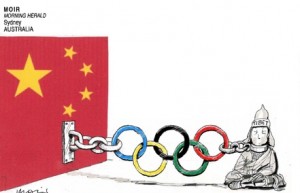
Yet even as these sentiments pull on the loose threads of nations, in China, one of the most intractable issues in the struggle for unity — the status of Tibet — is poised for a possible reversal, or at least a major adjustment. The long-running but frequently unnoticed negotiations have raised the possibility that the Dalai Lama, Tibet’s spiritual leader, may be nearing a deal that would enable him to return to his Tibetan homeland. If it happens, it would end the Dalai Lama’s exile in Dharamsala, India — an exile that began after the Tibetan uprising in 1959, nine years after the People’s Republic of China annexed Tibet. More important, a settlement between Beijing and the Dalai Lama could be a major step in lessening the physical and psychological estrangement between the Chinese heartland and the Tibetan Plateau.

The very existence of the Tibetan issue bespeaks several overlapping themes of Chinese geopolitics. Most fundamentally, it must be understood in the context of China’s struggle to integrate and extend control over the often impassable but strategically significant borderlands militarily and demographically. These borderlands, stretching from northeast to the southwest — Manchuria, Mongolian Plateau, Xinjiang, Tibet and the Yunnan Plateau — form a shield, both containing and protecting a unified Han core from overland invasion. In attempting to integrate these regions, however, China confronts the very nature of geographic disintegration and the ethnic identities in these restive borderlands, which have sought to resist, separate or drift away from China at times when weak central power has diminished the coherence of China’s interior.    China and Tibet

China and Tibet

Emma Watson Talks about Gender Equality

Emma Watscon:  Today we are launching a campaign called “HeForShe.”  …  This is the first campaign of its kind at the UN: we want to try and galvanize as many men and boys as possible to be advocates for gender equality. And we don’t just want to talk about it, but make sure it is tangible.

I was appointed six months ago and the more I have spoken about feminism the more I have realized that fighting for women’s rights has too often become synonymous with man-hating. If there is one thing I know for certain, it is that this has to stop.

For the record, feminism by definition is: “The belief that men and women should have equal rights and opportunities. It is the theory of the political, economic and social equality of the sexes.”

I started questioning gender-based assumptions when at eight I was confused at being called “bossy,” because I wanted to direct the plays we would put on for our parents—but the boys were not.

When at 14 I started being sexualized by certain elements of the press.  When at 15 my girlfriends started dropping out of their sports teams because they didn’t want to appear “muscly.”  When at 18 my male friends were unable to express their feelings.

I decided I was a feminist and this seemed uncomplicated to me. But my recent research has shown me that feminism has become an unpopular word.

Why is the word such an uncomfortable one?

s a natural consequence.If men don’t have to be aggressive in order to be accepted women won’t feel compelled to be submissive. If men don’t have to control, women won’t have to be controlled.

Both men and women should feel free to be sensitive. Both men and women should feel free to be strong… It is time that we all perceive gender on a spectrum not as two opposing sets of ideals.

If we stop defining each other by what we are not and start defining ourselves by what we are—we can all be freer and this is what HeForShe is about. It’s about freedom.

I want men to take up this mantle. So their daughters, sisters and mothers can be free from prejudice but also so that their sons have permission to be vulnerable and human too—reclaim those parts of themselves they abandoned and in doing so be a more true and complete version of themselves.

You might be thinking who is this Harry Potter girl? And what is she doing up on stage at the UN. It’s a good question and trust me I have been asking myself the same thing. I don’t know if I am qualified to be here. All I know is that I care about this problem. And Iwant to make it better.

And having seen what I’ve seen—and given the chance—I feel it is my duty to say something. English statesman Edmund Burke said: “All that is needed for the forces of evil to triumph is for enough good men and women to do nothing.”   Emma Watson Addresses the UN

The Harry Potter Girl Speaks Up

.

EU Becoming Less Transparent

Xavier Sol and Ana Colovic write   Transparency, once a ‘conditio sine qua non’ for democracy and good governance, is suffering a clear backlash in Europe.

In a post-Occupy, post-Wikileaks world, transparency has nestled in the public consciousness. Outraged by the abuses of power, people took to the streets demanding more say in decisions influencing their lives and more accountability by political leaders. People demanded better representation and they knew transparency was crucial to get it.

Yet at the same time we are witnessing a silent backlash against participation and transparency. Citizens are being surreptitiously pushed back from control over public life.  It could be seen very clearly during the economic crisis when, despite protests against austerity measures day after day, the EU and individual governments were pushing through with unpopular austerity measures.

Increasingly crucial economic decisions are being made by a narrow group of decision-makers including the Troika, members of the European Council, bankers and economic experts. Another symbolic example is the total emasculation of the “European Citizen Initiative”. –

And yet earlier this month a citizen initiative to give Europeans a say in the Transatlantic Trade Investment Partnership(TTIP) was struck down by the Commission on questionable legal grounds.

Despite the “citizen initiative” being one of the main arguments EU institutions would invoke to prove their openness to citizens, the Commission seems to reserve a right to decide on which issues citizens can speak.
The EU’s bank kicks back

When it comes to European public investment banks, we fear the same dynamics are taking root in the way public money is spent. The European Investment Bank’s (EIB) draft for a new transparency policy is a major setback from what has been gained since we first started campaigning for the bank to be more open.

Instead of bringing further improvements, the current draft would mean a major step backwards. Among other things, the bank is proposing a significant expansion of its existing exemptions on information disclosure – going beyond what is requested by EU legislation. As a result, EU citizens would be unable to access most EIB internal documents, even if they were of public interest.

The EIB is already ranked as “poor” in the 2013 International Aid Transparency Initiative. If the policy is adopted as it currently stands, it would turn the EIB into one of the world’s most secretive financial institutions.

This is happening despite earlier commitments to greater transparency and accountability to EU citizens made by the bank when it benefited from a capital increase in 2013.

And in spite of the European Parliament repeatedly calling on the EIB to increase the transparency of its operations and to make more information available.

This planned decrease in transparency comes as the institution is gearing up to play a core role in a pro-growth strategy prepared by the new European Commission run by Jean-Claude Juncker. The strategy involves the generation of an extra €300 billion in new investments into the European economy.

It seems that EU leaders are willing to pour more public money into another debatable growth package without allowing public oversight, let alone a voice for EU citizens.

Transparency

y.

Federal Reserve of New York Builds a DSCG Model for Policy Analysis and Forecasting

In recent years, there has been a significant evolution in the formulation and communication of monetary policy at a number of central banks around the world. Many of these banks now present their economic outlook and policy strategies to the public in a more formal way, a process accompanied by the introduction of modern analytical tools and advanced econometric methods in forecasting and policy simulations. Official publications by central banks that formally adopt a monetary policy strategy of inflation targeting—such as the Inflation Report issued by the Bank of England and the monetary policy reports issued by the Riksbank and Norges Bank—have progressively introduced into the policy process the language and methodologies developed in the modern dynamic macroeconomic literature.
The development of medium-scale DSGE (dynamic stochastic general equilibrium) models has played a key role in this process.2 These models are built on microeconomic foundations and emphasize agents’ intertemporal choice.    New York Federal Reserve DSCG Model

Intertemporal Choice