Few Women at the Top in America, Especially in Journalism

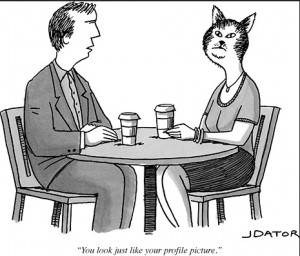
Susan B. Glasser writes: There are few women at the top anywhere in America, and it’s a deficit that is especially pronounced in journalism, where women leaders remain outliers, category-defying outliers who almost invariably still face a comeuppance.

Sheryl Sandberg may be a billionaire and a bestseller, but the Facebook COO’s self-help book is  not a recipe for success in this or any other field. At least not yet. All of these women in journalism, Abramson perhaps most of all, have leaned in. They paid close attention to those anxiety-producing cover stoirs in the Atlantic about having it all. They looked men in the eye and asked for promotions and raises (well, sorta, kinda, maybe—look what apparently happened when even someone as powerful as Abramson dared to complain.   They somehow overcame the stigma of being called bossy as girls, and most of them have balanced both challenging career experiences and raising children at home. They did not lack in confidence—or at least figured out how to project it, even when they weren’t in fact entirely feeling it. In short, these women editors have done most of the things the professional women’s empowerment class recommends.

But still, they were not really able to succeed. They—and I—remained stuck in a trap not of our own making. It’s called editing while female.  I said nothing when I worked as an editor and considered myself privileged—if more than occasionally terrified—when I was sent off to cover the war in Afghanistan, and heard the sound of gunfire for the first time while reporting on the battle of Tora Bora. I learned Russian and traveled to Iraq and slept on a hospital roof in Basra with a team of British snipers and co-wrote a book about Vladimir Putin. I edited Roll Call, a newspaper about Congress, in my 20s. I edited the Washington Post Outlook section and Foreign Policy magazine.

I was an optimist, even about the Internet, killer of tradition, and I believed that the bad old days of institutionalized discrimination were mostly behind us. As for the other stuff, the lingering evidence this was not entirely the case, I just avoided it. I didn’t write about how isolated I felt as a young working mom surrounded by older men or how to run a meeting while having a miscarriage. I did not blog about the male editor who told me I shouldn’t worry about having my own slot as a Washington Post foreign correspondent alongside my husband, since I couldn’t possibly hope to be his peer as a journalist anyway. Even when I became a department head and discovered that I was paid less than all of the other senior editors at the Post, I said nothing, because after all, I was younger and I was a woman and I didn’t want it to be about that. And besides, speaking up would mean being judged. And inevitably being found wanting.

Brenda Starr Reporter

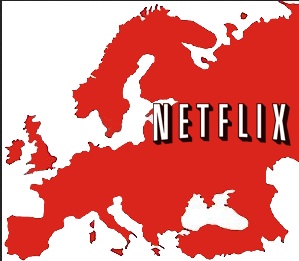
Netflix Expanding to Europe

Netfix streaming will be available in Germany, France, Belgium, Switzerland, Austria and Luxembourg.

There are a couple of question marks however behind Netflix’ European push.  While Americans are used to shelling out big bucks for cable TV, Europeans, and Germans in particular, have proven hesitant to pay for TV content in the past. In Germany, where a reasonably large selection of public and private television stations is available for free (apart from a monthly fee mandatory to everyone owning a TV set), pay TV has long been a money-burning business.

Sky Deutschland, Germany’s only relevant pay TV provider, currently has 3.8 million subscribers and that number would likely be considerably lower if it weren’t for Sky’s extensive live sports coverage.

Another major problem for Netflix is one that the company shortsightedly created itself: having sold exclusive distribution rights for its hit series “House of Cards” to Sky Deutschland and Canal+ in Germany and France, respectively, Netflix will not be able to rely on the star power of Kevin Spacey to attract customers in the two most important markets it’s entering tomorrow.

Netflix to Europe

The Swiss Vote to Get Gold Back

Ron Paul writes:  On November 30th, voters in Switzerland will head to the polls to vote in a referendum on gold. On the ballot is a measure to prohibit the Swiss National Bank (SNB) from further gold sales, to repatriate Swiss-owned gold to Switzerland, and to mandate that gold make up at least 20 percent of the SNB’s assets.

Arising from popular sentiment similar to movements in the United States, Germany, and the Netherlands, this referendum is an attempt to bring more oversight and accountability to the SNB, Switzerland’s central bank.

The Swiss referendum is driven by an undercurrent of dissatisfaction with the conduct not only of Swiss monetary policy, but also of Swiss banking policy. Switzerland may be a small nation, but it is a nation proud of its independence and its history of standing up to tyranny. The famous legend of William Tell embodies the essence of the Swiss national character. But no tyrannical regime in history has bullied Switzerland as much as the United States government has in recent years.

The Swiss tradition of bank secrecy is legendary. The reality, however, is that Swiss bank secrecy is dead. Countries such as the United States have been unwilling to keep government spending in check, but they are running out of ways to fund that spending. Further taxation of their populations is politically difficult, massive issuance of government debt has saturated bond markets, and so the easy target is smaller countries such as Switzerland which have gained the reputation of being “tax havens.”

Remember that tax haven is just a term for a country that allows people to keep more of their own money than the US or EU does, and doesn’t attempt to plunder either its citizens or its foreign account-holders. But the past several years have seen a concerted attempt by the US and EU to crack down on these smaller countries, using their enormous financial clout to compel them to hand over account details so that they can extract more tax revenue.

On the monetary policy front, the SNB sold about 60 percent of Switzerland’s gold reserves during the 2000s. The SNB has also in recent years established a currency peg, with 1.2 Swiss francs equal to one euro. The peg’s effects have already manifested themselves in the form of a growing real estate bubble, as housing prices have risen dangerously.

Switzerland… is ruled by a group of elites who are more concerned with their own status… than with the good of the country.  Given the action by the European Central Bank (ECB) to engage in further quantitative easing, the SNB’s continuance of this dangerous and foolhardy policy means that it will continue tying its monetary policy to that of the EU and be forced to import more inflation into Switzerland.

Just like the US and the EU, Switzerland at the federal level is ruled by a group of elites who are more concerned with their own status, well-being, and international reputation than with the good of the country. The gold referendum, if it is successful, will be a slap in the face to those elites.

Gold in Switzerland

Europe: Structural Reforms in Exchange for Short-Term Fiscal Constraints

Michael Spence writes:  In a post-crisis environment of aggressive and unconventional monetary policy in other advanced countries, the ECB’s less aggressive policies (owing to its more restrictive mandate) have resulted in an exchange rate that has damaged competitiveness and the growth potential of many eurozone economies’ tradable sectors. European Tradae-Off- Structural Reforms for Short Term Loosening of Fiscal Constraints

EU

How is Modi Faring in India

Fareed Zakaria writes:   Narendra Modi, India’s new prime minister, radiates confidence. He has the first outright majority in India’s parliament in 30 years. The public lauds him, world leaders court him and the Bombay Stock Exchange continues to soar. But will this moment of euphoria translate into lasting gains? Can India become the world’s next economic powerhouse?

I had the chance to pose these questions when I met with Modi last weekend at his house in New Delhi, his first interview since becoming prime minister. Modi is extremely intelligent and focused but is different from most leaders I have met. His worldview has been shaped almost entirely from experience rather than formal schooling. Born poor and lower-caste (which in India is a worse fate), he left home when he was 17 and soon got involved in politics, joining the RSS, a hard-line Hindu nationalist group. He later got bachelor’s and master’s degrees, but his real education came from traveling around India.

He recounted the thousands of villages he had visited as the head of the government in the state of Gujarat — a period during which Gujarat grew as fast as China. This feel for how people live animates him. Modi is passionate about hygiene and has launched an ambitious drive to build toilets in homes, schools and elsewhere. In his Independence Day speech last month, atop the ramparts of the Red Fort in New Delhi, Modi spoke plainly about the shame that vast numbers of Indians defecate in public. Any previous prime minister would have considered the topic beneath the office. But Indians love his down-to-earth approach.

During the election campaign, Modi placed a particular twist on the lavatory theme. He explained that India needed toilets first and temples later. Can this approach succeed?

Modi


The Economic Meaning of China’s Infrastructure Investment

Andrew Sheng and Xiao Geng write:   Without large-scale infrastructure investment, especially in transport, the productivity gains that enabled America’s emergence as an industrial power would have been impossible. Though the process included significant creative destruction, rapid economic growth offset losses resulting from excess capacity.
Similarly, when viewed through the long lens of history, China’s ghost towns will prove to be potholes on the path to development. China’s massive infrastructure investment, funded largely through LGFVs, will most likely be remembered for its critical contribution to the country’s economic modernization.  China’s Infrastructure Expenditures

China's March to the Future

The New Economics? Man Motivated by Self-Interest and His Social Relations

Dennis J. Snower writes:  Mainstream economics – and the concept of homo economicus – recognizes only half of what makes us human. We are undoubtedly motivated by self-interest. But we are also fundamentally social creatures.

Snower argues that the world seems to be on the verge of another “great transformation,” with changes far more profound than news-grabbing economic or geopolitical headlines about Asia’s economic rise or the fires in the Middle East. The coming changes will fundamentally redefine the nature of our economic interactions – and the social dynamics that underlie them.  The New Human Being

New Humans


Safra Catz, Co-Head of Oracle as Women Enter High Hi-Tech

Safra Catz, who was co-president and CFO of Oracle until Thursday, has just been promoted to co-CEO — alongside Mark Hurd — after its founder and longtime CEO Larry Ellison announced he’s stepping down to the Executive Chairman position.

Oracle said in a statement that Catz will be responsible for all manufacturing, finance, and legal decisions, while Hurd will be in charge of sales, service, and global business units. Ellison will continue to oversee all software and hardware engineering functions.

The move might come as a bit of a surprise, but Catz’s track record tells she was a natural choice for Oracle’s board.

Catz first joined Oracle in 1999 as senior VP. But she quickly rose through the ranks, becoming executive VP within seven months, and president of Oracle Corporation by 2004, a position she had kept for over a decade. She served as Oracle’s interim CFO from November 2005 to September 2008, only to return to the same role in 2011 as full-time CFO. She’s also been an Oracle board member since 2001.

A former banker at Donaldson, Lufkin & Jenrette, an investment bank that was later acquired by Credit Suisse, Catz has played a major role in Oracle’s M&A department, overseeing nearly 100 M&A deals worth billions of dollars for the company. Some of the biggest deals she’s led include the $10.3 billion acquisition of PeopleSoft and the $7.4 billion deal for Sun Microsystems. She’s a graduate of the Wharton School, but also holds a law degree from UPenn, which made her Ellison’s consigliere as well.

As remarkable as her resume is, Catz is perhaps better-known for regularly being named the highest-paid woman executive in the world. Last year, she made $44.3 million in total compensation, easily becoming the world’s top paid female exec and CFO. In 2013, she became the first female to hold the highest-paid CFO position, when she made approximately $43.6 million. That amount, in fact, was a drop from her 2012 compensation of $51.7 million.

“Safra and Mark are exceptional executives who have repeatedly demonstrated their ability to lead, manage and grow the company. The Directors are thrilled that the best senior executive team in the industry will continue to move the company forward into a bright future,” Oracle Board’s Presiding Director Michael Boskin said in a statement.

Safra Catz, Co-CEO, Oracle

Could You Be A Professional Taster?

Let’s make more job categories available to everyone.  You could be a supertaster, hired by food and drink companies to taste their products.

Alex Russell writes: There are natural variations between humans in our senses. We need different prescriptions to correct our eyesight. Some people say that vinyl sounds better than CDs or MP3s and will pay big money for audio equipment, while others can’t tell the difference.  Strictly speaking, the word “taste” refers to the five primary tastes: sweet, sour, bitter, salty and umami.

There is some evidence for other primary tastes, with fat most likely to be the next to be recognized. Others include calcium and metallic, although the latter is often due to various disorders or conditions.  It’s the bitter taste that started all of this supertaster stuff. Supertasters

Supertasters