Is Classroom Time Related to Good Teaching?

This is an important economic issue because long-range employment issues around the world are related to education.  While in the US we need stop gap measure like a massive infrastructure program to get people back to work, the future depends on education.

Generally, primary school teachers are required to spend more hours teaching than their counterparts in secondary education – a total average of 782 hours each year.

The OECD reports:  The average day lasts somewhere between 3 and 6 hours in the vast majority of countries across the world but Chile, France and the United States are notable exceptions where teachers spend in excess of 6 hours in the classroom. Those hours certainly add up in Chile where primary school teachers have 1,049 annual hours of instruction time. Australia isn’t too far behind with 1,010 while American teachers also put in a huge number of hours each year – 967.

This chart shows the annual hours of instruction time in primary education in selected countries.

.

Classroom Hours Worldwide


Military Projects for Entrepreneurs?

DARPA (the Defense Advanced Projects Research Agency) and Arizona State University are testing a jetpack for US troops but it has at least one drawback. The device will not allow soldiers to fly instead increasing the ground speed of the wearer allowing them to run a four minute mile.

Think of a jetpack and you may imagine flying over a futuristic city, inspired by scenes in sci-fi films. But the technology could also be used to enable soldiers to run faster in warzones in a matter of years.
US engineers have created a working prototype that attaches to people’s backs and helps them to run a mile in a much shorter space of time – despite carrying the large metal pack.
The project is the military’s latest effort to create exoskeletons for US soldiers to give them super-human strength, speed and other advantages on the battlefield.

imagine flying over a futuristic city, inspired by scenes in sci-fi films. But the technology could also be used to enable soldiers to run faster in warzones in a matter of years.
US engineers have created a working prototype that attaches to people’s backs and helps them to run a mile in a much shorter space of time – despite carrying the large metal pack.
The project is the military’s latest effort to create exoskeletons for US soldiers to give them super-human strength, speed and other advantages on the battlefield.

.

Jetpack for Soldiers

High Speed Trading Firm Nabbed by SEC

An SEC investigation found that Latour Trading LLC operated without maintaining its required minimum net capital on 19 of 24 reporting dates during a two-year period, and the firm missed the mark by large amounts ranging from $2 million to $28 million. During this period, Latour’s trading at times accounted for as much as 9 percent of the trading volume in equity securities for the entire U.S. market.

To settle the SEC’s charges, Latour agreed to pay a $16 million penalty, the largest ever for violations of the net capital rule. The previous high was $400,000 in an enforcement action in 2004. Nicolas Niquet, Latour’s chief operating officer when the series of violations began, agreed to pay a $150,000 penalty to settle the charges against him. Said Andrew J. Ceresney, Director of the SEC’s Division of Enforcement:  This record sanction reflects the seriousness of Latour’s violations of the net capital rule, which is a critical broker-dealer financial responsibility requirement. We also will aggressively pursue executives who cause the violations.

According to the SEC’s order instituting a settled administrative proceeding, a crucial step for a broker-dealer when calculating its net capital is to take percentage deductions referred to as “haircuts” from the firm’s proprietary securities and other positions. The purpose of these haircut deductions as prescribed in the net capital rule is to account for the market risk inherent in a firm’s positions and create a buffer of liquidity to protect against other risks associated with the securities business. A failure to calculate proper haircuts can inflate a broker-dealer’s net capital.
The SEC’s order finds that Latour repeatedly miscalculated its net capital amounts in 2010 and 2011 by failing to make proper haircut deductions from the market value of its proprietary securities positions and other positions.

SEC- "It Must be Cut"

Fed in US to End Taper, Maybe.

The Federal Open Market Committee (FOMC) – the board of directors of the Federal Reserve decided to continue to “taper” – reduce their rate of monthly purchasing under their quantitative easing policy. The taper in the 18 December 2013 meeting was $10 billion, the 29 January 2014 meeting added $10 of taper, the 19 March meeting tapered $10 million. the 30 April meeting tapered $10 million, the 18 June meeting tapered $10 million, the 30 July meeting tapered $10 million, and this 17 September meeting another $10 million. The most notable words are in this statement:  If incoming information broadly supports the Committee’s expectation of ongoing improvement in labor market conditions and inflation moving back toward its longer-run objective, the Committee will end its current program of asset purchases at its next meeting.

Has Yellen come to realiza that the intractable unemployment problems in the US are nothing the Fed can help?

Yellen Tapers

New Chair of CFTC Talks About Uncleared Swaps

Chairman Timothy G. Massad said:  As we take up any rule required by the Dodd-Frank Wall Street Reform and Consumer Protection Act, we must never forget why the Act was passed and the motivations behind Title VII. The Dodd-Frank Act was a comprehensive response to the worst financial crisis since the Great Depression. While there were many causes of that crisis, one was excessive risk from the over the counter swaps market, a large, global industry essentially unregulated by any jurisdiction at that time. It was six years ago—September 16, 2008—when our government was required to step in and prevent the failure of AIG, which was on the brink of collapse because of excessive swap risk, a collapse that could have thrown our nation into another Great Depression.  Opening Statement of Chairman Timothy G Massad

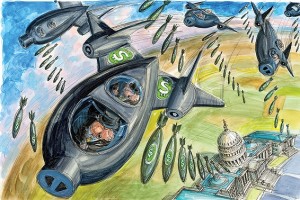
Money and Washington

Putin’s Oil Grab

Leonard Bershidsky writes:  Evtushenkov, founder of Sistema and Bashnaft, an oil company   rode into big business on the coattails of former Moscow mayor Yuri Luzhkov, a cheerful but ruthless politician whose wife became the city’s biggest real estate developer during his tenure. Evtushenkov headed the city government’s committee for science and technology, moved quickly to privatize Moscow’s fixed telephone network and set up what is now one of Russia’s three national mobile carriers, MTS. His business empire, called Sistema, grew rapidly. Evtushenkov expanded into electronics manufacturing and real estate, then took his companies public. Back then, Russia was a relatively tame dictatorship, so investors weren’t worried about Evtushenkov’s path to riches.

Sistema and MTS shares have crashed since news of Evtushenkov’s confinement to his mansion near Moscow with a monitor bracelet. The Kremlin doesn’t care. “We allow that some insignificant show of emotion in the markets may take place,” Putin’s press secretary, Dmitri Peskov, told the Interfax news agency. “That, however, is no reason for law enforcement agencies not carrying out necessary investigations.”

Sechin and Rosneft, sanctioned in the U.S. and in Europe, no longer have to wear sheep’s clothing and pretend to play by civilized rules. Private Russian businesses, large and small, now face a bigger threat than before the new Cold War: Putin and his entourage, riding a patriotic wave, no longer need a smokescreen for the de-facto nationalization of Russia’s economy so it can be run by their rent-seeking clique.

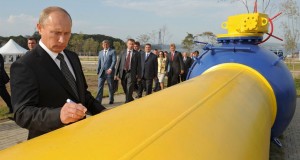
Putin Signs a Pipeline

LEGO Sells Out New Shapes for Real Girls

Harvard Business Review reports:  Why did it take until 2014 for the world’s second-largest toy maker to offer girls (and their toy-buying parents) products they might actually want? (After all, even Barbie has been an astronaut since 1965.)  Perhaps it has something to do with the profile of LEGO’s management team, comprised almost entirely of men. The three-person board of the privately-held company is all men, led by CEO Jørgen Vig Knudstorp. The 21-person corporate management team has 19 men and two women – both in internally-facing staff roles, not connected to the customer base or product development.* When your leadership isn’t gender-balanced, it’s tough to have a balanced customer base. The new ‘Research Institute’ range was proposed by geoscientist Ellen Kooijman on one of the company’s crowd-sourcing sites. But it begs the question, is there really no one inside the company who might have come up with the radical idea of having women scientists feature in a 21st century toy company’s line?   A Woman’s Image

Friends

Scotland: Nationalism or Economics

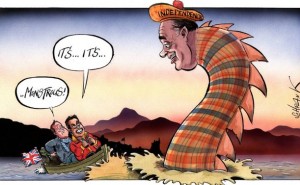
George Friedman writes:  Scotland was buried in Britain for centuries and has resurrected itself. This raises the question of how confident any of us can be that national claims buried for only decades are settled. I have no idea how the Scottish will vote. What strikes me as overwhelmingly important is that the future of Britain is now on the table, and there is a serious possibility that it will cease to be in the way it was. Nationalism has a tendency to move to its logical conclusion, so I put little stock in the moderate assurances of the Scottish nationalists. Nor do I find the arguments against secession based on tax receipts or banks’ movements compelling. For centuries, nationalism has trumped economic issues. The model of economic man may be an ideal to some, but it is empirically false. People are interested in economic well-being, but not at the exclusion of all else. In this case, it does not clearly outweigh the right of the Scottish nation to national-self determination.   Scottish Independence

Scotch Independence

Make Women in Technology Visible

With nearly 16 million programmers in the world, at 10 to 15 percent women, there are more than two million female programmers — but we never see them. Technical women remain largely invisible and behind the scenes despite important and often elite contributions.

In tech, we are standing on the shoulders of giants — men and women who have innovated and collaborated to bring us to where we are today. So many entrepreneurs, computer scientists, heroes, and creators have come before us — and yet we are critically challenged by the lack of visibility innovators of those days.

In the Hollywood film Jobs, all of the men on the core Macintosh team are introduced and have speaking roles, but we don’t meet Joanna Hoffman or Susan Kare, though both were a core part of the original Macintosh product development team.

The Geena Davis Institute on Gender in Media (GDI), through studies done with the USC Annenberg School, found a three to one ratio of male to female characters in children’s TV, with 80 percent of the jobs held by characters in kids TV and films being held by male characters. We need to help Hollywood and other media creation hubs fix this damaging bug. Armed with GDI research and the need to shift, we and many others have begun helping with outreach work to top media partners.

We have a tremendous opportunity to help change the narrative and our actions — all of us, women and men working alongside one another, have an important role to play here.

With nearly 16 million programmers in the world, at 10 to 15 percent women, there are more than two million female programmers — but we never see them. Technical women remain largely invisible and behind the scenes despite important and often elite contributions.

Making Women Visible

Will the Alibaba IPO Drag the Market Down?

Mohamed El-Erian writes:  The Alibaba IPO will be a very big deal, with potentially marketwide impact. At a possible $22 billion to $24 billion, it could well be the largest IPO in history. So it really matters how investors fund their purchase of Alibaba shares.

The broader market would be least affected if the incremental funds came from a healthy and sustainable increase in borrowing, associated with a greater willingness (and ability) on the part of investors to assume risk. The deployment of idle cash would also have minimal effect on the rest of the market. Although both will occur to some extent, they are unlikely to be the main drivers.

This leaves plenty of potential for downward market pressure as investors sell existing holdings in order to make room for their Alibaba purchases. Given that most investors don’t know as yet how many shares they will receive, most of the selling wouldn’t materialize until quite far into the IPO process. The combined effect could be quite significant.

Alibaba IPO