EU-wide corruption report drops chapter on EU institutions

The European Commission has decided not to include a chapter on EU institutions in a report on corruption in member states due out next week.

The original plan, announced in 2011, was to assess corruption across the member states and within the EU institutions.
EU home affairs commissioner Cecilia Malmstrom is set to release the first bi-annual report on Monday (3 February), around six months later than originally planned.
EU-wide corruption report drops chapter on EU institutions

The commission estimates EU-wide corruption costs the tax

Exporting from the US

Did you know that nearly 96 percent of consumers live outside the United States? And two-thirds of the world’s purchasing power is in foreign countries. As the numbers show, the international marketplace is a big one. So if you’re interested in exploring the world of exporting – or have gotten started but could use some guidance – check out these resources to help.

Export Assistance Centers

Did you know that assistance centers across the United States exist to help small business owners and entrepreneurs exclusively with exporting topics?

United States Exporting Assistance Centers (USEACs) are staffed by professionals from the SBA, the U.S. Department of Commerce, the U.S. Export-Import Bank and other public and private organizations. USEACs can help you understand the global marketplace and get you organized to join in and succeed. Some USEACs also have SBA representatives who are available to help you with your SBA export financing needs.

Export Business Planner

The Export Business Planner Download Adobe Reader to read this link content is a downloadable tool that you can save and customize as you explore your exporting options.

The Planner starts with an introduction to exporting and helps you determine your export readiness, then walks you through training and counseling information; marketing plan and financial materials; transportation and documentation details and more.

The Planner also provides practical worksheets, templates and forms, in addition to a glossary of industry terms and even more helpful resources.

Export.gov’s FAQ

Export.gov is an ideal export resource. And its frequently asked questions page is great to browse, as they’ve organized responses by categories. From exporting basics to trade agreements and regulations, this is a good place to start if you’re looking to learn more but aren’t quite sure where to start.

USTDA Consultant Database

The U.S. Trade and Development Agency (USTDA) maintains a database of companies and individuals who provide fee-based consulting services to small businesses interested in importing and exporting.

Almost all contracts with USTDA are reserved for small businesses, most of which are opportunities for technical experts qualified in the areas of energy and power; project finance; health; manufacturing; mining & natural resources; telecommunications and information technology; transportation; and water and the environment.

Your business may be small, but there’s a big opportunity in selling your product or service overseas. And this handful of resources can help put you on the path to international success.

Related resources

Danger in China’s Shadow Banks

Of all the economic dangers to flare up over the past week, the most unsettling was at first glance also the most esoteric: the near default of a high-yield loan product held by a few hundred small-time Chinese investors.  Set against the turmoil in other emerging markets – steep currency falls in Turkey and South Africa that prompted their central banks to raise interest rates, stubbornly high inflation in India and a collapsing currency in Argentina – China appears to be a bastion of economic strength. Even analysts with a bearish bent still expect its growth to come in at about 7 per cent this year.  China’s Shadow Banks

China's Shadow Banks


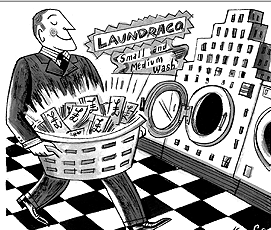
Bank Executives Report Poor Money Laundering Controls

One in three senior bank executives believes their institution hasKPMG Global poor anti-money laundering controls at a time when the threat of vast regulatory fines and criminal prosecutions is increasing, according to a KPMG survey.

The annual survey, which quizzed 317 anti-money laundering and compliance professionals in banks and financial institutions across 48 countries, said only around one half thought their systems were able to provide a complete picture by monitoring transactions across businesses and jurisdictions.
One Third Of Bank Execs See Poor Money Laundering Controls
Global Anti-Money Laundering Survey – KPMG_AML_Survey_29.1.14

Clean Money?

FINRA: Independent US Regulatory Agency?

Everyone is familiar with the notion of the fox guarding the henhouse, but few are aware that the fox guarding Wall Street is the Financial Industry Regulatory Authority (FINRA).  This self-regulatory organization (SRO) is charged with regulating brokerage firms.  An SRO is not a government agency like the Securities Exchange Commission; it is a private corporation with the authority of a government agency.  While FINRA is supposed to police Wall Street, many suggest that this cop is on the take, or perhaps, more kindly, that FINRA is Wall Street’s own trade association.  Madoff Whistleblower Harry Markopolos in his testimony before Congress describes FINRA as a “very corrupt self-regulatory organization.”  Financial Industry Regulatory Authority

FINRA

Women Go to War on Twitter

Empowered by social media, feminists are calling one another out for ideological offenses. Is it good for the movement? And whose movement is it?  In the summer of 2012, twenty-one feminist bloggers and online activists gathered at Barnard College for a meeting that would soon become infamous. Convened by activists Courtney Martin and Vanessa Valenti, the women came together to talk about ways to leverage institutional and philanthropic support for online feminism. Afterward, Martin and Valenti used the discussion as the basis for a report, “#Femfuture: Online Revolution,” which called on funders to support the largely unpaid work that feminists do on the Internet. “An unfunded online feminist movement isn’t merely a threat to the livelihood of these hard-working activists, but a threat to the larger feminist movement itself,” they wrote.   Feminism’s Toxic Twitter Wars

Twitter Wars

Tapering Arrives, Slowly

The taper. Isn’t that a giant nocturnal pig? No, you’re probably thinking of the tapir.  The taper is a kind of monetary policy. It’s the bland, one-word shorthand for the winding down of the biggest financial intervention in history: the U.S. Federal Reserve’s five-year investment of more than $3 trillion (that’s almost the size of the German economy) in bonds to prop up economic growth after the global free fall of 2008. There’s plenty of controversy about whether buying bonds with money conjured from thin air saved the world or has fueled new bubbles. But there’s been none about the perils the Fed faces in slowing the purchases down. To investors and central banks around the world, the taper is much scarier than pigs in the night.   The Taper in the US

Tapir- Slow in Coming, Slow in Happening

Wolves of Wall Street

The Wolf of Wall Street, Martin Scorsese’s new film about the machinations for Jordan Belfort played in a brilliant turn by Leonardo di Caprio, is too long.  What is missing from the reviews is the fact that Goldman Sachs looks just like this fun house mirror.

For investors who can’t get into Goldman deals and brokers who don’t have the right resume for firms like Goldman, what better choice than a small firm that does the same thing but welcomers all comers.

That story is the real story of the film.  Where can the little guy go to make money the way Goldman does?  Getting a 25% return on investment regularly.

Jordan Belfort, founder of the firm. was “able to gather in the sales force and promise them riches beyond belief,” says Ira Sorkin, a well-known white collar criminals’ lawyer.

Joel M. Cohen, a partner at Gibson, Dunn & Crutcher says,  “It was about pushing stock to unsuspecting investors with all kinds of hard-sell tactics to get people to buy stuff that wasn’t suitable for them.”

Mr. Belfort and his employees ran a classic pump-and-dump scheme, The sales force would pitch customers on the stock, helping drive up the price and creating an economic gain for the company insiders. After the price rose to a certain level, the brokers would dump their holdings on the market, causing the stock to collapse.

Mr. Coleman, the F.B.I. agent, said the big break in the case came when Mr. Belfort set up offshore corporations and bank accounts to smuggle cash out of the United States. That allowed the government to go after him for money laundering, gaining leverage in the longer-running investigation into the pump-and-dump scheme.

Switzerland is a major character in the film.  When the signatory on a bank account dies, they arrange for Belfort to immediately come to Geneva and forge documents.

Mr. Belfort’s cooperation with the FBI helped him avoid a lengthy prison sentence. Another factor that reduced his jail time was that he was considered a drug addict.  A judge sentenced Mr. Belfort to four years in prison, though he ended up serving only 22 months.

After writing a memoir and signing a movie deal, Mr. Belfort is now portrayed on the big screen by Leonardo DiCaprio.

That is “an interesting way to end your career,” Preet Bharara, the United States attorney in Manhattan, said.   “Do the bad guys always win?”

DiCaprio

Sarah Mavrinac, Social Entrepreneur

Sarah Mavrinac, aidha, Singapore/United Arab Emirates.

Aidha provides financial education and entrepreneurship training to the world’s hopeful poor, serving migrant workers, especially women who leave their home countries to find work as domestic helpers. The organization offers confidence-building, money management, and business courses as well as microcredit services necessary to launch small businesses when migrants return home.

Since 2006, aidha has been providing training programs to foreign domestic workers in Singapore where they can learn financial and management skills for a brighter future. Over 2000 domestic workers have been trained at aidha and we continue to welcome domestic workers every month. The skills they learn allow them to manage their money, make productive investments and sustain themselves and their families back home.    Social Entrepreneurship

Sarah mavrinac

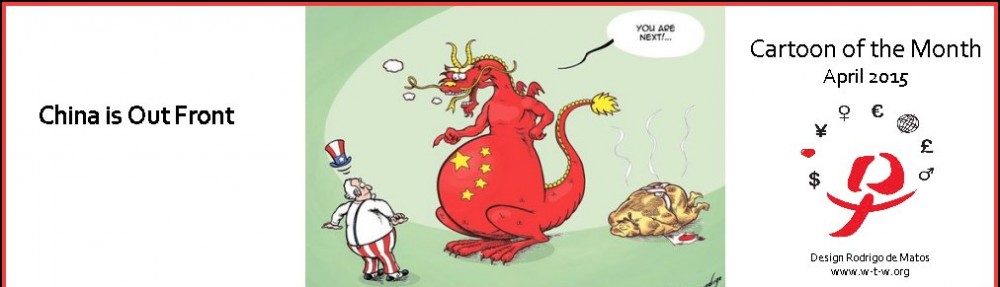
China: From Manufacturing to Buying

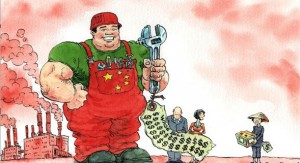
For the better part of 20 years, China has been the world’s factory, and its low labor costs have helped tamp down inflation in developed nations by allowing them to import cheap, Chinese-made goods. The torrent of foreign direct investment (FDI) that flowed into mainland China—some $900 billion since 1990, according to United Nations data—helped finance factories along the southeastern coast that slaked the global thirst for inexpensive goods. It also underpinned phenomenal economic growth. The country’s GDP grew from $357 billion in 1990 to $9.3 trillion last year, a nearly thirty-fold increase in a single generation. But that growth also spurred deep social changes. Millions migrated from inland, rural provinces to coastal cities in search of manufacturing jobs, and some 300 million Chinese vaulted into the middle class. The net result: China’s days as the world’s low-cost factory are numbered. They’re going to be buyers now.  China – From Manufacturing to Buying

Chinese Manufacturing