Spiffing Up the Dept. of Defense

Shaping up the way governments do business, the US Defense Department has formed an alliance with Silicon Valley businesses.

Defense Secretary Ash Carter is back in Silicon Valley to sell his vision for a collaboration between fast-moving tech giants and the more “traditional” Pentagon bureaucracy. In his second trip there in four months, Carter will unveil the $171 million FlexTech Alliance award, a collaboration between a consortium of tech companies and the Pentagon whose goal is to produce flexible sensors that can be stretched over clothing or fitted on ships and airplanes.

Backed by 162 companies, universities, and research labs, the alliance includes names like Apple and Lockheed Martin and will be managed by the Air Force Research laboratory. Overall, it’ll receive $75 million in Defense Department funding over the next five years, along with $96 million from the civilian sector.

Allying with the Defense Department

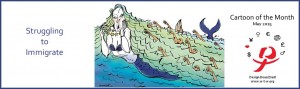
Migration: A Human Dilemma

The Rocky Road to Globalization

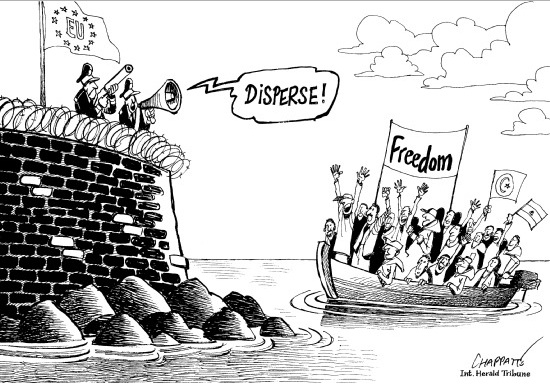
UN News writes:   The European Union should establish a human rights-based, coherent and comprehensive migration policy which makes mobility its central asset, a United Nations expert today advocated, assuring is the only way in which the EU can reclaim its border, effectively combat smuggling and empower migrants.

“Let’s not pretend that what the EU and its member states are doing is working. Migration is here to stay,” Mr. Crépeau of the UN stressed. “Building fences, using tear gas and other forms of violence against migrants and asylum seekers. Democratic borders are porous by nature. Providing migrants and asylum-seekers with legal and safe mobility solutions will ensure such a control.”

The Special Rapporteur urged Europeans to start focusing on regaining control of their external border from the smugglers by increasing mobility solutions available to most migrants, investing in integration measures– especially through supporting the action of cities – and developing a strong public discourse on diversity and mobility as cornerstones for contemporary European societies..

“Opening up the regular labour markets through smart visas allowing people to come to look for work and incentivize them to return if they don’t find the job in question would allow for a much better regulated and controlled official labour market,” Mr. Crépeau noted.

Welcoming the positive steps taken by the EU in rescuing migrants and asylum-seekers at sea so far, Mr. Crépeau however warned that rescuing people who arrive by sea and then turning a blind eye to their plight leaving them vulnerable to human rights violations is irresponsible,” the expert said.

“Talking about ‘flows,’ ‘marauders,’ and ‘swarms’ is an unsubtle way of dismissing the legitimacy of the asylum-seekers and migrants’ claim to human rights, by creating images linking them to toxic waste or natural disasters” he noted. “We are talking about men, women, children and even babies, who have faced traumatic experiences. These are people just like you and me, and none of us have the moral high ground to say that we would never do the same if we were in their shoes.”

The UN Special Rapporteur warned that the political and popular discourse in Europe has seen a race to the bottom in the anti-migrant sentiments and use of inappropriate language which is often linked to criminalizing migrants. “Migrants are human beings with rights. When we dehumanize others, we dehumanize ourselves,” he underscored.

Mr. Crépeau therefore called on European political leaders “to show moral and political leadership in fighting much more vigorously racism, xenophobia and hate crime, in consolidating the common human rights culture that is now framing the evolution of all traditions, in strengthening the free movement of persons throughout the EU while developing regulated mobility solutions at its external borders, and in celebrating the diversity of cultures and religions as enrichment for everyone, citizens and foreigners alike.”

An equitable redistribution of refugees and asylum-seekers across the European Union was needed, the spokesperson stressed.

Porous Borders in Democratic Countries?

Immigration: An Economic Issue?

The Rocky Road to Globalization:

Immigration as an economic issue.  Who gets the immigrants out of their countries?  Who benefits?  How do destiny countries pay for services to immigrants in tough economic times?

Janosch Delcker writes:  After keeping a studied silence about the anti-migrant violence in eastern Germany the past week, Angela Merkel went to visit this town near Dresden on Wednesday to show her sympathy with the asylum seekers. The locals gave her a rough reception, indicating that her open-door policy on immigration is running into stern resistance.

“Politicians, lowlifes!” yelled one man among the booing crowd when the normally popular German chancellor descended from her limousine and turned to wave — from a safe distance — to locals in Heidenau.

After a spate of arson attacks this year against asylum shelters, anti-immigrant protesters last Friday clashed with police in Heidenau during a demonstration against the imminent arrival of a new batch of refugees.

The incident sparked another outpouring of angst about how to respond to a record influx of refugees, which is expected to quadruple this year to 800,000, testing the country’s liberal laws on asylum.

Overall in Germany, the population appears to support the idea of providing shelter to people fleeing persecution or violence in their homeland. In a poll by public broadcaster ZDF, 60 percent said they believed the country could cope with the arrivals.

Another right-wing party, Alternative for Germany, which was founded in 2013, has won seats in the European Parliament and German state assemblies, especially in the former communist east, mixing Euroskepticism with calls for restrictions on immigration.

Saxony and other eastern states where the far-right thrives are also redoubts of nostalgia for the days of the German Democratic Republic, when the state provided jobs, housing, health care and schooling and immigration was almost unknown.

Immigration?

Does China Protect Investors?

Jennifer Carpenter and Robert Whitelaw write:  The government promise of investor protection runs deep in China. To stand by and let the stock market seek its own level will take a strong stomach. In a country where markets are routinely managed and defaults are rare, investors may feel betrayed by the government’s lack of direct stock market intervention to mitigate the 15 percent drop this past Monday and Tuesday, especially after the propping up we saw last month. To let the market reveal new pessimism about China’s growth prospects will even further test the nerves of a government accustomed to managing information flow.  Does China Protect Investors

Chinese Investors?

However, while this week’s monetary policy measures targeted at the broader economy may be warranted, direct stock market intervention causes more problems than it solves. If China’s regulators can stand their ground, this week’s turmoil will provide them with an opportunity to clarify their stock market regulatory stance, reduce distracting policy uncertainty, let China’s stock prices find their fundamental value, and continue on the promised reform path to more sustainable economic growth.

Stock markets are messy and the price discovery process can be roiled by exuberance on the upside and panic on the downside. But these same emotions are precisely what underlie the market’s ability to generate new information so effectively. Greed and fear drive investors to produce private information about potential gains and losses and buy and sell stocks accordingly. The clearing of these trades then aggregates this diffuse information into public signals to corporate managers and other investors, leading to more efficient corporate investment and capital allocation across firms.

Our research suggests that, contrary to perception, China’s stock prices have been surprisingly informative about future corporate earnings and have been generating useful signals for managers.

China Begs to Enter the World. And Does.

Bloomberg writes:  For years, China’s leaders have wanted the world to acknowledge their economy’s leading role in the global system. This week they got their wish. Sadly, the circumstances weren’t ideal.

The crash in global stock markets began with gloom about China’s prospects and muddle over what the authorities in Beijing intend. Global markets may be calming down, but the confusion hasn’t gone away. The Chinese government and its critics all need to think a bit more clearly about what is going on.

In the past few days, China has been a whipping boy for everyone from Japan’s finance minister to U.S. Republican presidential hopefuls.  Its central bank is accused of waging a currency war with its devaluation of the yuan two weeks ago. Before that, critics chided Chinese authorities for perpetuating a stock-market bubble by intervening extensively in equities; this week’s sell-off accelerated when the government declined to prop them up.

The world doesn’t seem quite sure what it wants from China’s leaders. Critics scold Beijing for boosting stocks, then panic when they don’t. They insist market forces be allowed to set the yuan, then howl when those forces push it down. They tell China to accept slower growth as the price of rebalancing its economy, then clamor then for stimulus when the economy slows.

To be sure, there’s confusion in Beijing as well. Leaders have promised to shift the economy onto a more sustainable growth path that’s based less on exports and more on services and domestic demand. But they’ve held to an unreasonably high growth target.

There’s an underlying tension in that mix: The leadership is sincere about its desire for markets to allocate capital more efficiently, yet mostly in order to preserve the power and position of the Communist Party. Party needs come first.

Beijing’s reluctance to surrender more fully to market discipline is understandable given the daunting list of challenges leaders face. But they’re only storing up problems for the future.

The government is paying the price now for having artificially boosted stocks earlier. The central bank is thought to be spending an estimated $40 billion a month to keep the yuan from falling further and prevent capital flight. Authorities are reportedly considering raising an additional $161 billion in bonds to fund new infrastructure projects. Some of these may make good sense, but the fact that Beijing is directing the program raises doubts..

More forthrightness now would buy China goodwill from markets when the government really does need to intervene — as the U.S., Japan and the European Union have all repeatedly judged to be necessary. Chinese leaders should remember that the currency that matters most is their credibility.

China enters the world


China Bites Apple?

Apple chief executive Tim Cook halted a 13pc drop in the tech giant’s stock on Monday after taking the unusual step of emailing a media organization to reassure investors about the business’s Chinese operation.

With Chinese stocks plunging close to 9 %, Apple shares slumped as much as 13 % to a year-low of $92 amid a sell-off in the broader US market.

Mr Cook took the rare step of commenting on the health of Apple’s business midway through a financial quarter.  He wrote to CNBC to reveal that iPhone activations in China had accelerated over the past few weeks.

He also said the App Store in China had its best performance of the year over the past fortnight.

“Obviously I can’t predict the future, but our performance so far this quarter is reassuring. Additionally, I continue to believe China represents an unprecedented opportunity over the long term,” Mr Cook wrote.

Apple’s shares then reversed its losses to trade up 2.25pc at $108.12, adding around $85 billion to Apple’s market capitalization from its earlier low.

Chinese consumers are critical to fueling demand for iPhones, and a slump in the country’s stock market and Beijing’s recent devaluation of the yuan have shaken Apple investors already worried about slowing growth in the world’s second largest economy.

Apple’s success over the past decade has made it a top holding for many portfolios and it accounts for 3.5pc of the S&P 500, indirectly affecting millions of investors saving for their retirements through passively invested index funds.

Many on Wall Street remained cautious about risks Apple faces in China’s potentially stumbling economy. After Monday’s rebound, Apple’s stock was still down about 19pc from its record high close set in February.

China’s smartphone market is widely believed to be close to saturation with fewer first-time buyers, although Apple has continued to gain market share there.

China Bites Apple?

Can We Afford Massive Immigration?

The Rocky Road to Globalization

Throughout the world, desirable advanced economies who provide services to their citizens are being hammered by waves of immigrants from less developed and supporting economies.  Germany’s Chancellor Merkel says that we must welcome these people who are endangered in their home countries.   In the US whether or not to welcome immigrants and embrace people who have come to this country without going through the required legal channels is one of the prime these of the 2016 Presidential debate.

Ian Traynor writes:  Thousands of refugees were heading towards Hungary and the EU border as the German chancellor, Angela Merkel, said the union’s member states must fairly share the burden of dealing with Europe’s biggest migration crisis since the second world war.

Merkel said Europe needed to act together to deal with the chaotic scenes in Greece and the western Balkans as desperate migrants tried to reach the EU. “The current situation troubles us greatly,” she said.

Germany and France are to draft common proposals on immigration and security to deal with the worsening emergency. On Monday, Merkel said they could include building new registration centres in Greece and Italy to be run and staffed by the EU as a whole by the end of the year.

She said: “Time is running out. EU member states must share costs relating to this action.”

The two leaders also said that the EU must draw up a unified list of safe countries of origin. Asylum seekers arriving from these countries should be swiftly returned.

Berlin is increasingly determined to push a new system of mandatory quotas for refugees across the EU despite the issue being rejected by EU leaders.  Many immigrants spend three days on Greece’s northern border after Macedonia refused to allow them to enter.

At the Serbian border crossing of Miratovac, refugees walked three miles to a reception centre in the southern town of Preševo. Most carried their belongings in rucksacks and men carried small children on their shoulders. In Preševo, they received medical aid, food and papers legalising their transit through the country.

Germany is warning of reintroducing national border controls unless other countries step up to the plate and share the refugee burden more equitably. Proposals from Brussels in May to introduce mandatory refugee quotas across the EU on a small initial scale were rejected by Spain and most of eastern Europe. At their June summit, leaders debated until 3.30am and agreed nothing.

Since then, the number of migrants entering Greece, Italy and the Balkans has soared, with Germany predicting the arrival of 800,000 asylum seekers this year and the figures for the EU projected to triple compared with 2014.

Immigration

Money in US Politics

Lisa Rein writes: The world’s largest defense contractor has agreed to pay $4.7 million to settle charges that it illegally used government money to lobby top federal officials to extend its contract to run one of the country’s premier nuclear weapons labs.

Over five years starting in 2009, top executives for Lockheed Martin — who were being paid by the federal government to run Sandia National Laboratories — ran a fierce campaign to lobby members of Congress and senior Obama administration officials for a seven-year extension of their contract, according to the settlement the Justice Department announced Friday.

Lockheed executives, who hired a former New Mexico congresswoman to help them, didn’t just press people with influence to re-hire them for a deal worth $2.4 billion a year. 

Mizer said the lab, a subsidiary of Lockheed, allegedly used federal money to lobby Congress and other federal officials from 2008 and 2012, “to receive a non-competitive extension” of its contract in violation of federal law.

The case opened a window on the inner workings of power and influence in Washington. It’s not surprising that a big, politically connected defense contractor would lobby hard to keep a lucrative slice of federal business. But this case went further. It was taxpayers, not Lockheed’s corporate lobbying arm in Bethesda, Md., who paid for the influence peddling.

Excerpt from guidance that former New Mexico Republican Rep. Heather Wilson gave Lockheed Martin officials to ensure that the company’s contract to run a premier nuclear lab would be renewed. (Source: Energy Dept. Inspector General)

To clinch the contract extension, Sandia labs officials hired high-priced consultants — including a former congresswoman who was paid $226,000 — to write up a “contract extension strategy.” Among the tactics suggested by Heather A. Wilson (R-N.M.) were “working key influencers” by targeting then-Energy Secretary Steven Chu’s staff, and even his family, friends and former colleagues at another federal lab, all with the goal of keeping Lockheed Martin in charge of Sandia in Albuquerque.


Wilson was not just on Lockheed’s payroll. From 2009 through 2011, she had consulting jobs for Lockheed and three other contractors managing the Energy Department’s national lab, charging taxpayers a total of $450,000.

Wilson, who left Congress in 2009 after an unsuccessful run for the Senate, has publicly denied that she took part in any lobbing involving the Sandia contract. But Friedman at the time that she was “deeply, deeply involved” in Lockheed’s effort to renew its contract.

he world’s largest defense contractor has agreed to pay $4.7 million to settle charges that it illegally used government money to lobby top federal officials to extend its contract to run one of the country’s premier nuclear weapons labs.

Over five years starting in 2009, top executives for Lockheed Martin — who were being paid by the federal government to run Sandia National Laboratories — ran a fierce campaign to lobby members of Congress and senior Obama administration officials for a seven-year extension of their contract, according to the settlement the Justice Department announced Friday.

Congresswoman who was paid $226,000 — to write up a “contract extension strategy.” Among the tactics suggested by Heather A. Wilson (R-N.M.) were “working key influencers” by targeting then-Energy Secretary Steven Chu’s staff, and even his family, friends and former colleagues at another federal lab, all with the goal of keeping Lockheed Martin in charge of Sandia in Albuquerque.

Lobbyist

As Goes China, So Goes the World?

The Rocky Road to Globalization

European and most Asian financial markets rebounded strongly as China’s stocks continued to slide. The Shanghai Composite index dropped 7.6 percent, just a day after its biggest loss in eight years triggered worldwide market turmoil. Beijing’s central bank followed by cutting interest rates and banks’ reserve requirements in hopes of ending the mayhem that erased a combined $5 trillion from global equity markets on Monday.

Dow futures indicated a sharply higher open on Wall Street, with premarket trading showing an initial gain of around 600 points, one day after a roller-coaster session that included a 1000-point drop. Inside China, government censors appeared to crack down on editors at the state-run People’s Daily: A day after it referred to the rout as “China’s Black Monday,” the newspaper had no mention of the financial upheaval.

China's Markets

Celebrate Women?

Gina Glantz writes:  When is “celebrating” women not all that good for women?

Let’s face it. Something tagged exclusively for or about women is all too often a revenue generating strategy alongside a way to deflect criticism about the lack of attention to women and an opportunity for the powers-that-be to say, “look what we do for women.” Unfortunately, often, what they “do” is not much.

Politico’s opening news release about “Women Rule” said, “More so now than ever, women are driving the conversation in the political, business and advocacy arenas. . . . Women Rule is meant to recognize those women and share the innovative ways they are influencing some of the nation’s most important issues.” After waxing on about the influence of women, they then could only find 21 women they called “thinkers, doers and dreamers” as part of “The Politico 50,” which was made up of 81 individuals.

Food & Wine magazine touted its January “all-women’s issue” but could only find two women to feature among their 11 “best new chefs” in 2015.

CSIS featured Penny Pritzker and Samantha Power among others in their Smart Women/Smart Power series, but in 2014 they could only find one woman to speak at their premier forum titled, naturally, “Statesmen’s Forum.”

And what about TED? Despite great women appearing at TEDWomen, one can only find 33 out of 102 participants who appeared at this year’s main event. Maybe there should also be a TEDMen and the best of both should be featured at a TEDEverybody.

Design Dieter Huthmacher @wtwfinance

Design Dieter Huthmacher
@wtwfinance