No New US Sanctions Against Iran?

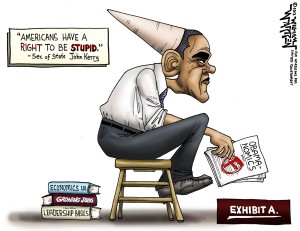
Obama has succeeded in persuading the US Congress and other interested parties that Netanyanhu is wrong about Iran.  We have to worry about our long term relationship with the country.  To impose new sanctions as the US thrashes its way through complex negotiations on nuclear materials and nuclear weapons would be a big mistake.

A President who had his legs chopped off six months ago is walking again.

Iran and Sanctions


North Sea Oil and Sanctions?

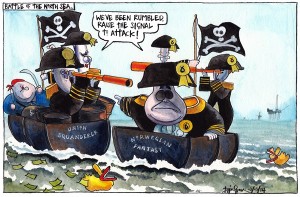
RWE has agreed to complete the sale of North Sea gasfields to a Russian billionaire — with the proviso that the German utility will buy back the UK assets in the event of sanctions against the oligarch.

RWE’s €5bn deal to sell RWE Dea, the German group’s oil and gas arm, has been held up by opposition from the UK government following US and EU sanctions on Russia’s financial services, defence and energy sectors.

As part of a revised transaction, Russian businessman Mikhail Fridman’s investment fund LetterOne Group will keep Dea’s North Sea gasfields separate from the unit’s remaining energy activities for a number of years.  The UK business will be operated by Dea but monitored by a separate governing entity, which will be a private foundation registered in the Netherlands.

The Netherlands foundation will assume full control of Dea’s North Sea business if sanctions on Luxembourg-based L1 or its owner are imposed. Sanctions would also oblige RWE to buy back the UK business if the sanctions were imposed within one year of the deal being completed, which is due to happen in March.

RWE’s shares were up 4.5 per cent to €23.51 in Frankfurt on Friday.

L1 announced last March that it was buying Dea, which pumps oil and gas in the UK, Germany, Norway, Denmark and Egypt, for €5.1bn.

Although the deal was approved by the German government, Britain’s energy secretary Ed Davey blocked the transaction, in a sign of how private Russian companies with no connection to president Vladimir Putin were falling victim to deteriorating relations between Moscow and the west over Russia’s intervention in Ukraine.

RWE and L1 sought assurances from the UK that it would not seize control of RWE Dea’s North Sea assets if Russian companies were targeted by additional sanctions.

The deal will be carried out at almost the same price agreed last year, despite the collapse in the oil price. RWE and L1 said the value of RWE Dea had been adjusted from €5.1bn to €5bn to account for “developments relating to certain exploration and production licenses”.

The UK accounted for about one-fifth of Dea’s natural gas production in 2013, but less than two per cent of the unit’s crude oil production that year.

Mr Fridman attracted some of the most high-profile names in the energy business to advise him on his oil investments, including former British Petroleum chief executive Lord Browne.

RWE’s profits have been badly squeezed by Germany’s shift to renewables, and the company has responded by cutting operating costs and capital expenditure, and putting RWE Dea up for sale.

North Sea Oil

Deflation in the Eurozone?

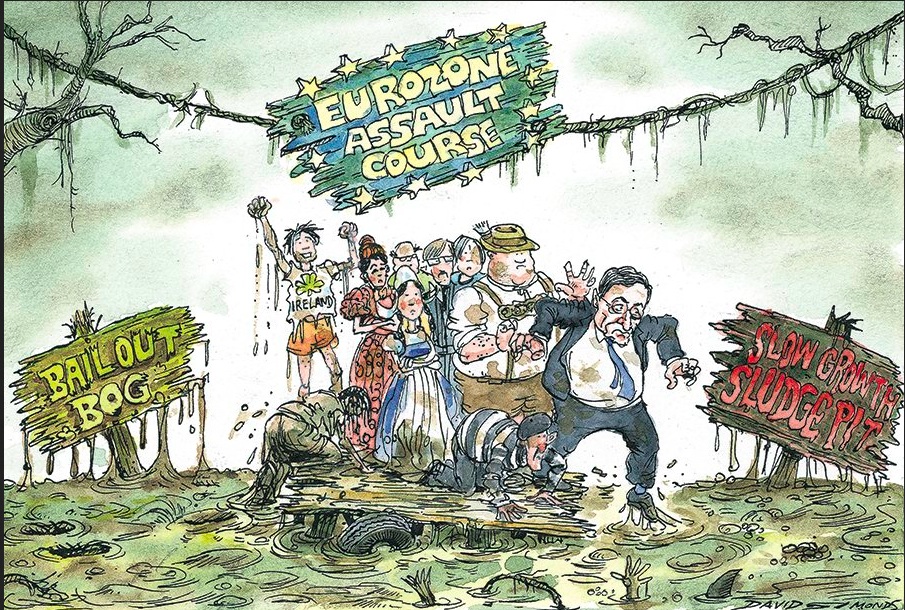
In January, prices in the eurozone were 0.6% down on their levels a year ago. The figure shows the eurozone heading deeper into deflationary territory from December, when prices were 0.2% down on the year before.

A large contributor to falling prices is the cost of energy, with oil prices down almost 60% on the middle of last year,  Energy prices plunged 8.9% in January.

If food and energy are stripped out of the calculations, eurozone prices were still rising at an inflation rate of 0.5%, down from 0.7% the month before.  The eurozone has only once before experienced deflation at these levels, in July 2009, as the region first went into recession following the financial crisis.

Last week the European Central Bank (ECB) launched a programme aimed at pushing prices back up – known as quantitative easing – through which it injected around 1 trillion euros into the economy.

Was it energy prices that have pulled the eurozone into deflation? While cheaper energy is welcome news for a net importer of the stuff, as the eurozone is, the danger of a period of wider and potentially more damaging deflation is there. Debt is probably the big issue.

So the European Central Bank president Mario Draghi will no doubt see these figures as supporting the decision last week to launch a programme of quantitative easing intended to push inflation higher.  Still, other new data show that a period of deflation doesn’t necessarily mean an economy can’t grow.  In Spain, where prices were falling for much of last year, the economy grew at a respectable 0.7% in the last quarter of 2014.

Deflation across the 19 countries that use the eurozone currency is gathering pace.

Christian Schulz, senior economist at Berenberg Bank said the latest figures showed that “the ECB was … more than justified in taking aggressive action earlier this month.  There was better news on eurozone unemployment, which fell to 11.4% in December, down from 11.5% in November.

Within that figure there are huge differences between jobless levels in different countries.  Germany has a 4.8% unemployment rate. But 25.8% of Greece’s labour force is out of work and Spain’s jobless rate is 23.7%.

Eurozone Deflation


Comprehensive US Corporate Tax Policy?

It’s no secret that companies including Apple, Google, Amazon, Uber, Airbnb and Ikea seem to pay less than their fair share of tax in Australia. Despite booking huge revenues from sales to Australian customers they are able to reduce their profits in this country by shifting profits to tax havens such as Ireland, the Netherlands, Luxembourg and the Cayman Islands, to name a few.

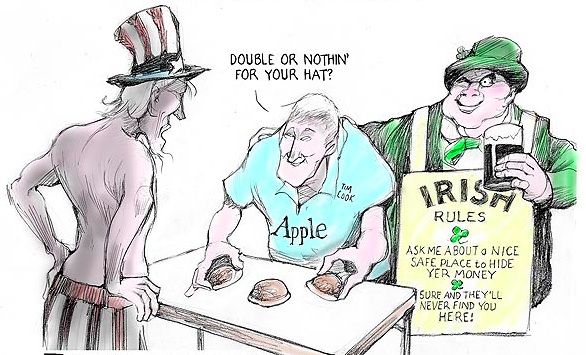
Apple shifrts its  rights for all markets outside the Americas to a subsidiary in Ireland through a cost sharing agreement. The agreement allows Apple to circumvent the US transfer pricing rules. All international sales outside the Americas are routed through Ireland where Apple negotiated a 2.5% tax rate.

Appple also exploits the different rules regarding tax resident status in Ireland. This enabled it to have an entity with no declared tax jurisdiction that booked over US$30 billion in profits between 2009 and 2012.

Most countries, including Australia, currently rely on transfer pricing rules based on arm’s length principles to prevent transfer pricing abuse between wholly owned subsidiaries. This allows tax authorities to vary transactions to what it would be if the two entities involved were separately owned and transacting in a transparent market.

This approach is realistic when there is a market for the products or services, such as with commodities, but is unsuitable for the transfer of intellectual property rights or online sales and services, as there is no market or acceptable technique for valuing them.

Australia, like many other countries, has finally woken up to this problem.

One solution is the UK Diverted Profits Tax.  It is a 25% tax on company profit that is designated (by the tax authority) to have been “inappropriately” shifted out of the UK to a tax haven. In fact the 25% rate is higher than the UK statutory corporate tax rate and has the objective of deterring companies from shifting profits to lower-tax jurisdictions.

Many of the multinational tech companies sell services online and record revenues via a registered entity in a tax haven. The UK government has no jurisdiction over these transactions. Hence it is unclear how the UK will tax entities registered in a foreign jurisdiction. The UK “Google tax” may also lead to double taxation of some profits.

The  US has so far resisted attempts to prevent its corporations from aggressively reducing their foreign taxes as many in the US believe this strengthens these corporations and leads to better economic outcomes for the US itself. Without US involvement this approach will fail.

Apple in Ireland

The IPhones Impact on Apple

In the first quarter of Apple’s fiscal year 2007, the last quarter before Steve Jobs unveiled the original iPhone, Apple’s revenue amounted to $7.1 billion.

Contributing $3.4 billion to that total, the iPod was Apple’s most important product back then. Now, eight years later, the iPod has been rendered all but obsolete as smartphones have taken over most music playback duties. Apple doesn’t even break out iPod sales anymore; instead they are buried in the “other products” category along with Apple TV which, as Steve Jobs once put it, is considered a mere hobby at Apple.

Meanwhile iPhone sales alone generated $51.2 billion in the most recent quarter, accounting for almost 70 percent of Apple’s total revenue in that period. Being considered Apple’s most profitable product, it is very likely that the iPhone also accounted for the lion’s share of the company’s record-breaking $18 billion profit over the last three months. It only took the iPhone eight years to evolve from what many considered an overpriced niche product to the planet’s biggest cash cow – an achievement that is unlikely to be repeated in the foreseeable future.

This chart illustrate the iPhone’s huge impact on Apple’s results.

Infographic: How the iPhone Changed Apple in Just 8 Years | Statista

How to Handle Greek Debt

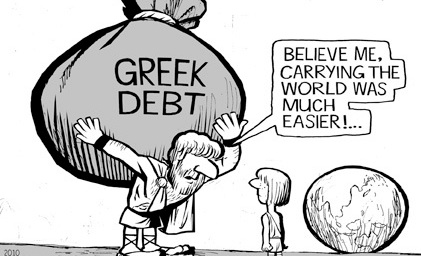
It is not the case that those arguing against austerity are against repaying the debt – they argue that debts cannot be repaid if less government spending (austerity) and more flexible labor markets with lower wages, longer hours, and less security and benefits (structural adjustment) leads to more unemployment.  It should be very clear that – macroeconomically – saving is income not spent.  Cutting income is then not a logical strategy to boost savings, quite the opposite!

It would be a very big step forward if in 2015 we can have a debate on growth in the euro zone, because without growth the logical level of government debt for euro zone governments is zero. The debate about Greece should be viewed as a fight between two paradigms on how to repay debt: austerity versus textbook macroeconomics from the IS/LM model. And that model says that in periods of weak aggregate demand you need to push the interest rate down or increase government spending. Austerity says that less government spending will create more incomes. How the gap between less government spending (which cause incomes to fall) and higher incomes is bridged still seems misty. The evidence says the gap will remain.

So, either you chose more government spending, more economic growth and more debt repaymentt or you chose austerity. That should have been the debate the whole time, instead of Greek taxpayers versus (Greek and non-Greek) bond holders. We had this debate in the economics profession, but somehow it did not get noticed in the press. Perhaps now would be the time.

Greek debt


Corporate Rehabilitation?

Jed S. Rakoff writes:  In Too Big to Jail, Brandon Garrett, a highly regarded law professor at the University of Virginia, presents for a lay readership a detailed and comprehensive examination of deferred corporate prosecutions, and corporate criminal prosecutions generally, and concludes that they have been, on the whole, ineffective. According to Garrett, “the big story of the twenty-first century” in corporate prosecutions is that “prosecutors now try to rehabilitate a company by helping it to put systems in place to detect and prevent crime among its employees and, more broadly, to foster a culture of ethics and integrity inside the company.”

But Garrett—on the basis of his own painstaking gathering of evidence (for neither the Department of Justice nor any other governmental entity keeps detailed and complete records of how such agreements are implemented over time)—finds that many, perhaps most such agreements, while often obscuring who was personally responsible for the company’s misconduct, fail to achieve meaningful structural or ethical reform within the company itself (a good example being the Pfizer cases described below). Nonetheless, Garrett does not urge the abandonment of deferred prosecution agreements, or of comparable non-prosecution agreements and corporate guilty plea agreements, but recommends instead that various steps be taken to improve their efficacy, including greater judicial oversight, greater use of court-appointed monitors, and greater attention to breaches of the agreements.   Does Corporate Rehabilitation Work

Corporate Rehab?

Money Matters: Jobs

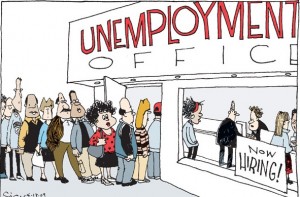
JobsJobs. All over the world jobs are short. Especially jobs for young people who we are supposed to be welcoming into the adult world.

Unemployment among the 18-34 year old group is higher than any other. Except perhaps people who have given up looking for work.

The issue is partly lack of training for jobs that are available. Richard Fisher, formerly of the Dallas Federal Reserve in the US noted that plenty of jobs were available for truck drivers but they have to pass an arithmetic test, and many young people fail.

In the US President Obama is pushing community colleges. This is a good move. Two year colleges are set up to prepare and certify young people for jobs.

Infrastructure projects, so sorely needed, are also abundant employers.

The Dardenne brothers Belgian film, “Two Nights and One Day,” shows one part of the pain of not being employed.

A play which one of our editors reviewed shows how emasculating not having a job can be for a middle aged man.

The consequences of unemployment range from not being able to pay the bills to devastating emotional waves.

Jobs should surely be a focus for social efforts across the US and Europe.

When Robots Replace Jobs

Young People Can’t Find Work

Jobs All Around, but Not for You

Theatrical presentation of the Impact of Joblessness

Write to us if you would like to receive our weekly newsltetter in your mailbox.  wtwfinance@gmail.com

Impact of Joblessness

Winner by MAggie Bofill in New York:  Winners is billed as a comedy and it is indeed funny, because its core truths are so real and so seldom put on stage.

The animal characters rival A.J.Gurney’s Sylvia in their entrancement. What dog owner has not had their underpants stolen for a good sniff? Curran Connor (dog) tumbles, attacks the garbage pail (which is a driving character in its own way) and snuggles with the kids of the house as they squeeze into a single bed to ward off danger.

Stephanie Hau as the family cat Marie Antoinette is a peril to flies. More accurately one fly which is stuck in a window between the pane and the screen. Driven crazy by the teasing buzz, Marie Antoinette is finally victorious. The show will show you how.

Hau must have studied the movement’s of cats endlessly, because she can create a pounce, stalk and hump back with ease. Pamela Berlin has directed her and all the members of the cast into a stunning group performance.

The cat is a winner, but so is every member of the family.   Brian, brilliantly played by Grant Shaud, finds himself again in the stock room of the Gap. He can leave the house to work, and finally defend his son’s sense of the world. This could well get him fired, but it is more important to do the right thing: not a message we hear so often today.

David Gelles gives a nice boy who is after all a teen, new dimensions, as his own stalking turns into the rescue of a girl who is being sexually abused. As his sister Gabby, Arielle Goldman is an enhanced Harriet the Spy. Like today’s Facebook crowd, she photographs all the evidence: a surreptitious text message, the non-stick pan, offending hand cleaner and so on.

Gabby is writing a play within a play for a Christmas pageant. She chooses Herod’s Murder of the Innocents as her theme. In the play’s final twists, the innocents are saved.

The play is constructed as a series of vignettes. Frequent set changes which required much physical action seemed mistaken at first.  But on reflection, in a play which is perfectly produced, the uncomfortable feeling the ‘busyness’ produces may be exactly what the playwright intended.   The set moves more than the actors intentionally.  The discomfort of “stuff” which fills in for substance is emotionally conveyed by furniture in motion.

Since the  point of the play is that material props set the outline of our moral values– the meaningless repositioning of  stuff– like Gabby’s bag full of swiped ‘evidence’,  is discomforting because it does exist outside of the self.

Working the Obama/Modi Chemistry

Lawmakers who came with Obama during his three-day visit.to India were impressed by the comfrotablility shared by the two leaders.

Senator Warner said it was “thrilling” to experience the real sense of optimism and enthusiasm for reinvigorating the US relationship with India.  “Many of the announcements made during our three-day trip were incremental, but they nonetheless represent genuine signs of progress,” he said in the monthly newsletter of the Senate India Caucus.

Noting that it was his my honour to accompany Obama this week to celebrate India’s Republic Day, the commemoration of the adoption of India’s democratic constitution in 1950, Warner said he was proud to attend as co-chair of the bipartisan Senate India Caucus.

“As two of the world’s largest democracies and with the incredible Indian American population that contributes so much to Virginia’s culture and commerce, it is critical for us to continue to deepen and broaden the existing framework of partnership and friendship between the United States and India,” Warner said.

“During a series of productive conversations, Obama and Modi announced a nuclear deal that could clear the way for multinational corporations to build civilian nuclear power plants in India to provide clean power for the people of India,” he said.

For the first time, the US clearly expressed support for bringing India into the Asia-Pacific Economic Cooperation forum, the chief trade group in the region, he said.

The takeway.  China has beenfocusing on Pakistan.  Pakistan was not mentioned by Obama, in public.  Modi announced progress had been made on negotiations over a civil nuclear deal — a new 10-year defense cooperation agreement between the two countries was announced — which may have far-reaching consequences for both sides on sharing intelligence and military education, and there was much talk about boosting bilateral trade from its current level of around $100 billion a year to $500 billion by 2025.

Obama and Modi Groove

“In my own conversations with Prime Minister Modi and officials from India’s government and industry, I focused on the need for India to make progress on efforts to ease red tape, regulations and legal hurdles that have prevented the US and India from fully tapping the exciting potential of this economic relationship,” Warner said.