Davos Woman?

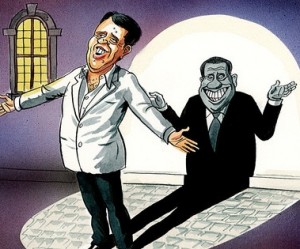
Amanda Foreman writes:  Since its staid beginnings in 1971 as an annual management symposium at a Swiss ski resort, the World Economic Forum in Davos has grown into the premier talking shop for the global financial elite. Unsurprisingly, given the opportunities it offers for smug pronouncements and ostentatious parties, Davos (as it is known) has attracted—and earned—some trenchant criticism. The late Harvard political scientist Samuel P. Huntington coined the term “Davos Man” to pin and puncture a kind of obnoxious alpha male who flits from one international meeting to the next in self-serving pursuit of wealth and power.

But Huntington’s Davos Man highlights another issue about the forum: It was (and is) overwhelmingly male. This year, some 19% of the 2,500 delegates were women, according to the forum—a number that has barely changed since a (widely ignored) quota system meant to involve more women was imposed by the event’s corporate sponsors in 2011. (Saadia Zahidi, who heads the forum’s gender-parity initiative, said that the gender ratio in Davos reflects “global leadership as a whole” and that the forum is working to increase women’s participation.)

Behind some of the most famous public gatherings in history lie arguments and controversies about whether to include women. One particularly egregious example was the first World Anti-Slavery Convention, which met in London in 1840. Women on both sides of the Atlantic had been campaigning to abolish slavery since the 18th century. Nevertheless, the 350 male delegates were divided over whether to allow seven American women to participate. One faction, led by William Lloyd Garrison ’s supporters, favored their inclusion; friends and colleagues of the New York abolitionist Lewis Tappan vehemently opposed it. The latter won, and the women were forced to watch from the gallery.

Half a century later, women faced similar discrimination when the first modern Olympic Games were held in Athens in April 1896. Pierre de Coubertin, the founder of the International Olympic Committee, refused to include women. It would be “impractical, uninteresting, unaesthetic and incorrect,” he claimed. Four years later, when the summer games were held in Paris, the Olympic committee ignored his objections, and 22 women were allowed to compete alongside the 997 male athletes (although only in five sports: sailing, equestrian, tennis, croquet and golf). At the 2012 London games, some 44% of the athletes were women.

One notable irony relates to the U.S. civil rights movement. The only woman listed as an official speaker on the program for the famous 1963 March on Washington was Myrlie Evers, widow of the murdered Medgar Evers ; she got stuck in traffic. Leading female activists—including Rosa Parks —were not allowed to accompany the Rev. Martin Luther King Jr. down Constitution Avenue but were sidelined to walk alongside the wives of male activists. After the women protested, organizers added a short tribute to their work. No women were among the delegation that met with President John F. Kennedy.

But in the long run, these slights only deepened women’s determination. Furious over their exclusion from the 1840 conference against slavery, the activists Elizabeth Cady Stanton and Lucretia Mott went on to hold the Women’s Rights Convention at Seneca Falls, N.Y., in 1848, marking the start of a 72-year fight for women’s suffrage in the U.S. Similarly, frustration among women’s rights activists in the early 1960s led to the rise of second-wave feminism, from the founding of the National Organization of Women in 1966 to the passage of Title IX and Title X in the 1970s to guarantee educational and employment equality.

Davos Man still rules today, but history is against him. One day, he will be joined by Davos Woman—and she will, we hope, be as unlike him as possible.

Davos Woman?

Can Xi Continue to Whiz?

Kerry Brown writes:  In the late 1990s, former President Jiang Zemin liked to talk of China entering a two-decade era of “strategic opportunity” — a period when China could become a middle income country while continuing the Deng-ist strategy of building up its capacity and strengthening its economy during the era of American hegemony. During this period, China would be low profile, largely free of global leadership responsibilities, and able to plead its status as a poor, developing power focused on solving its own problems as a reason to sidestep heavy diplomatic duties beyond its borders.

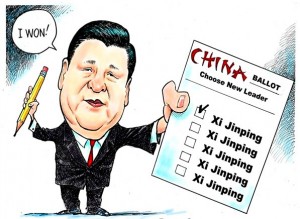
Three-quarters of the way into this era of “strategic opportunity,” and we might argue that this period has already come to an end. Economically and geopolitically, the China of Xi Jinping increasingly talks and acts like an emerging super power. Xi, with his grand narratives of a “new model of great power relations” for the U.S. and China, and a “New Silk Road” for most of the rest of the planet, seems to have the look, and tone, of someone willing to stand more on the global stage and get attention.

It seems like the “era of strategic opportunity,” where the onus was on internal issues and keeping a low profile, has been replaced by a China where inward and outward context are intimately linked. For China, the pressure is now on finding “holistic” solutions where it often proactively takes the lead on the global stage and wants to be listened to.

Even so, it still makes sense to think along the lines of smaller strategic opportunities. For all his talk of “pivots” and rebalancing, President Obama has been a good president for China. He has been read as weak and overstretched and was treated with staggering disdain during his first visit to Beijing in 2009. Under Obama’s watch, we witnessed the rise of an assertive, pushy China that has been increasingly able to call the shots, at least in its neighborhood. What will happen in the US elections of 2016 is not knonw.

The same year will all bring a presidential elections in Taiwan. Like Obama, but for very different reasons, incumbent Ma Ying-jeou of the Kuomintang (KMT) has been a good ally for Beijing. He promoted economic closeness and political carefulness, significantly reducing the cross-strait tensions that existed in the eight years under Chen Shui-bian before Ma’s election in 2008.

In the space of a few months in 2016, therefore, Beijing will see the leadership of two of its key partners change, with the real possibility that this will bring about a more confrontational environment.

Xi's Plans

Is Asean Ready for Union?

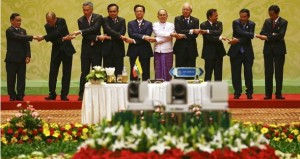
WIlliam Boot writes: The Asean goal of creating a single business market among the regional grouping’s 10 member countries is unlikely to happen for some years and certainly not by the target start date of the end of this year.

Burma is one of several countries in the bloc that lacks sufficient infrastructure to benefit from the planned beginning of the Asean Economic Community (AEC), they say.

And the dream of a single, joined-up market with unrestricted movement of labor—similar to the European Union—will be dogged by national self-interest for years to come, it is predicted.

Burma, Cambodia, Laos and Vietnam will be slower to achieve their targets for trade liberalization than the other more affluent members, said the Wharton business school at the University of Pennsylvania in an assessment on the AEC this month.

The other six Asean members are Brunei, Indonesia, Malaysia, the Philippines, Singapore and Thailand.

Meanwhile, the AEC countries are already facing their first and unexpected economic hurdle, Wharton said: sharply falling crude oil prices.

Most Asean countries will be unable to comply with AEC objectives for more relaxed rules on foreign ownership and freer movement of workers by the end of this year due to domestic political constraints, international law firm Allen & Overy said in its latest quarterly report on business.

One of Burma’s leading businessmen, Serge Pun, spoke on the AEC at the annual World Economic Forum in Davos.  Protectionist impulses were strong in government and business, but there now seemed to be a determined effort to make the AEC work, he said.

The disparity in development between the 10 member states could be an advantage to an emerging economy such as Burma, which “would welcome the unskilled jobs that more developed Asean members are shedding,” Serge Pun said.

Thailand’s deputy prime minister, Pridiyathorn Devakula, defied the general opinion at Davos: “Some in the audience may not believe it, but believe me, we will have a single market by the end of the year,” he said.

Murray Hiebert, the deputy director of the Sumitro chair for Southeast Asia studies at the Center for Strategic and International Studies (CSIS) in Washington, told the Wharton study that the liberalization of financial services and freer movement of capital and labor would be slow to develop.

“Some Asean countries are anxious about opening up financial services and capital markets out of fear of financial contagion and exchange rate volatility, even though integration would provide opportunities for risk-sharing,” Hiebert said.

A more unified market will eventually lead to a more organized industrial division of labor, some analysts believe. Not all member countries could afford to develop or sustain a car-building industry, for example.

At present Thailand is “Asean’s Detroit.” But Indonesia is fast catching up in production volume, which leaves little room for emerging players such as Burma to attract major investment in vehicle construction.

Commercial nationalism looks likely to impede full open markets for some time.

Burma poses two potential problems for the AEC.  Uncertainty following parliamentary elections later this year, and the prospect of more violence between majority Buddhists and the country’s minority Muslim Rohingya population.

In the longer term, the AEC is likely to bring greater cohesion between the member states, but this is likely to be a long and arduous process.

What Asean needs more than anything is a powerful supranational body, something akin to the Commission in the European Union, which could compel its disparate and self-interested members to comply with their promises.

An Asean EU?

Beware Greeks Bearing Gifts?

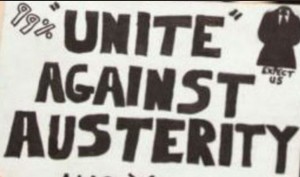
Charalampos Economou writes:  The structural adjustment program in Grrece has failed to deliver the expected results. Indicative of this is the fact that government deficit in 2013 reached 12.2% of gross domestic product (GDP); debt went up to 174.9% of GDP; unemployment reached 27.5%; more than a third of the population (35.7%) is at risk of poverty or social exclusion; and the inequlaity of income distribution increased. Public health expenditure decreased by €4.2 billion between 2009-12, and more than 2.5 million people lost their health insurance.

In this context, Syzria’s election win came as no surprise. Based on an alternative policy proposal of a national reconstruction plan, the party put forward an optimistic vision that was desperately needed.

The plan focuses on four major pillars to reverse the social and economic disintegration, to reconstruct the economy and exit from the crisis. The four pillars are: confront the humanitarian crisis; restart the economy and promote tax justice; regain employment; and transform the political system to deepen democracy.

The plan includes free electricity to households under the poverty line and meal subsidies to families without income.  Syriza has also promised to provide free medical and pharmaceutical care for unemployed people without health insurance — a big problem in Greece that impacts on access to care.

Housing guarantees, rent subsidies, transport discounts for long-term unemployed and those under the poverty line aim to tackle issues related to poverty along with the restitution of the €12,000 annual income tax threshold and restoring the minimum wage to €751.

The health sector will be one of Syriza’s priorities, with an emphasis on securing access for the uninsured to health services, staffing the national health service with the recruitment of the necessary number of medical and nursing personnel and increasing the budget for health.

Deliverying health care will be done through an increase in public spending to be covered  by decisively combating tax evasion and smuggling, and by establishing a public development bank as well as of special-purpose banks financed from the so-called “comfort pillow” of the Hellenic Financial Stability Fund and other specialized European instruments.

The most difficult task the party has will be to convince the EU and troika that a new European deal for Greece is needed in order to secure a socially viable solution to Greece’s debt problem.

Anti-Austerity

Is Growth Necessary in US?

James Pierson writes: The Bureau  of Labor Statistic’s Consumer Expenditure Survey, a detailed study of the spending patterns of 35,000 randomly selected households, paints a grim portrait of middle class families trying to maintain their standard of living in the face of stagnant or falling incomes and rising costs for necessities like rent, transportation, and health insurance. Middle class families – defined as those falling in the middle quintile of the income distribution with incomes between roughly $35,000 and $60,000 in 2013 – reported incomes that were essentially flat between 2009 and 2013 and expenditures that increased by slightly less than 3 percent. Households in the income quintiles just below and above the middle reported similar patterns of flat incomes and slightly increased expenditures. During these years of “economic recovery” – 2009 to 2013 – consumer inflation increased by nearly 9 percent, leaving real incomes for the middle class that were much lower at the end of the period than at the beginning.

Americans have never favored radical schemes to redistribute income because of their faith in social mobility and the belief that they can get ahead on their own. A stagnant America, lacking growth and broad opportunities for advancement and achievement, would represent something new and dangerous for a nation whose ideals and institutions have been built upon a foundation of abundance.

The United States, in short, needs a new focus on economic growth and especially a new “growth agenda” out of Washington to replace the emphasis upon redistribution, regulation, and gender and race controversies that have defined the Obama years. The party or candidate that can deliver such an agenda will win the support of grateful middle class voters – and along the way they may just succeed in saving their country from tearing itself apart in fruitless battles over dwindling shares of a stagnating economy.  Is Growth Necessary

 The Growth Cornucopia


In India, Rajan Slashes Bank Rates

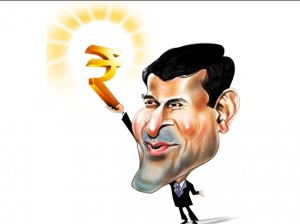
William Pesek writes:  Raghuram Rajan’s recent surprise rate cut in India was what central bankers call an “insurance move.” In a highly uncertain and deflationary world, the Reserve Bank of India governor decided he’d rather risk higher inflation in hopes of boosting growth. More quietly, Rajan is hoarding dollars.

On Friday, the day before Barack Obama flew to New Delhi,  the RBI announced that India’s foreign-exchange reserves had risen to a record $322 billion. While the news couldn’t compete with the Modi-Obama hug at the airport, a nuclear deal and talk of cooperation on climate change, that swelling stash greatly increases the odds that Modi’s reform program will succeed.

By slashing the benchmark rate to 7.75 percent from 8 percent, the RBI governor made clear the central bank was ready to guard India’s economy against a fast-mounting number of risks around globe. Equally important was the “vote of confidence” the decision signaled about Modi’s government.

Now Rajan’s stockpiling of currencies should help catalyze change in New Delhi. As recently as September 2013, when Rajan started at the RBI, India was spiraling toward crisis. An economy once celebrated as one of the superpowers of the future — Brazil, Russia, India and China, or the BRICs — was being grouped among the world’s most “fragile” nations. Hedge funds bet India would be the first of the BRICs to be downgraded to junk.

Rajan moved fast to halt a run on the rupee, shore up the banking system and cap inflation. Rajan has stockpiled about $59 billion of reserves since taking charge at the RBI, or an average of $4 billion per month. While India’s reserves are still a fraction of China’s $3.8 trillion, they’re substantial enough now to “create a stronger firewall against external account shocks and build greater international confidence,” says Rajiv Biswas of IHS Global Insight.

India represents something of an outlier in the region. While Asian peers devalue to boost exports, Rajan has clearly decided that a stable, strong rupee is the key to cementing trust in India’s economy, which still suffers from a sizable current-account deficit and relies on short-term capital flows. A firm currency should attract overseas capital to support equities, upgrade infrastructure and pay down government debt.

In July, the prime minister’s first budget avoided “big bang” reforms like allowing foreigners to hold majority stakes in key sectors like insurance and defense. His government sidetracked a World Trade Organization deal to cut tariffs. And while he harnessed the plunge in oil prices to trim subsidies, Modi has been slow to dismantle budget-busting support programs.

Modi enters the budget process with a rare economic tailwind. By stabilizing the financial system and shoring ups its defenses, Rajan has given Modi considerably more latitude not only to restructure the economy, but to take risks like selling state assets and welcoming more foreign involvement in the economy. Once India reforms and moves beyond the boom-bust cycles of the past, it should be able to turn around and use its reserves to invest in education and healthcare as well as roads, bridges, ports and the power grid.

All Rajan has done, though, is prepare the ground. The onus still lies on Modi to push forward the politically difficult reforms he’s avoided thus far. He’s now got 322 billion good reasons to do so.

Rajan

America Back in the Swing of Oil Production?

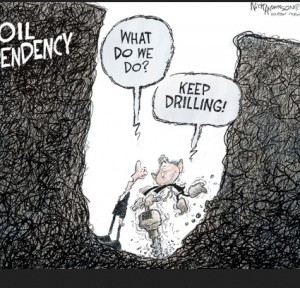
Daniel Yergin writes:  American shale oil has become the decisive new factor in the world oil market in a way that could not have been imagined five years ago. It has proved to be a truly disruptive technology. But will that impact continue in a world of low prices?

Oil is now below $50 a barrel, a price too low for a good deal of the new shale oil development to make economic sense. Yet output is likely to continue to rise by another 500,000 barrels per day in the first half of 2015 because of sheer momentum and commitments already made.

Come the middle of the year, however, growth will flatten out. Producers will work hard to improve efficiency and lower costs, but in 2016, at these prices, American output could decline. Production elsewhere in the world will also be flattening.

But by then, the world economy might be doing better, stimulating oil demand. Prices could start rising again. If the gulf producers have their way, prices will not go back to $100 a barrel. Even at prices well below $100, American shale oil producers will find ways to drive down costs and output will start rising again. And the world’s new swing producer will find itself back in the swing of things.

Oil production

Can We Get from QE to QED?

Dick Ehnts writes:  With quantitative easing, a central bank creates additional deposits for banks as it buys some of their assets, like bonds. What can banks do with these reserves? They can lend them out to other banks, but that is not very likely since all banks will receive additional reserves and none will lose some.

Banks can use reserves to buy financial assets, but this would increase their exposure to risk since they would have to take any losses resulting from this business. Plus the reserves are moved to the balance sheets of another bank, so we’re still unsure of where they go. In the end, the banks will move the reserves into the deposit facility at the European Central Bank, forinstanace, which offers a fantastic interest rate of -0.2%. And this creates inflation how?

Bank loans are created by banks when they mark up the deposits of their client and simultaneously create an item called loan on the asset side of their balance sheet. Banks do not need reserves to make loans, which should by now by common knowledge among macroeconomists.

The monetary circuit in the euro zone is damaged, because the private sector repays net debt. This destroys deposits, which are not available for spending. We need additional deposits to grow faster. Some confuses deposits in the central bank (reserves) with deposits in banks. Only the latter can lead to more spending and hence more inflation. Banks owning more central bank deposits will not be able to spend them on goods and services produced. QE was a failure in Japan, in the US, and the UK. It will be a failure in the euro zone as well. The only thing it does is to lower the long-term yields, but given that firms have problems with demand this will not be the cure of the aggregate demand weakness that is hurting the euro zone so much.

Creating Inflation

Italians Now Credible?

Rob Cox writes:  The Italian presence was hard to miss at Davos, and not just on the official program, where the 40-year-old Renzi was the subject of a special session entitled “Transformational Leadership.”

Chiefs of the country’s top banks, state-oil giant Eni, insurer Generali – even the head of the once-secretive Mediobanca – and their entourages jostled through security lines. Opera tenor Andrea Bocelli kicked off the proceedings. Global brewer SABMiller hosted a “Taste of Italy” reception.

The country’s corporate and political leaders have had good reason to avoid Davos. Italy’s output has shrunk by about a tenth over the last decade. The unemployment rate, especially among young people, exceeds 13 percent. GDP growth is forecast by the International Monetary Fund at a recently slashed 0.4 percent.

Renzi nevertheless took the stage in Davos with some significant reform victories, which Italian executives say could help the economy expand beyond those expectations.

1. Renzi has pushed through labor rules that will allow companies to hire and fire more easily.

2.  Italy’s Senate this week approved an amendment to a new electoral law designed to foster more stability and efficiency in long-dysfunctional Italian politics.

3.  Renzi approved a plan to effectively force the country’s mutually-owned banks, which account for about a fifth of the industry, to privatize. By abolishing a structure that gave every stockholder the same vote notwithstanding the number of shares held,  much-needed consolidation will take shape.

The risk for Renzi is that he is moving so quickly that he splinters the party. To get reforms approved, for instance, the coalition has had to rely on the opposition led by Silvio Berlusconi, whose control of his party, Forza Italia, is also tenuous. With presidential elections on the horizon, the possibility of an all-too-familiar political setback is possible.

“The most important structural reform for Italy is credibility,” he told the WEF delegates. The question is whether they take that message home with them from Davos.

Renzi

Ralph Nader Exposes Credit Suisse

Nader writes:  In May of 2014, financial firm Credit Suisse AG pled guilty to serious criminal charges. The giant bank aided and assisted approximately 22,000 wealthy U.S. taxpayers (whose names Credit Suisse AG escaped having to send to the Justice Department for law enforcement) for over a decade in filing false income tax returns and other documents with the Internal Revenue Service (IRS).

The full extent of these crimes, according to a Department of Justice news release, are as follows: “assisting clients in using sham entities to hide undeclared accounts;” “soliciting IRS forms that falsely stated, under penalties of perjury, that the sham entities were the beneficial owners of the assets in the accounts;” “failing to maintain in the United States records related to the accounts;” “destroying account records sent to the United States for client review;” “using Credit Suisse managers and employees as unregistered investment advisors on undeclared accounts;” “facilitating withdrawals of funds from the undeclared accounts by either providing hand-delivered cash in the United States or using Credit Suisse’s correspondent bank accounts in the United States;” “structuring transfers of funds to evade currency transaction reporting requirements;” and “providing offshore credit and debit cards to repatriate funds in the undeclared accounts.”

These elaborate illegal acts over many years are quite revealing. They show a deliberate willingness by Credit Suisse AG officials to knowingly engage in profitable activities that defrauded the United States Treasury and burdened honest taxpayers.

The Employee Retirement Income Security Act of 1974, or ERISA, was enacted to protect the retirement savings of retirement plan participants. The law, in theory, automatically disqualifies institutions like Credit Suisse AG who have committed serious crimes or pled guilty to serious crimes from serving as a “qualified professional asset manager” (QPAM) of ERISA assets or pension plans.

Unfortunately, the Department of Labor has not adequately enforced this law or its regulations in this area.

The Department of Labor (DOL) already has granted Credit Suisse a temporary waiver to continue conducting their pension management business. On January 15th, the DOL held a public hearing—where I testified— to discuss whether Credit Suisse and its affiliates can continue this troubling trend of avoiding the consequences of their actions indefinitely. Credit Suisse AG is hoping to completely sidestep the mechanisms of justice for their admittedly serious crimes and carry on business as usual—a result that in itself is, unfortunately, business as usual.

This routine ability to evade proper punishment is the root of the issue of so much corporate and Wall Street crime—a slap on the wrist leads to a perpetual cycle of wrongdoing with no end in sight. Their corporate lawyers turn laws into “no-law” laws. Corporate crime pays.

The Department of Labor, which exists to defend workers, now has a unique opportunity to stand proudly at its post and to send a clear message—a firm signal—to other Qualified Professional Asset Managers that if they commit unthinkable criminal violations, they lose the ability to handle pension funds. On the other hand, allowing these institutions to continue to receive permanent waivers would be a clear signal that the DOL will tolerate cutting corners and criminal wrongdoing by powerful financial institutions at the expense of workers, complying taxpayers, democracy, and the rule of law.

Credit Suisse