Men are saying no to sexual violance in the US. Acts are usually against women. Men are blamed. They want to be part of the solution. They are trying to see what it’s like to walk in women’s shoes.

Men are saying no to sexual violance in the US. Acts are usually against women. Men are blamed. They want to be part of the solution. They are trying to see what it’s like to walk in women’s shoes.
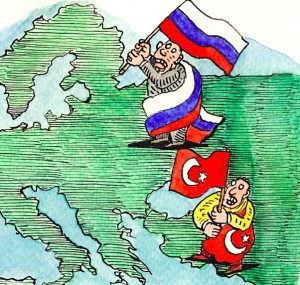
Paul J. Saunders writes: Russia and Turkey have had a long, often tumultuous relationship, and some of their difficulties are not so distant. Before Moscow invaded and annexed Crimea earlier this year, Russian-Turkish relations had been on a dramatic upswing, with two-way trade reaching some $32 billion in 2013 (mostly Turkish imports of Russian natural gas) and Russia becoming Turkey’s No. 2 trading partner, behind Germany. Turkey had also emerged as Russia’s No. 1 trade partner in services, according to Russian Central Bank statistics, and the leading destination for Russian tourists (some 4 million in 2013), although recent advertisements on Russian state television are encouraging them to go to Crimea.instead.
Two years ago, Russia and Turkey agreed on visa-free travel for their citizens, allowing stays of one and later two to three months. On the political front, Russia and Turkey established the High Level Cooperation Council in 2010, which has met four times and may convene its fifth session in Turkey before the end of the year. Russian and Turkish officials appear to consult regularly on significant regional issues.
Although Moscow and Ankara do not always agree on how to proceed on issues, their communications appear to be far more regular and substantive than Putin’s exchanges with any other NATO member, especially after the alliance shut down the NATO-Russia Council earlier this year.
Perhaps most remarkable is that while Erdogan continues to press Putin about the
Crimean Tatars and their priorities, Turkey has abstained from Western efforts to
punish Moscow over Ukraine, maintaining a rather moderate tone. This stands in starkcontrast to the other governments most directly affected — namely, the Central
European NATO members — which have tried to push NATO and the United States
into doing more and which in many cases are seeking US and NATO troop
deployments on their territory.
The US-EU strategy for dealing with Moscow, such as it is, relies primarily on economic rather than military instruments. Turkey does not look particularly interested in lining up with the United States and the EU to confront Moscow. Turkey’s ambassador to Russia declared that his government would not impose sanctions on Russia if
asked by its allies. Earlier, in August, Turkey offered to increase food exports to Russia
after Moscow banned many European foodstuffs and suggested using national
currencies rather than dollars in bilateral trade. A month earlier, Ankara had inquired
about a free trade agreement with the Russia-led Customs Union. In early May, less
than two months after the Crimea annexation, state-owned Turkish Airlines announced
plans to reinstate flights there.
Russia’s relative success with Turkey likely extends beyond mere active diplomacy to also reflect a gradual, underlying shift in Ankara’s perception of its national interests and goals as its efforts to join the EU recede. Moscow sees Turkey as a key market and service provider. Looking ahead, there is still room for growth in bilateral trade. The combination of Russia’s energy resources and Turkey’s location straddling three continents creates
considerable synergies that could be appealing to Russia, not to mention that Turkey
provides state-owned Gazprom with yet another route around Ukraine to Europe.
Turkey also appears to share some of Moscow’s perspectives on the need to reform
the international financial system to accommodate emerging economies.
For now, Moscow and Ankara appear to have found a way to compartmentalize their
disagreements so they do not detract materially from their overall bilateral relationship.
With Erdogan having moved from being prime minister to president and former Foreign
Minister Ahmet Davutoglu taking over the premiership, Turkey seems likely to sustain
its current policy toward Moscow, and Russia seems likely to reciprocate.
From Robert McChesney: The United States is unique today among major states in the degree of its reliance on military spending and its determination to stand astride the world, militarily as well as economically. No other country in the post–Second World War world has been so globally destructive or inflicted so many war fatalities. Since 2001, acknowledged U.S. national defense spending has increased by almost 60 percent in real dollar terms to a level in 2007 of $553 billion. This is higher than at any point since the Second World War (though lower than previous decades as a percentage of GDP). Based on such official figures, the United States is reported by the Stockholm International Peace Research Institute (SIPRI) as accounting for 45 percent of world military expenditures. Yet, so gargantuan and labyrinthine are U.S. military expenditures that their true magnitude reached $1 trillion in 2007. US a Military Economy

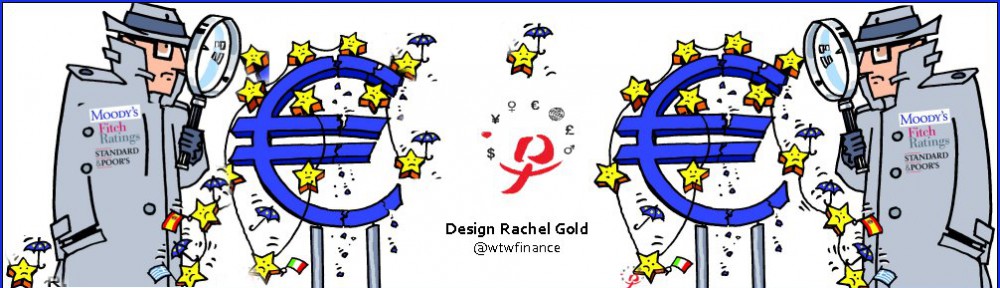
Mark Gilbert writes{ Regulators around the world are making good progress toward preventing future bank crises from hurting the global economy. Some of the new rules proposed for individual bankers, however, have more to do with revenge than safety. Unless the aim is to make life so difficult for the world of finance that the banks are forced to shrink — and, granted, that may be a desirable outcome — the proposals risk doing more harm than good.
Last week’s confirmation that foreign exchange traders conspired to rig currencies even as their banks were being fined for manipulating Libor is clear evidence that the finance industry hasn’t learned enough from the credit crisis. Vengeance, though, won’t help.
The Parliamentary Commission on Banking Standards, which has been at the forefront of the U.K.’s refurbishment efforts, issued a progress report on its June 2013 recommendations. One of its conclusions makes sense: Bonus payments should automatically end for the executives of any bank that needs a taxpayer bailout. All the work being done to make sure banks maintain adequate capital to avoid that outcome makes this bonus rule especially important.
But the report also says that regulations need to be changed to capture both the individuals who submitted false money-market rates in the Libor scandal and the traders who schemed to distort currency values. According to committee chairman Andrew Tyrie, banks to identify the people responsible for each risk-taking function. But it won’t work to try to extend accountability all the way down the food chain.
While it seems fair that any and all bank employees should be subject to rules designed to claw back bonus payments that turn out to have been unjustified, it’s still impossible to know in advance which new pocket of financial engineering might turn out to cause trouble. Tying the hands of individual traders, before it’s clear that their trades are unduly risky, just keeps them from doing their jobs.
If almost everyone within a financial institution is deemed responsible for risk-taking, then no one really carries the can. Designated supervisors should be held accountable for the departments they head, with the promise of sanctions up to and including criminal liability for bad things that might happen on their watch.
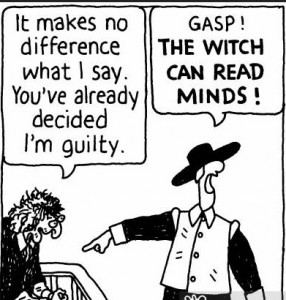
David Zirin writes: Ccongressional shields and anti-trust exemptions enable pro sports to operate in a constitution-free zone, without the customary rights accorded in labor law. You get drafted to your city of work, a salary cap determines what you can make, and, arbitrarily, you can be deemed not old enough to work.
wages are artificially capped, with the supposed business geniuses that own NBA franchises protected from their own checkbooks like over-caffeinated teenagers. It does not change an accepted narrative that trickles down into the main vein of US life: that the bosses always know – and do – what’s best.
Michele Roberts took a blowtorch to this narrative, saying, “I don’t know of any space other than the world of sports where there’s this notion that we will artificially deflate what someone’s able to make, just because. It’s incredibly un-American. My DNA is offended by it.”
She also said that the current revenue split, where 50 percent goes to ownership, was ridiculous and would change when the players opt out of the current CBA – a CBA that shifted billions of dollars in wealth from players to owners – and renegotiates in 2017.

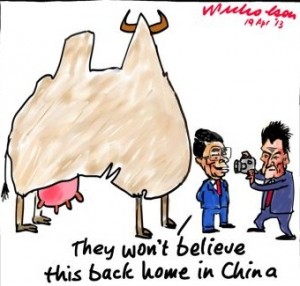
Australia and China signed a trade deal which extends beyond mining. Australia is the most China-dependent country in the world. Exports to China count for 5.3 percent of the GDP.
Two-way trade, which reached A$151 billion ($132 billion) in 2013, has been driven by China’s insatiable appetite for resources and energy, while Australia mainly buys cheap Chinese manufactured products.
China supplied 20 percent of Australia’s A$256 billion of imports in 2013 and bought more than 35 percent of its exports last year, International Monetary Fund data show.
95% of Australia’s exports to China will be free of tariffs.
The issue of investnment by China’s state-owned enterprises was deferred in order to get the deal done.
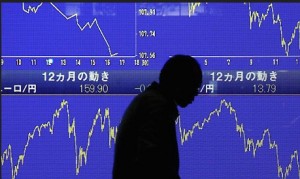
Technically yes, and European markets and oil prices responded ‘as if.’ But the growth rate could change quickly when next month’s figures come in.
Prime Minister Shinzo Abe may delay an unpopular sales tax hike and call a snap election two years before he has to go to the polls.
The recession comes nearly two years after Abe returned to power promising to revive the economy with his “Abenomics” mix of massive monetary stimulus, spending and reforms, and is unwelcome news for an already shaky global economy.
Gross domestic product (GDP) shrank by an annualised 1.6 percent in July-September, after plunging 7.3 percent in the second quarter following a rise in the national sales tax, which clobbered consumer spending.
An adviser to Abe termed the economic slide “shocking,” and urged the government to take steps to support the economy.
Economy Minister Akira Amari said some economic stimulus was likely, but added it would be hard to craft an exceptionally big package because of the need for fiscal disciplin
The yen slipped on the poor GDP reading, with the dollar briefly pushing to a seven-year high above 117 yen. The Nikkei stock average fell 3 percent.
Sluggish growth and easing price pressures due to sliding global oil prices prompted the Bank of Japan to unexpectedly expand its massive monetary stimulus last month.
Trying to find your two-pizza team magic? Here are three tips to get you started:
1. What’s the magic number?
Bezos’s two-pizza rule works out to at most 6 or 7 non-ravenous people. Teamwork expert Hackman pegs his magic number at 5 and fervently warns against going above 10. Management expert Bob Sutton cites the U.S. Navy Seals as having learned that 4 “is the optimal size for a combat team.”
It’s safe to say that a small team count sticks to single-digits, so start thinking of splitting into subgroups when you get beyond 10 people.
2. Follow the “Cheers” rule of effective teams.
Relational loss is a perception — so the more you can do to bring your teammates together, the better your team will be.
With thousands of employees, Zappos puts a lot of thought into scaling the same strong culture, familial atmosphere, and tight-knit feeling that it had when it was much smaller. They even hacked together a “face game” — when you log into the computer system, an employee’s face and bio pop up and you guess the person’s name. The smaller startup, Karma, follows the Cheers rule by eating family-style lunches together every day.
3. Make teamwork easier through transparency.
One crucial support structure found with effective teams is “an information system that provides teams the data and forecasts members’ need to proactively manager their work.” Every jump in relational links as groups get larger opens the door to more miscommunication and misinformation.
Providing self-service through systems, processes, and tools help distribute information and power so individuals can get aligned and move forward together as a team.
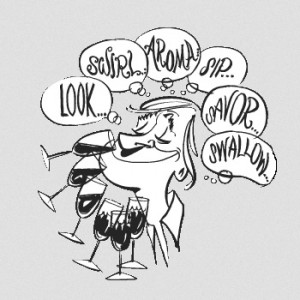
Elliott Morss writes: The evidence from blind tastings of wines people like and their ability to tell differences between wines is growing rapidly.
Goldstein et al, based on data from 6,000 blind tastings, found: “Individuals who are unaware of the price do not derive more enjoyment from more expensive wine. …we find that the correlation between price and overall rating is small and negative, suggesting that individuals on average enjoy more expensive wines slightly less….”
More recently, Ashton has taken another look at Goldstein findings and provides data that reinforces them. Lecocq and Visser analyzed data from three data sets totaling 1,387 observations on French Bordeaux’s and Burgundies. They report similar findings: “When non-experts blind-taste cheap and expensive wines they typically tend to prefer the cheaper ones.”
The evidence suggests most people cannot tell one wine from another when only using sensory organs. So what really adds to wine’s value? Like doctors’ recommendations, there appear to be significant wine “placebo effects” from brand, label, price, country of origin, high ratings, and the recommendations of wine store staff.
If most wine is consumed with food and food changes the taste profile of wines, why are most tastings done “in isolation”? Sipping wines loaded with tannin (like Barolos) is not fun. Such wines taste much better with food.
In tastings of the Lenox Wine Club, we tried to get tasters to consume wine with food before scoring the wines. It did not work. The tasters viewed the tastings as “work” and wanted to complete them before food and socializing at dinner.
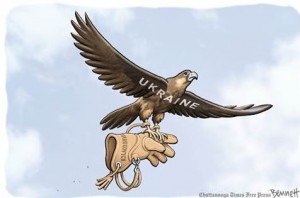
As nations have freed fhemselves from their tormentors, should they punish them or move on? Hundreds of government employees in the Ukraine have been dismissed or banned from public service for ten years in a policy called ‘lustration,’ or cleansing.
Ukraine wants to distance itself from its past, join Europe and put Russia behind them. There is a baance to be struck between national reconciliation and retribution. Laws should not cause further ruptures. Iraq is an example of how wholesale justice without lenciency can sow the seeds fof future conflict.
A positive example is South Africa where people who told the truth were essentially forgiven.
Ukraine is correct to punish the irredeemable, but they must over compassion to those who admit their past transgressions.