AIG Against the US

Lawyer David Boies has a shot at an upset win in the trial of Maurice “Hank” Greenberg’s $25 billion bailout case against the U.S. government, a turnaround from the weak odds he was given just a month ago.

Boies, representing Greenberg and other AIG shareholders, has had a series of evidentiary rulings go his way since the trial began Sept. 29 in Washington.

Beyond the money at stake, Justice Department lawyers are also fighting to prevent a verdict that the Federal Reserve acted illegally by charging a high interest rate and demanding equity as a condition for the loan. Such a ruling could limit the tools available to the government in a future economic crisis.

In their defense, the three top designers of the bailout, former Treasury Secretary Henry Paulson, ex-Federal Reserve Chairman Ben Bernanke and Timothy Geithner, the former Treasury secretary who was president of the Federal Reserve Bank of New York in 2008, all testified that the U.S. rescued AIG to avert the catastrophic damage that would have occurred if the insurer went bankrupt.

The heart of Starr’s argument is that however noble the government’s aims, it used power it didn’t have to take over AIG and further harmed shareholders by failing to pay just compensation.

As an example of how shareholders’ due process rights were violated, Boies highlighted the more favorable treatment troubled investment banks including Goldman Sachs and Morgan Stanley.

U.S. Court of Federal Claims Judge Thomas Wheeler frequently overruled government objections to Boies’s questions and handed him beneficial evidence rulings.

In a skirmish over the so-called Doomsday Book, the New York Fed’s compendium of confidential legal opinions on its emergency powers, Wheeler said he was inclined to grant broad access to Starr.

Wheeler rebuked Justice Department lawyers several times for attempting to rely on hearsay testimony, introducing exhibits in violation of trial rules about redactions, and dragging out proceedings by reading lengthy passages from documents.

The case going to trial at all was a victory for Boies and Greenberg, because the judge’s refusal to dismiss it was a rejection of the notion by some legal experts that the lawsuit was without merit.  .

Wheeler in July 2012 wrote that he agreed with Starr’s argument that the only consideration for a loan under the Fed’s emergency powers can be an interest rate set by the Board of Governors — not a demand for equity.  In the same 2012 ruling, Wheeler wrote that he didn’t buy a government assertion that authority for demanding equity came from the “incidental powers” section of the Federal Reserve Act, which deals with unspecified actions needed “to carry on the business of banking.”

Boies’s position that the U.S. didn’t have authority to demand equity was bolstered by testimony from Bernanke, who told Boies that he didn’t read the word ‘rate’ in the emergency-powers section of the Federal Reserve Act to include equity.

The government countered with testimony from the general counsel for the Federal Reserve Board of Governors. Alvarez said he concluded that the board could empower a reserve bank “to extend credit and in giving that authorization can set whatever limits and restrictions and rules the Federal Reserve Board believes is appropriate,” including demanding equity..

Geithner testified he barely looked at the Doomsday Book because much of its counsel for the Fed was formulated during the Great Depression.

If guidance for the future is Wheeler’s goal, it may nonetheless have little impact, said Philip Wallach, a fellow at the Brookings Institution.  Regulators faced with a crisis will do what they think is necessary and worry about the consequences later.

Bailing Out

Japan Spreads its WIngs

A weak domestic econmoy has encouraged Japanese businesses to exapnd abroad.  Japanese investment in Southeast Asia doubled to $24 billion last year.

Jaan focused on the automotive and electronic sectors of Thailand, Malaysia and Singapore during the 1980s and 90s.  japan moved its focus to China’s cheap laobor market at the end of the century.  But now relations between Japan and China have soured and Southeast Asis looks good again.

QE and newly created money under Shinzo Abe’s policy has left Japan with money to invest abroad.  But if this policy changes, that market will dry up.  Abe wnats Japanese firms to invest more at home.  A weak yen makes it possible to do this.  Canon is trying to shift production back to Japan, but Mitsubishi is building a new plant in Indonesia.  Impovements in corporate governancce have forced Japanese firms to look for profits they overlooked in the past.

Japan risks becoming a rentier economy, living off profits made in other countries and failing to getbroad-based wage growth at home.

Japan Builds in Southeast Asia

Deutsche Bank Struggles

Deutsche Bank is in trouble, some of it its own making.  Its history is in many ways the history of big banks in the 20th going into the 21st century.  To sum up:

1.  About 25 years ago DEutsche Bank started its transformation from a small German lender to a global investment bank, trading bonds, currencies and commodities (FICC).

2. DB offered issuing of bonds, hedging of foreign exchange risks to its corporate clients, mostly mid sized colmpanies in Germany.

3.  Gobal markets gave DB a chance to speculate for its own account and DB shares traded at twice the vallue of tangible DB assets.

4.  The outsized FICC business becomes a liability andthe hgiher the ahreof cinome from trading, the lower the share price.

5.  European banks argue that they need a trading floor to serve corporated clients.

6.  Low interest rates and bond market stability make corporate clients less prone to juggle their accounts

7.  All the big banks have been subected to big fines including DB.

8.  Post recession regulation is a big drag on big banks.  Rules imposed on domestic lenders in the US will be extended to foreign banks.  Regulators in the US have called DB reprorting, “low quality, inacurate, and unreliable.

Deutsche Bank Struggles


Anti-Competition and Tax Breaks in the EU

Joaquín Almunia steps down as ‘competition” commissioner.  Many European politicians have objected to his anti-trust efforts, particularly against Google.  He also tried to investigate tax favoritism for big corporations who promised to bring jobs to countries in exchange for low tax rates.  Among the companies he targeted: Apple in Ireland, Starbucks in the Netherlands, Amazon and Fiat SpA in Luxembourg.

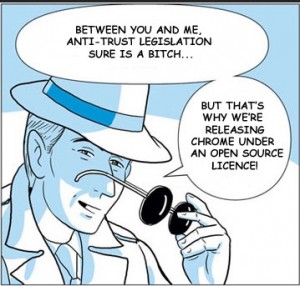
The Google case has caused the most furor.  Almunia has said that it should not be a poitical football, but his efforts to come to a peaceful resolution with the company have come to naught.

Search engine favoritsm for consumers who subscribe to many Google products is being challenged as anti-competitive. In the US too people are beginning to realize that there is no free lunch.  Products you use for free from Google, Facebook, Twitter and Skype also subject your personal data to wide dissemination.

Google


Looking Forward to the End of Sanctions in Iran

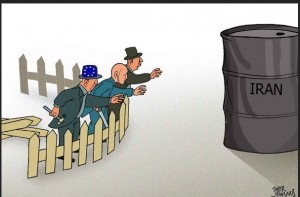
The prospects of sanctions against Iran ending and the opening up of that market are enticing to entrepreneurs and business people the world over.  Familiar faces are returning to the country.  Peugeot, which once had 20% of the car market, is coming back.

Sanctions have depressed the GDP by 25% in the last three years. Iran has $1.8 billion in purchasing power and is by that measure 18 on the world list.  The population is well-educated.  Its oil and gas reserves are huge.

The Teheran stock exchange is seond biggest in the Middle East.  Turkey’s stock exchange is 50% owned by foreigners; Iran’s 0.1%.

Among attractive investments for foreigners are manufacturing and retail.  The country has a need also for bankers.

Iran’s oil reserves are the world’s largest and yet it has only 1% of the world market.

At first, entreprise in Iran will be cramped by their limited capacity to handle foreign capital.  Privitization and economic reforms have to happen.  Many important areas of the economy are controlled by the Revoutionary Guard, part army and part intelligency agency.  Its presence has been expanded in business over the past several years.

End of Iran Sanctions?


Women from Warriors to Politicians in the US

Kristina Wong writes:  A record number of female veterans are running for Congress this year, as both parties make a play for the women’s vote.

Only five female military veterans have ever served in Congress, including Reps. Tammy Duckworth (D-Ill.), a lieutenant colonel in the Army National Guard, and Tulsi Gabbard (D-Hawaii), an Army National Guard captain.Both are expected to win reelection, and 11 other female military veterans are vying to join them.  They include five Republicans, four Democrats, and one each from the Libertarian and Independent Green Party.

Veterans help the Republicans push back against what Democrats say is a GOP “war against women.”  In 2012, ten female veterans received a major party nomination — eight Democrats and two Republicans. Two Democrats — Duckworth and Gabbard — won. This year, Republicans alone have a chance of matching that number.

Their top two contenders are Joni Ernst, a lieutenant colonel in the Iowa Army National Guard running to succeed retiring Sen. Tom Harkin (D-Iowa); and Martha McSally, a retired Air Force colonel and the first female fighter pilot to fly in combat and command a fighter squadron. She is running against Rep. Ron Barber (D) in Arizona.

Republicans say while they put a big focus on recruiting women candidates, they did not purposely recruit female veterans.  They do make good candidates.  They approach campaigning in a very disciplined way, they take the process very seriously, and are some of the hardest workers as far as campaigners.

If elected, Ernst and McSally would enter Congress as it assumes oversight over the administration’s war strategy against the Islamic State in Iraq and Syria.  Ernst, who ran convoys in the Iraq War in 2003 and currently commands the largest battalion in the Iowa Army National Guard, supports tougher actions against ISIS, including increased airstrikes and, if necessary, the use of U.S. special operations forces on the ground.

McSally, who flew A-10 fighter jets in the Afghan War, also supports putting a “limited” numbers of advisers on the ground to increase the effectiveness of airstrikes.

Next year, each military service will have to present plans on how to integrate women into every military job available — including special operations, or else explain why they cannot serve in a particular capacity.

Ernst has spoken out about being sexually harassed in the military. Veterans are apparently less afraid to buck their parties on votes. For example, he said, Duckworth and Gabbard both recently cast votes in September against the president’s proposal to arm and train Syrian rebels.

A roster of the 11 female veteran candidates include several women who have broken glass ceilings in the military.  For example, Libertarian Donna Dunn, a former Marine, who is running for a House Indiana seat, was the first woman to serve as the Sergeant of the Guard at Camp Pendleton.

And Republican Wendy Rogers, a retired Air Force Lieutenant Colonel running for an Arizona House seat, was one of the Air Force’s first 100 female pilots.


Waiting for the Keystone Pipeline

Peter Moskovitz writes;  As many people here see it, the keys to unlocking Montana’s full economic potential are just 40 miles beyond the state’s eastern border, out of the reach of even Montana’s most powerful politicians.

There, in a dirt field in Gascoyne, North Dakota, sit hundreds of segments of 36-inch-wide pipe, each painted pale green to prevent rust and stamped with the letters “KXL.’’

For many Montanans, the pipes represent a slap in the face from the federal government, which for six years has labored over whether to allow Canadian pipeline giant TransCanada to build the Keystone XL.  The pipeline would bring up to 850,000 barrels of oil from Alberta’s tar sands through Montana, South Dakota and Nebraska, to an existing pipeline system stretching from Kansas to oil refineries on the Gulf Coast.

The Keystone has run into opposition from dozens of environmental groups across the U.S., with activists arguing that the pipeline is an environmental catastrophe waiting to happen. Those concerns have shaken up politics in South Dakota and Nebraska. But in Montana, a state keenly aware of the benefits of a booming energy industry, the fight over the pipeline is virtually nonexistent. A few local environmental groups have protested it, but in political races, at school board meetings and in local bars, the debate seems to be settled.

Baker, a city a few miles from the North Dakota border, home to a little less than 2,000 residents, makes clear why: It’s bustling thanks to the ancillary effects of the oil industry, mainly drilling in eastern Montana and western North Dakota. Hotels are full, real estate prices are high, and the population is slowly growing. Two interstate pipelines already pass through the town. For many here, the idea that another pipeline would cause controversy is confounding.

Many think Montana’s support for the pipeline has to do with the state’s already robust energy industry.  Energy infrastructure can be seen even through the most desolate sections of the state. Mile-long freight trains carrying tons of coal from Montana’s Powder River Basin crawl from east to west. Oil rigs in the hills of eastern Montana tap into the same Bakken formation that made North Dakota an American energy success story.Keystone Pipeline


All in the Family

Family firms are flourishing around the world.  37% of firms with over 1 billion in assets are leading the ermerging markets.

In the US, family  firms are treated favorably by legislation   Families can keep their money and reinvest it in the business with favorable consequences.  Ford weathered the economic downtrun without borrowing money from the govenrment.  Almost 40 famiily members are connected to Ford.

Walmart, Volkswagen, Glencore, and Samsung are still controlled by families.

Special classes of shares, allowing family members to run the company, liike Ana Botin and Abigail Johnson,and maybe even genetics come into play.

Family firms are less likely to lad up on debt they historicaly have had better labor relaitons, and they tend to have a superior corporate culture.

Warren Buffet likes to buy family firms. Helzberg Diamonds has been discussed on this site.  Buffett plans for succession in his firm include his son.

Family Businesses

MicroLoans from Local Chambers of Commerce?

A division of the Indianapolis Chamber is applying to become a U.S. Small Business Administration-affiliated microlender, a move aimed at boosting its available capital and expanding its territory in a wide-open frontier of finance.

The 124-year-old chamber already offers microloans through its Business Ownership Initiative, putting it in rare company among its peers across the country and giving it a leading position as a one-stop shop for small businesses. But that’s not enough. BOI is looking to beef up its role as a microlender as demand for these mostly low-five-figure loans continues to grow.

The BOI Microloan Program has a roughly $2 million fund to make these loans, but nearly half of that already has been deployed. And because of its diverse history, much of the program’s funds are restricted to Marion County, even specific neighborhoods within the county.

Becoming an SBA intermediary would pave the way for BOI to receive an initial infusion of about $750,000 from the SBA and would allow the program to expand to eight surrounding counties. The program over time could receive as much as $5 million from the SBA—money that BOI would have to repay.

Microloans are loans of less than $50,000 that some businesses struggle to obtain from traditional financial institutions. Such low amounts often aren’t worth the bank’s or credit union’s while, and sometimes collateral or credit scores pose a problem for small-business owners.

BOI was an independent microlender before it merged into the chamber in 2012. It started out with about $150,000 in capital, officials said, but got grants from the city of Indianapolis and JP Morgan Chase’s charitable arm to grow the fund.

Ian Scott of the Association of Chambers of Commerce Executives said several chambers across the country are involved in connecting small businesses with financing, but Indy Chamber’s latest venture puts it in rare company.

“This is an innovative program that is certainly on the cutting edge of what chambers are doing to support small- and medium-sized businesses,” Scott said.


As an intermediary, BOI would not be able to use SBA money for operations, officials said, and all interest income on SBA funds is returned to the SBA. Julie Grice, who oversees BOI as the chamber’s vice president of entrepreneur services, said the $1.2 million annual operating budget is supported by grants, service fees and interest income from its other microloan funds.

The loans made by BOI so far have been as small as a few thousand dollars and have allowed businesses like Kountry Kitchen at 19th Street and College Avenue to make unexpected repairs.

The smaller the loan, the more personal the collateral, Grice said. One loan has been secured by three guitars, she said. Another involved a lawnmower.

The region has a few other non-SBA microlenders, including Indianapolis-based Lynx Capital Corp., which focuses on minority businesses, and Grameen America, a Bangladesh-based lender that opened an Indianapolis office in 2012. The Boone County Economic Development Corp. and the town of Zionsville also have microlending initiatives.

Flagship is the Big Kahuna with respect to SBA microloans in the state, but that might change if BOI joins the fray. Adam Hoeksema, Flagship’s loan program manager, said he doesn’t see BOI’s entry as a bad thing, and the two organizations already send referrals to each other.

Microloans

To Frack or Not to Frack?

John Hickenlopper, governor of Colorado, has an even-handed and clear approach to fracking.  He supports the technology associated with hydraulic fracturing used to extract oil and natural gas.

Hickenlooper governs an energy rich state. He is up for re-election in the US this Tuesday and in a tight race.  He bravely and intelligently argues that fracking can be safe if it is done right.   He takes seriously complaints about unsafe measures.

Colorado has mandated disclosure of fracking fluid ingredients and additional groundwater testing, while designing stricter air quality regulations.  Before the regulations are passed, the govenror gets a buy-in from industry and environmentalists.

The governor sought out measures to provide an altnernative to ballot measures that might have crippled drilling.  The state has a chance to reach a compromise on local control of driling.

Hickenlooper has been a leader on a very controversial subject.

To Frack or Not to Frack?