Piketty on the Campaign Trail in the US

Mark Bloomfield writes:  Election 2014 is upon us; all eyes are on targeted races around the country and the balance of power in Washington. One young French economist may shape outcomes on Nov. 4 and beyond more than any other candidate: Thomas Piketty. Since earlier this year, Piketty has made tremendous waves as a critic of free markets and an advocate of a global wealth tax in his bestselling academic treatise, Capital in the 21st Century. He has been published in over 20 countries, while his influence has been seen in governments from the Netherlands to Columbia. I even found the bestseller on bookshelves in South Africa during my recent trip there.

Here in the U.S., he is providing the intellectual ammunition for President Obama and allies who call income inequality “the defining challenge of our time.”

Of course, Piketty is not truly a candidate for office, but the buzz surrounding his repetitious messaging of “income inequality” is weighing on the psyche of voters. Consider a CNNMoney survey conducted earlier this summer. Nearly six in 10 respondents concluded that the American Dream is out of reach.
So does this mean that voters will only support candidates that pledge to close the divide by hiking wages at the bottom or punishing super salaries at the top with pay caps, the Buffett Rule or even Piketty’s favorite global wealth tax?

Not so fast. Another recent survey by the Global Strategy Group found by almost the same percentages that Americans prefer a candidate who focuses on economic growth to one who emphasizes economic fairness.

The 2014 election will be the first test of Piketty and the inequality issue. The second will be in the 114th Congress, where the stage is already being set for a major discussion on tax reform. Paul Ryan (R-Wis.), the heir apparent to take the reins from retiring House Committee on Ways and Means Chairman Dave Camp (R-Mich.), forecasts that tax reform could happen within one to three years.

On the campaign stump, several Republican candidates are departing from traditional red meat about “tax cuts” and talking more about real tax reform, such as California Rep. John Campbell, the No. 4 Republican on the House Budget Committee: “We have to stop being one-trick ponies. We can’t say tax cuts will cure this, cure that and cure the other thing, because it’s just not credible. The purpose of tax reform is not to cut revenue to the government or to cut taxes — it’s to grow the economy.”
Piketty


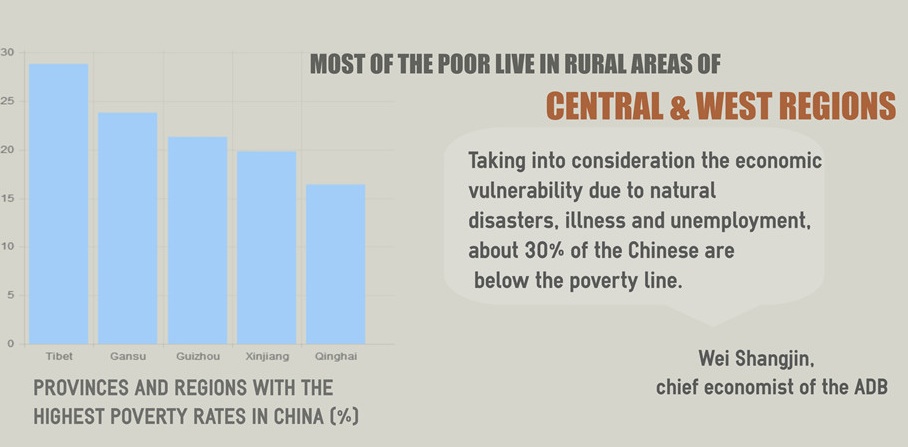
China Takes Aim at Rural Poverty

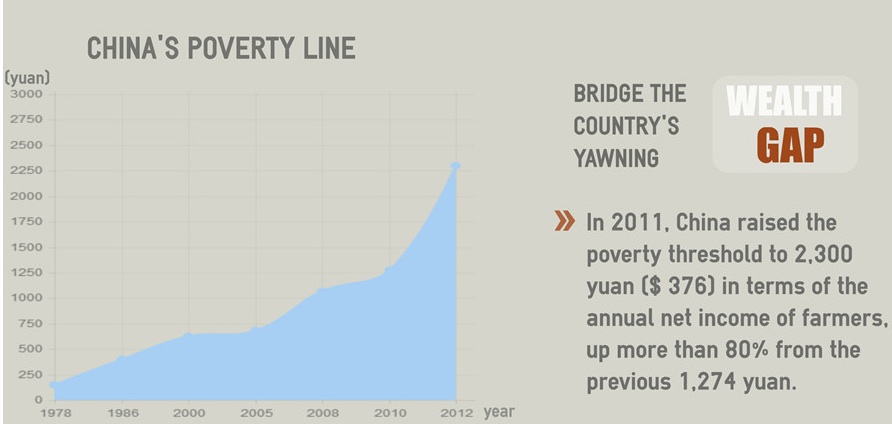
On poverty alleviation day, as many as 310 central government organs were arranged with targeted poverty relief work for 592 key counties that receive relief and preferential policies,” Zheng Wenkai, deputy director of the Poverty Alleviation and Development office, said.  Wenkal has said that China helped nearly 40 million poor rural residents overcome poverty last year.

The government will use the upcoming “Poverty-Relief Day” to provide funds, labor and other help to industries such as energy and e-commerce, both big factors in helping develop poor areas, in poverty-stricken counties.

China vows to reduce the number of rural people in poverty by 10 million this year, on the eve of China Poverty Alleviation Day.

rural poor 1Rural Poor 2

China and the Rule of Law

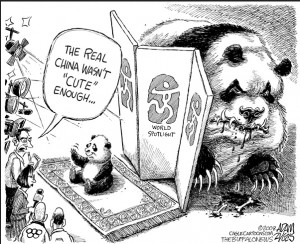
Top Party officials began a landmark meeting on Monday focusing on the rule of law. They will deliberate on a draft decision covering “major issues concerning comprehensively advancing the rule of law”, sources close to the meeting said.

The Fourth Plenary Session of the 18th Communist Party of China Central Committee is meeting in Beijing from Monday to Thursday.

The decisions reached are expected to set the tone for promotion of the rule of law by the Party, and it is the first time a plenary session of the CPC Central Committee has taken the rule of law as its central theme.

The sources said the rule of law – which China wrote into its Constitution in the 1990s – will play a more prominent role in the overall work of the Party and the government.

It is expected to give provincial courts supervisory powers over their county-level peers on funding and appointments, removing the lower courts from the influence of local authorities.

Xu Xin, a legal scholar in Beijing said the plenary session may also introduce measures to curb corruption by requiring newly appointed officials to publicly disclose their personal assets and by setting up an anti-corruption agency.

Lian He Zao Bao, a newspaper based in Singapore, said in a report that setting up an anti-graft system and addressing judicial reform are likely to be key topics at the meeting.

David Fouquet, director of the European Institute for Asian Studies, said China has introduced and adopted legislation in recent years covering competition, labor and employment laws to bring them more in line with international standards.

“We are hopeful and optimistic that the Chinese leadership will achieve all the ambitious objectives raised at recent meetings and in documents,” he said.

“That should go a long way toward making China – its economy, society and political system – fairer for its population.”

The Law in China


Catholic Recommendations for Capitalism

Erasmus of the Economist writes: Advocates of capitalism will certainly retort that the system has no need of redemption. The core meaning of the word redemption is something like “to secure the freedom, or the very existence, of someone or something at a price….” And as a supremely efficient instrument for resource allocation and price discovery, so the argument would go, capitalism should have no need of any external agency to purchase its right to exist. It just needs to be allowed to do its job. At the other extreme, critics on the left will retort that capitalism is so wicked that it cannot be redeemed by anything, least of all the doctrines of Catholicism.

Yet the paper by Clifford Longley is well worth reading, if only because it presents in readable language ideas which normally lie buried deep inside closely argued papal encyclicals and other cerebral writings. Mr Longley explains some of the key concepts in an elaborate body of thought which began to emerge in 1891 with a document called Rerum Novarum which accepted with qualifications the ideas of a free market in capital and labour. They include not just “solidarity”—the idea that all members of society must look out for one another’s welfare—but “subsidiarity” or the widely devolved distribution of power. Catholic Social Teaching (CST) seeks to chart a middle way between unrestrained capitalism and dirigiste socialism by stressing the vital role of civil society: all the institutions, from the family to voluntary associations and churches, that stand between the individual and the state.   Just Money

Catholic Comments on Capitalism


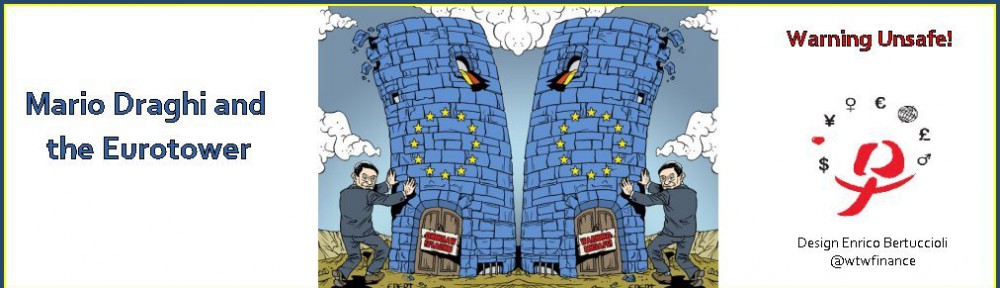
Is Russia Sending Shivers to the EU?

Marc Champion writes:  If the countries of the EU can get together and plan, there is no reasons for the Russian stoppage of natural gas to effect them.

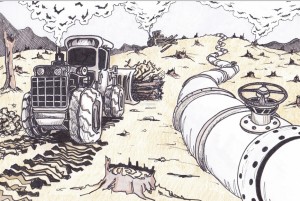
The Nord Stream pipeline project completed in 2012 leaves eight countries vulnerable instead of 18.  In addition, the 2009 shock prompted the EU to make a few changes of its own. A new 67-mile pipeline connecting the Slovakian and Hungarian gas grids should be fully operational by Jan. 1.

The Balkans, Hungary and Poland would come under real stress, however. (Finland and the Baltic states might also be severely affected, but only if Russia stopped supplies through pipelines outside Ukraine in a direct attack on those countries.) So long as EU members respond by spreading the pain and helping each other out, lost supplies would average 10 percent to 60 percent, from Greece to Poland, according to the EU stress tests.

On the other hand, if countries stop supplying others with gas as soon as they run out of surplus themselves, some will be hit much harder. Bosnia and Macedonia would lose 100 percent of their gas supplies, while Bulgaria and Serbia would lose 60 percent to 80 percent. So the severity of the impact would depend on just how willing countries were to work with and sacrifice for each other, making this a big test of EU “solidarity.” Nothing would please Putin more than to see the EU fail that test and so disillusion new members and applicants from the ex-communist bloc in Central Europe — including his hosts last week in Serbia.

 Pipelines

Bad Ideas Linger on in Economic Policy

Barry Ritholtz writes about the consequences of holding on to bad ideas.  There are none for the people who came up with them in the first place.  Particularly think tanks just go blissfully forward.

Here are some ideas that have failed without sufficient notice:  Profit maximizing economic actors, austerity as a virtuous policy during recessions, the efficient-market hypothesis, tax cuts pay for themselves, self-regulating markets.

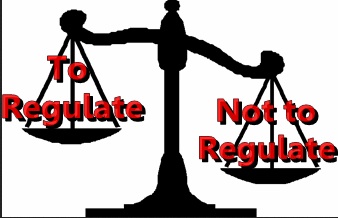
During the financial crisis, including many attempts to negate the role radical deregulation of financial markets had as an underlying cause of the crisis. American Enterprise Institute’s Peter Wallison and Edward Pinto were the leading proponents of the anything-but-deregulation causation. First, they blamed the Community Reinvestment Act — the anti-redlining legislation that had nothing to do with subprime lending. Next, it was the Department of Housing and Urban Development and the Federal Housing Administration. When that didn’t hold up they blamed Fannie Mae and Freddie Mac. When most of the subprime loans that went bust were shown to be from private lenders that didn’t follow Fannie or Freddie guidelines, they quietly changed the subject.
Regulation

We Need Jocks and Nerds to Thrive

When change occurs, we often tilt violently in one direction.  Gloria Steinem who spoke for women for so long, did not marry until late in life and never raised children.  WHat did she have to say to mohters and wives?   Her advice was often not helpfull.

With the advent of the age of high tech, nerds who had often been teased and bullied in high school became the go to peoplle.  Noah Smith writes about why the jocks they supposedly replaced as still nevessary to the conduct on business and in fact life in general.  Why We Need Jocks

New Appreciation of Jocks

Coal Corrupts, Extractive Industries Corrupt Absolutely

Mariana Lu writes about coal and corruption:  Juan Pablo Perez Alfonso, one of the founders of OPEC, once compared the world’s fossil-fuel use to “drowning in the devil’s excrement.” There is certainly plenty of evidence supporting his prediction that the fossil-fuel industry, with its powerful corrupting influence, will “bring us ruin.” Indeed, coal-related corruption stories are breaking worldwide, shining a light on the murky space between “illegal” and “improper” where the extractive industries work.

Last year, in the Australian state of New South Wales, the Independent Commission Against Corruption investigated former Labor ministers Eddie Obeid and Ian Macdonald for conspiring to defraud the state over the issuance of multi-million-dollar licenses for coal exploration and mining. Today, the ICAC is conducting an even more far-reaching and complex investigation into a number of figures from the Australian Labor Party and the Liberal/Nationals Coalition, including for favoring the interests of Australian Water Holdings, a major infrastructure company.

Last month, India’s Supreme Court found that all 218 coal-mining licenses allocated by the government in 1993-2009 had been granted in an “illegal and arbitrary” manner.  Indonesia is set to revoke the contracts of 17 coal producers that failed to pay government royalties. And, since the beginning of this year, the country’s corruption commission has been focusing on the extractive industry, including the state officials who facilitate mining companies’ illegal activities.

Likewise, China’s ongoing anti-corruption drive – the largest in its modern history – has begun to focus on the coal industry. Last month, two Communist Party officials from the coal-rich Shanxi province were charged with corruption and abuse of power, signaling that Shanxi may well move to the forefront of President Xi Jinping’s quest to eliminate entrenched corruption in the Party’s ranks.

Where the coal industry operates, bribery and venality are likely to be rampant. But this does not have to be the case. In order to reduce – if not eliminate – such corruption, several fundamental weaknesses in the regulation of how mining contracts are allocated must be addressed.

For starters, instead of conducting fair and transparent open-tender processes, governments often empower their ministers to decide which companies are allocated lucrative fossil-fuel exploration and extraction contracts, and conflicts of interest are not disclosed. Indeed, there is an unguarded revolving door between politics and the extractive industry, and political donations are allowed. Finally, though states are responsible for regulation, they also receive royalties and levies for the sale of their resources, which tends to weaken regulators’ effectiveness.

The key to addressing all of these problems is, of course, greater transparency. Resource-rich countries, such as Equatorial Guinea and Sudan, tend to perform worse economically and experience more violent conflict than their resource-poor counterparts – a phenomenon famously dubbed the “resource curse.”

Corruption plays a major role in this curse. Natural-resource wealth insulates leaders from accountability, while offering them the prospect of significant personal financial gain at the expense of the rest of the country.

Economies that depend on natural-resource exports are vulnerable to sharp price fluctuations, making government revenues and foreign-exchange supplies unreliable. For private investors, this makes involvement in these countries prohibitively risky.

If a country like Australia, with its robust civil society and strong democracy, is struggling with widespread graft among high-level government officials, no country is safe from the corrupting influence of the extractive industries. Worse, as is so often the case, those who suffer the most from the extractive industry’s opaque and unfair activities – not to mention the selfish actions of corrupt officials – are those who can least afford it.

Coal Corruption

Fees Don’t Create Real Wealth

Rentier skims do not contribute to real wealth,  Charles Hughes Smith suggests.

The classic example is a fee collected to pass from one fiefdom’s border to the next: no value is provided to the person paying the border fee; it is a rentier skim that transfers wealth from serfs to the fiefdom’s landowning nobility.

In the modern economy, rentier skims take a variety of forms. The government is adept at levying rentier skims. Harsh penalty fees piled on top of minor traffic violations are one example; another is extra fees to “expedite” services government is supposed to provide in a timely manner.

A California architect recently recounted the new fee structure in a Northern California municipality: the fee to have the city planning department review your building permit application leaped to $6,000. Since the department warned applicants it will take at least six months for the agency to process the application, they kindly offer an alternative: for a mere $4,000 more (an “expedited fee”), the applicant can get his application reviewed in a mere four months rather than six months.

Planned obsolescence provides many other examples of rentier skims. Microsoft’s operating systems and hardware makers both operate a form of rentier skim, in that each new OS and device offers marginal benefits (if any) in terms of productivity. The rare printer that doesn’t break down in a few years is obsoleted as software drivers are no longer available on the new OS.

Cartels and quasi-monopolies offer a wealth (ahem) of rentier skims. Monopolies can raise prices and degrade services at will. Cartels maintain price controls while denying they do any such thing.

Finance offers the richest opportunities for rentier skim. Load up college students with tens of thousands of dollars in high-interest student loans for marginal educations that could be provided at a fraction of the cost.

The net result of an economy of endless rentier skims is stagnation and rising wealth inequality. Money that could be saved and invested in productive enterprises and infrastructure is skimmed off.

Simply put, the rich get richer and the poor get poorer. This is the teleology of every rentier economy: the built-in consequence of rentier skims is increasing wealth inequality and economic stagnation.

Rentier Schemes

ECOLEC report on Money Laundering and Crime

After the Third EC Directive to combat money laundering and terrorist financing came into force, the European Commission awarded Utrecht University the assignment to research the economic and legal effectiveness of the anti-money laundering and combating terrorist financing policy in the European Union (hereinafter ‘ECOLEF’). This research is performed within the European Commission, DG Home Affairs, on the “Prevention of and Fight against Crime” (ISEC) Programme. The ECOLEF team researches the policy of the 27 Member States of the European Union in relation to the mentioned topic, The ECOLEF project is headed by Prof. Dr. Brigitte Unger. Other members of the team are Prof. Dr. Henk Addink, Prof. Dr. Francois Kristen, Joras Ferwerda MSc., Ioana Deleanu MSc., Melissa van den Broek LLM, and Daan van der Linde MSc from Utrecht University, Ass. Prof. John Walker from the University of Wollongong, Australia, and Prof. Dr. Reinhard Pirker from Wirtschaftsuniversität Wien.         Final ECOLEF report (digital version)_25.06.2013

Money Laundering and CrimeCorruption Reports