New Jersey Couple Launder Pizza Cash

Andreas Frank reports:  The U.S. Attorney’s Office claims that owners of an iconic pizza shop were cooking more than just slices: they were also cooking the books.

Charles and Mary Bangle appeared in a federal court in Camden, New Jersey, to face charges of conspiracy to evade income taxes, income tax evasion, and making false statements to the IRS. Charles Bangle was also charged with multiple counts of “structuring” in order to avoid reporting requirements.

The Bangles are the owners of four Manco & Manco pizza shops (the shops were formerly called Mack & Manco but the name was changed in 2011 after Mary and her husband bought the business from her parents).

According to the indictment, Manco & Manco raked in nearly $4.5 million per year in cash sales alone. And since the business was geared towards those vacationing at the shore, most of the cash came in at peak tourist season. The feds allege that the Bangles used a series of maneuvers in order to avoid reporting nearly $1 million. As a result, the Bangles allegedly failed to pay $336,273 in federal income tax.

The indictment alleges that the Bangles took advantage of the fact that the pizza shops were cash based and skimmed money from the business. That money was deposit into the couple’s personal account at TD Bank. To avoid detection, the feds allege that the couple purposefully deposited less than $10,000 with each visit to the bank. By law, banks are required to report cash deposits which total more than $10,000 in any single day. The reporting requirement is meant to help the government track large transactions and prevent money laundering. One of the ways to get around the law is to break down large transactions into smaller ones, sometimes called structuring. While making cash deposits of less than $10,000 is not illegal under 18 U.S.C. § 5324(a), it is a violation if you structure transactions to avoid reporting requirements.

That’s exactly what the feds say the Bangles did. The indictment outlines bundles of transactions which the Bangles allegedly structured to avoid detection, most of which occurred in 2010 and 2011.

US Indictment

Pizza Converted to Cash

Is India the New China?

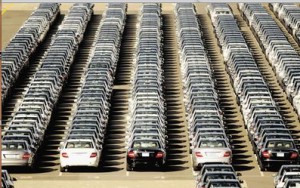
Mercedes to assemble in India:  German luxury car maker Mercedes Benz on Thursday announced commencement of assembly of the S-Class sedan in India and has slashed the car’s price by `18 lakh to enhance its position in the country.
The locally produced top-end model S 500 will be priced at `1.39 crore (ex-showroom, Delhi) and will be rolled out from the manufacturing facility in Chakan, Pune, Mercedes-Benz India said in a statement, adding that this strategic move will help to cater to the increasing demand.

UK-based construction gear maker JCB will relocate its compaction equipment production unit to India, closing down its Gatersleben site in Germany.
The move is aimed at strengthening the company’s foothold in emerging markets.
“JCB has decided that, by the end of June 2014, production of all VM Compactors and two larger VM Tandem Rollers will relocate to JCB’s factory in Pune, India,” the company said in a statement.
JC Bamford Excavators (JCB) CEO Graeme Macdonald said: “The decision to relocate production of compaction equipment to factories in the UK and India is right for our business. Demand for compaction equipment has shifted tow-ards emerging markets and manufacturing smaller models in the UK and larger equipment in India is in our customers’ best interests, especially in light of our recent investments in new compaction products.”
He added that this will improve the competitiveness of JCB in the compaction sector and also create a far more sustainable position on which the company can build as it grows the business in the future.

Mercedes

For Women: More Powerful, Less Likeable?

Jack Zenger and Joseph Folkman writing in the Harvard Business Review:

A businesswoman has a conversation with her five-year-old daughter. “What if I told you that as Mommy does better at work, fewer people like me. But when Daddy does better at work, more people like him. What would you say?” She expected her child to say, “Well thatʼs really unfair, Mom.” But what she said instead was, “Well then, Mommy, I would be less successful at work so more people will like me.”

In a recent interview,  Facebook COO Sheryl Sandberg recounted this story to underscore the importance of a body of research that she cites in her book Lean In indicating “that success and likability are positively correlated for men and negatively correlated for women.”

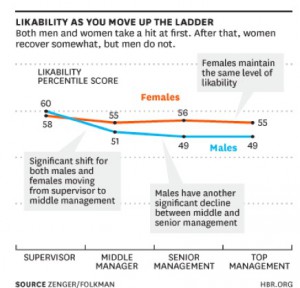
We share Sandbergʼs disappointment in this young girlʼs response. We too would like to see women lean in further. And we share her view that barriers, both external and self-imposed, stand in the way. But our work with leadership development and 360-degree assessments does not confirm that a likability penalty as women rise to the top is one of those barriers. While, certainly, some individual women may find themselves disliked as they move up the organization, our aggregate data show the opposite is more common — that male leaders are perceived more negatively as they rise, whereas women generally maintain their popularity throughout their entire careers.

Hereʼs how we came to this conclusion. Taking items from our 360-degree feedback instrument such as “Do you stay in touch with issues and concerns of individuals in the work group?” and “How well do you balance getting results with a concern for othersʼ needs?” we created a likability index. (For a detailed explanation of how it was created and to take the quiz yourself, go to our website. (http://zengerfolkman.force.com/likabilityquiz) ) We then analyzed a group of 9,500 male and 5,000 female leaders who participated in our programs in the past three years. Using our scale, we compared their level in the organization with how well liked they were by their bosses, peers, and direct reports. On average, 10 people assessed each leader.

Likeability

 Likability and success actually go together remarkably well for women. Parents can accurately and unhesitatingly tell their daughters, “Aspire for positions of power and influence, and when you get promoted, it is totally your choice whether you act in a way that will have people continue to like you or not.”

Oil and Money in Indian Elections

Sanjay Bohra reports:  Former BJP leader Jaswant Singh, who rebelled against the party to contest Lok Sabha election from Barmer, has claimed that Rajasthan chief minister Vasundhara Raje was instrumental in the party’s decision to deny him the ticket.  Ms Raje, according to many people in Rajasthan, did it so out of personal animosity between the two leaders. However, others think the decision was part of big change in the BJP’s social engineering under its prime ministerial candidate Narendra Modi to shift banking on traditional Rajput, Bania, Brahmin votebanks to OBCs. Thus, Ms Raje chose Col. Sonaram as he belongs to the most influential political OBC community in Rajasthan.

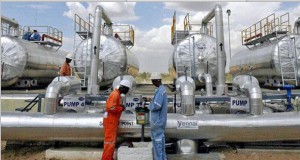
The battle between Mr Jaswant Singh and Col. Sonaram or Ms Raje is not about winning the Lok Sabha election. The once sleepy town of Barmer is now buzzing with economic activities thanks to oil and gas discovery a decade ago. Big bucks followed as demand for real estate boomed and the discovery was followed by an announcement that a refinery would be set up in the area.
Just to put things in perspective, the Rajasthan government receives approximately `5,000 crores per annum in sales tax and royalty from the sale of crude oil.

Politicians have purchased land in anticipation of a refinery being built. Land acquisition was a big issue during the Assembly elections, in which Col. Sonaram was a key player as he had opposed the Rajasthan government’s move to shift refinery site from Lilala to Pachpadra. The land in Lilala was to be acquired from farmers, who demanded `1 crore per bigha for land that had no takers a few years ago and was available dirt cheap. If refinery shifts to Pachpadra, it means those who bought hundreds of acres in Lilala, in anticipation of a refinery being built there, now stand to lose big bucks. Besides, who wouldn’t like to control the flow of money through various contracts?

Barmer, India

Did GM Give a Dirty Job to a Woman?

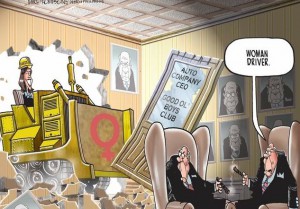
As a new CEO with just a few weeks behind her, Mary Barra might offer the fresh leadership needed to solve General Motors’ recall crisis, but since she began her ascendance to the CEO’s office as a twenty year old intern, her lifer status raises red flags about her ability to evoke change in the company she now leads.

Surely Barra is a product of the GM Way.  This presents a potential problem, because, clearly, something at GM has to change.  And if GM has to change, Barra has to change first.

Many leaders view change as something that they do to others, but an important leadership moment occurs when a leader must acknowledge that he or she is part of the problem. And being part of the problem can be as subtle as a sly wink signaling agreement that a secret ought to be made of a serious issue.

It is not easy to accept the possibility that some of our most cherished and entrenched beliefs about how the world works, or about our company’s recipe for success, may be wrong. However, genuine transformation and the ability to continually learn and adapt (and deal with a crisis) only comes when people open themselves up to the possibility that they themselves will need to alter their attitudes, beliefs, and behaviors.

That kind of learning occurs when we can recognize the mental model we are using and challenge its validity, and when we can see the walls of whatever box we happen to be in at the time for what it is, an artificial boundary to our thinking. ”Thinking outside the box” is actually not possible for a human being. You can think inside a different box or a bigger box, but there’s always a box, and its walls represent the limits of the mental model – the “way” – that you use to make sense of a given situation.

It has been suggested that GM’s predicament offers Mary Barra a unique opportunity to evaluate her management team. It is also a unique opportunity to evaluate herself, and especially to examine how she has been, and maybe continues to be, part of whatever aspect of the GM way that spawned the current crisis. If she cannot or does not do that necessary work, there is little chance of her effecting the kind of change needed at GM in order to manage the current crisis and avoid others in the future.

Mary Barra

Pay Parity in Italy?

In the workplace, the equality between men and women still has not been  According to data collected by the European Commission , the pay gap by gender is marked.  Compared to men women work for free 59 days in a year at the same jobs.

Data from Brussels reveals that the gender pay gap and increased from 16.4% in 2012 to 17.3 % in 2012.

In this context Italian data are better than average , but showed a decrease compared to previous years . In our country , in fact, women’s wages were 6.7% lower compared to those of men.while in 2008 the pay gap stood at 4.9% .

As a result, Italy is one of the countries that have shown a reduction in the disparity in pay, but not for the right reasons.  The European Commission has in fact made ​​it clear that Europe has a greater presence of women in the labor market, so the reduction of the pay gap is due in large part to a decline in men’s wages as a result of the economic crisis .

Italy Coming Back


Did Austerity Succeed in Great Britain?

Chancellor George Osborne tells IMF meeting in Washington, resoundingly yes. Critics of Britain’s economic recovery plan have been proved “comprehensively wrong”, George Osborne has said.

The Chancellor conceded “many risks remain” for the UK, including the fall out from the crisis in Ukraine and the sluggish eurozone recovery.  Mr Osborne was in Washington for the spring meetings of the IMF and World Bank, basking in the latest IMF forecasts which predict the UK will be the fastest-growing economy among the major developed nations this year.

Osborne said: “Pessimistic predictions that fiscal consolidation was incompatible with economic recovery have been proved comprehensively wrong by events.

“Cutting deficits and controlling spending has not choked off recovery but has instead laid the foundations for sustainable growth.  Many risks remain, but all this should be cause for cautious optimism. The pessimists said our plan would not deliver economic growth. Now they say economic growth will not deliver higher living standards. They were wrong about the past and they are now wrong about the future. It’s only by continuing to work through our long-term economic plan that we can deliver more economic security and a brighter future for all.  If we can control our public finances, strengthen our financial systems and set free the power of human enterprise and innovation then there is no reason why our best days should not be ahead, for all of us.”

He used the keynote speech to reject the arguments of the IMF’s chief economist, Olivier Blanchard, who warned last year that the UK’s austerity policies were strangling growth, saying such an approach was “precisely the wrong prescription for our economies”.

The Chancellor said that the strengthening economy in Britain is underpinned by well-capitalised banks and a “credible” fiscal policy.

He argued that the UK’s experience has shown that claims that recovery required more fiscal stimulus and higher government borrowing were wrong, and that re-building the public finances goes hand-in-hand with restoring the wider economy.

Mr Osborne pointed to figures showing that job creation is three times faster than in any previous UK recovery – with four new jobs in the private sector for every one lost in the public sector – while the rate of growth in investment spending is outstripping the United States.

“Our economy has grown faster than any other in the G7 over the last year and is now forecast by the IMF to do the same in 2014. This is despite warnings from some that our determined pursuit of our economic plan made that impossible.

“All of this demonstrates that fiscal consolidation and economic recovery go together, and undermines the pessimistic prognosis that only further fiscal stimulus can drive sustainable growth. Indeed, that is precisely the wrong prescription for our economies.

“Instead of more debt or more government spending, we need to get our public finances in order, make structural reforms and compete in the world again.”

The Chancellor also singled out Cabinet colleague Michael Gove for praise for his controversial radical education reforms, insisting that they would help bolster Britain’s economic recovery.

“T here is one area of reform that I believe is more important for our long-term prosperity than all the rest – that can deliver growth rather than stagnation and simultaneously ensure that the gains from growth are shared, and t hat is education.”

He added: ” What unites all of these reforms is a belief that our nation will only make progress if we make use of every child’s talents and liberate every student’s potential. In all these ways we can ensure that the link between growth and prosperity remains unbroken.”

Successful Belt Tightening


Impact of Lobbying

Andreas Frank reports:   The enormous power and destructive influence of financial markets became apparent after the global economic collapse of 2008.

This event revealed a need for bringing the sector under democratic public ownership; failing that, stronger regulations for financial markets at the very least. But political will has been lacking on both counts. The sector enjoys massive financial resources and successfully translates them into political influence.

The EU’s financial industry spends more than €120 million per year and employs over 1,700 lobbyists to work in the EU institutions, according to new research by transparency campaigners.   Financial Lobby Power

Financial Lobby

Employees in Textile Companies in Tuscany Thrive

Prato, a textile city in Northern Italy, is safeguarding the standards  of its textile companies. Protection of workers is often difficult in small companies.  But if the workers band together, using critical mass, they can get services on more favorable terms. Many companies that supply services in the Prato area have joined together to provide less costly goods to the new grouping of workers.  The welfare of the district has thus far been favorably impacted by the new alliances.
Prato, Italy

Asian Women Go to the Library to Get Out of Poverty

Women make up 24 percent of the workforce in South Asia, according to the Wall Street Journal. That represents a huge untapped resource: 336 million women like Chuna could be contributing to their families’ incomes and lifting themselves out of poverty if they had the skills to do so.

Chuna is part of a solution to inequity and poverty that is taking root in some of South Asia’s most remote corners, and it begins with a simple but disruptive idea: going to the library.

For more than 2 million rural villagers across South Asia, libraries called Read Centers have already become a powerful platform for women like Chuna to learn skills, network in her community, and become leaders who change social norms.

At the age of 47, Chuna changed her and her daughters’ lives by learning to read and starting a women’s group. Today, her goal is to convince other women that it’s never too late to learn, earn an income, and change your community.

Women play a vital role in poor households. As UN Secretary-General Ban Ki-moon said recently, “Empowering rural women is crucial for ending hunger and poverty. By denying women rights and opportunities, we deny their children and societies a better future.”

A recent UN study shows that if women were given the same access to productive resources as men, it would reduce the number of hungry people in the world by about 12 to 17 percent. Similarly, USAID stated that women are more likely than men to reinvest in their families’ food security, health, and education.  Despite the obvious benefits, the road to entrepreneurship is extremely difficult for many women. They often lack the education and skills needed, and face gender discrimination. About 493 million women are illiterate worldwide. More than half of them live in South Asia.

These women rarely have the opportunity to learn at a young age. 130 million girls in South Asia will be married as chidlren by 2030, ending their education and resulting in early pregnancies. As adults, these women often must seek permission from their husbands to leave their homes for reasons other than child care or agricultural work.

In South Asia, libraries are seen as legitimate, neutral places for women to visit because they often offer child care and health services that benefit the family. The READ Centers set up by the non-profit READ Global also help women learn income-producing activities, such as sewing, beekeeping, or mushroom farming.

When women learn a trade and start providing income to their families, their husbands often gain trust in the READ Center and give them more freedom. Women can become networked with a community of other women who provide mutual, ongoing support.

Literacy does not necessarily precede economic empowerment. But READ Global has found that these skill sets are mutually reinforcing, and together, they can empower women to change the status quo in their villages.

Just last year, more than 1,700 women like Chuna learned to read through READ Centers in Nepal. Many of them also joined savings cooperatives, often putting away money for the first time in their lives. With 3,339 peers, the women collectively saved $207,382 last year at READ Centers.

And many finally became entrepreneurs: 324 moved from subsistence farming to commercial farming – earning an income from agriculture for the first time. 174 women farmers actually became self-sufficient in their production for the first time, and almost 100 women launched new businesses.

With this new income, the women helped generate almost $140,000 to invest back into the READ Centers and sustain them.

A major challenge in rural development is that efforts often don’t take a holistic approach. Many organizations and government bodies work in a piecemeal fashion: They provide one-off literacy training to women in a community for a few months, for example, and then move on.

For women like Chuna, libraries like READ Centers can play the role of incubators – not just for businesses, but also for long-term social change. By working with local partners, setting up committees to manage the centers, and providing a holistic set of training programs over the course of five years, READ Global ensures that rural villagers create local support networks that can sustain themselves in the future.

After Chuna learned to read, she had the confidence to take other training in vegetable farming, women’s leadership, health, and mobile technology. She then paid it forward by convincing her friends to join a study group with her, helping them learn to read and investing in her own daughters’ education.

“I realized that all uneducated women suffer,” Chuna says, “There are a lot of illiterate women in Nepal. I want to tell them that you’re never too old to learn.”


Read Centers Vital to Liberating Women