Living Below the Line

In the US, if you’re careful, you can get a cup of morning coffee for $1.50.  But for 1.2 billion people in the world, about $1.50 is all they have to spend in a day for … everything, including all their food and beverages.

The Live Below the Line project aims to help people understand extreme poverty more personally. For five days, April 28 to May 2, people are being invited to spend only $1.50 on food and drink per day and use the money saved to make donations to poverty-fighting charities.

“We want it to be a challenge people take on in the workplace, at home, at school, or in their faith community,” says Hugh Evans, the co-founder and chief executive of The Global Poverty Project, which is sponsoring Live Below the Line.

The annual event has been held since since 2010 and has already involved 50,000 participants in more than 70 countries, raising $10 million for charities around the world. Charitable partners in the United States include the Global One Foundation, Kiva, Heifer International, Opportunity International, The Hunger Project, and the World Food Program USA.

Equally important to fund-raising is the goal of getting Americans and others in wealthy countries to think and talk about extreme poverty – and how to end it.

Eliminating extreme poverty for 1.2 billion people in the next 16 years might seem like a daunting task. But Evans points to the remarkable progress that has been made in recent years: Just since he was born, extreme poverty was halved from 52 percent in 1981 to 25 percent in 2005 and, most recently, 23 percent.

“I really believe that every generation is called upon to leave a great mark on this planet,” he says. In the late 20th century Nelson Mandela endured decades in prison on his way to ending apartheid in South Africa. For 27 consecutive years in the early 19th century, British politician William Wilberforce introduced a bill in Parliament to end the slave trade: It was rejected the first 26 times.

“No one ever said that the job [of eliminating extreme poverty] was going to be easy,” Evans says. “If it were easy, we’d have already seen an end.”

While Live Below the Line might seem to be a five-day fast, Evans is sometimes amused at how people find clever ways to feed themselves.  The charities associated with Live Below the Line provide models for how to defeat extreme poverty, Evans says. He sees the way forward as “the six and the three.”

Six changes need to be made: improve and expand food security, education, health care, water and sanitation, micro-finance and other job-creating programs, and empower women. The three ways to achieve these goals are through humanitarian aid, trade, and good governance within nations.

“If you have these six and three, I believe you can make a big impact on extreme poverty,” he says.

A Cup of Coffee Equals

Revising the US Tax System to Help Small Businesses

Daniel Marron comments:

America’s tax system is needlessly complex, economically harmful, and often unfair. Despite recent revenue gains, it likely will not raise enough money to pay the government’s future bills. The time is thus ripe for wholesale tax reform.

1. Tax compliance places a large burden on small businesses, both in the aggregate and relative to large businesses.

The Internal Revenue Service estimates that businesses with less than $1 million in revenue bear almost two-thirds of business compliance costs. Those costs are much larger, relative to revenues or assets, for small firms than for big ones.

2. Small businesses are more likely to underpay their taxes.

Because they often deal in cash and engage in transactions that are not reported to the IRS, small businesses can understate their revenues and overstate their expenses and thus underpay their taxes. Some underpayment is inadvertent, reflecting the difficulty of complying with our complex tax code, and some is intentional. High compliance costs disadvantage responsible small businesses, while the greater opportunity to underpay taxes advantages less responsible ones.

3. The current tax code offers small businesses several advantages over larger ones.

Provisions such as Section 179 expensing, cash accounting, graduated corporate tax rates, and special capital gains taxes benefit businesses that are small in terms of investment, income, or assets.

4. Several of those advantages expired at the end of last year and thus are part of the current “tax extenders” debate.

These provisions include expanded eligibility for Section 179 expensing and larger capital gains exclusions for investments in qualifying small businesses. Allowing these provisions to expire and then retroactively resuscitating them is a terrible way to make tax policy. If Congress believes these provisions are beneficial, they should be in place well before the start of the year, so businesses can make investment and funding decisions without needless uncertainty.

5. Many small businesses also benefit from the opportunity to organize as pass-through entities such as S corporations, limited liability companies, partnerships, and sole proprietorships.

These structures all avoid the double taxation that applies to income earned by C corporations. Some large businesses adopt these forms as well, and account for a substantial fraction of pass-through economic activity. Policymakers should take care not to assume that all pass-throughs are small businesses.

6. Tax reform could recalibrate the tradeoff between structuring as a pass-through or as a C corporation.

Many policymakers and analysts have proposed revenue-neutral business reforms that would lower the corporate tax rate while reducing tax breaks. Such reforms would likely favor C corporations over pass-throughs, since all companies could lose tax benefits while only C corporations would benefit from lower corporate tax rates.

7. Tax reform could shift the relative tax burdens on small and large businesses.

Some tax reforms would reduce or eliminate tax benefits aimed at small businesses, such as graduated corporate rates. Other reforms—e.g., lengthening depreciation and amortization schedules for investments or advertising but allowing safe harbors for small amounts—would increase the relative advantage that small businesses enjoy. The net effect of tax reform will thus depend on the details and may vary among businesses of different sizes, industries, and organizational forms. It also depends on the degree to which lawmakers use reform as an opportunity to reduce compliance burdens on small businesses.

Small Businesses and Taxes

Bank of America Fined $773 Million for Credit Card Ad-Ons

Bank of America was ordered by the Consumer Financial Protection Bureau to refund $727 million to consumers who were deceived by the bank’s marketing of credit card payment protection programs and others who were charged for credit monitoring services they never fully authorized. This makes the bank the fifth major credit card issuer to be financially penalized for these types of credit card practices.

The CFPB issued a consent order that showed over 1.4 million consumers were deceived by the marketing of two credit card payment protection programs. These products, called “Credit Protection Plus” and “Credit Protection Deluxe,” allowed customers to request the bank cancel some credit card debt in the event of certain hardships like disability and involuntary unemployment, or certain life events such as retirement or entering college.  The CFPB found that the telemarketing practices used in selling these products were misleading. This took place between 2010 and 2012.

Bank of America must provide approximately $268 million in refunds to the more than 1.4 million customers affected by these deceptive marketing practices.

In addition, Bank of America enrolled consumers in programs to monitor their credit and alert them to potentially fraudulent activity. These programs were known as “Privacy Guard,” “Privacy Source,” and “Privacy Assist.” The bank began charging customers fees and interest without or before they received proper authorization from consumers.

Bank of America must pay $459 million to roughly 1.9 million customer accounts, representing approximately 1.5 million consumers who enrolled in the credit monitoring products and were charged while the bank did not perform all of the promised services.

“We have consistently warned companies about illegal practices related to credit card add-on products,” said CFPB Director Richard Cordray.   “Bank of America both deceived consumers and unfairly billed consumers for services not performed. We will not tolerate such practices and will continue to be vigilant in our pursuit of companies who wrong consumers in this market.”

Federal regulators have been cracking down on deceptive credit card practices and marketing from many of the biggest card issuers in the United States in recent years.

JP Morgan Chase, Discover, Capital One and American Express have also been recently fined for deceptive ad-ons.

Getting Out of the Credit Card Mess

HP Pays for Bribing Polish Police

Our correspondent Andreas Frank calls attention to some of the mess Meg Whitman has to clean up at Hewlett Packard. Polish prosecutors alleged that a local executive with U.S. firm Hewlett-Packard Co. paid bribes worth over $500,000 in exchange for help winning contracts to supply computer equipment to the Polish police headquarters.

Poland’s Interior Minister Bartlomiej Sienkiewicz said HP would make an announcement later on Wednesday acknowledging its Polish unit had been involved in “corrupt activities”. A spokeswoman for HP declined to comment.

Polish officials said dozens of people had been charged as part of an industry-wide investigation of corruption dating from 2007 to 2009, among them representatives of major information technology (IT) companies, government officials and former police officers.

The minister said Poland had cooperated on the investigation with the U.S. Federal Bureau of Investigation (FBI) and the Securities and Exchange Commission (SEC).

The U.S. Foreign Corrupt Practices Act makes it illegal for U.S. companies to pay bribes to officials with foreign governments to win business. Firms found to have violated the act have in the past been ordered to pay multi-million-dollar settlements.

Polish prosecutors said their case centered around a former government official who was initially in charge of IT with the national police headquarters, and later became head of the IT Projects Center, a state agency at the Polish Interior Ministry.

Zbigniew Jaskolski, a spokesman for the Appellate Prosecutors’ office in Warsaw, which handles major cases, said the official gave favorable treatment for firms, including HP, which were bidding for IT contracts with the police headquarters that were worth a total of $39.71 million.

In exchange, the executive in HP’s Poland unit, who is no longer with the company, gave the official a payment of $529,500 as well as computer, audio and video equipment worth $36,400, Jaskolski said.

The Appellate Prosecutors’ office named the former government official as Andrzej M., and the former HP executive as Tomasz Z., without giving their full last names in accordance with the Polish law.

The former HP executive also promised the same official a bribe worth $827,400 in exchange for including in the tender documents provisions which favored bidders designated by the executive, Jaskolski said. Both the former executive and the former official have been charged with offenses which carry prison sentences of between two and 12 years, he said.

Polish Police

College Debt Greater than Credit Card Debt in US

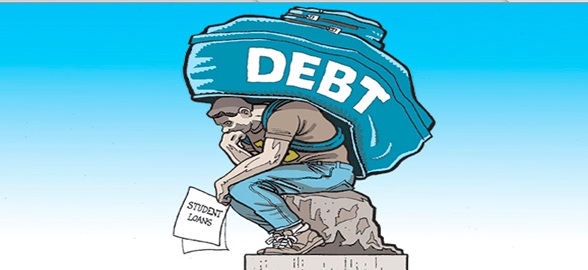
Eizabeth  Warren’s bill to penetrate the dilemma of college debt did not survive debate in the US Senate.  Senate Majority Leader Harry Reid will try to bring it up again.   The bottom line in Warren’s argument and President Obama’s is that the massive student debt held by Americans is slowly economic growth and is fundamentally unfair.

As to the economic issue, there is no question that recent graduates crippled by the burden of student debt, live at their parents’ home instead of renting or buying their own homes, do not buy cars, and keep their expenses to a minimum.  Freed from at least a portion of their debt, they would probably contribute to the nation’s growth by buying more.

It is also true that other groups are given advantages students are not.  Banks in TARP, subsidies to banks represented by Federal Deposit Insurance, and corporate tax advantages are among the obvious skews to that industry.

While real questions about who should go to a four year college and on to professional education, and who should be trained in two year colleges for available work remain, and are often too politically charged in America to even be debated, something is very wrong if college debt exceeds credit card debt in the US.

Student Loan Debt


Microcredit in Northern Italy

The economic crisis in Italy continues even in the prosperous north. In the province of Milan a project to stimulate new route out of poverty for families and individuals in need has been founded.

The town of Busto Garolfo, the Bcc Busto Garolfo and Buguggiate and parish Caritas have signed an agreement to create a new experimental project using microcredit. If the project is successful, it will be copied elsewhere.  Here is a concrete, local solution to economic problems.

The underlying philosophy is that of shared responsibility. Or rather, ” to aid each other ,” says the president of the Bcc Busto Garolfo and Buguggiate , Roberto Scazzosi . “As the local reality and reality as we have done credit cooperative of mutuality and to grow our core principles.  We write in our Charter of Values ​​”the goal of the Cooperative Credit is to produce utility and advantages, to create economic, social and cultural benefit of members and the local community and to build a foundation of trust.  We have taken the initiative.

The experimental project microcredit fits in collaboration initiated three years ago between the same three cities to create employment opportunities through community service.   Microcredit is a response to the needs characterized by uniqueness , simplicity and sustainability. That is, sudden and temporary needs that relate to basic needs – such as paying rent or utility bills, medical expenses – as long as there are conditions for a return of the loan. You want to stimulate the autonomy , responsibility, the ability of those who receive funding , putting him in a position to carry out the project to life.  In other words, let’s talk about education welfare, adds Don Ambrogio Colombo Busto Garolfo pastor and president of Caritas.  The post office network creates a driving force for growth. The concept of aid is a prerequisite for the growth of education and to ensure that those being helped today may one day help others.

Bcc di Busto Garolfo e Buguggiate


In Business, Men Are More Likely to Lie Than Women

Latest business school studies suggest:

Men appliy ethical standard relative to their role (or personal benefit) in transaction.

Wharton School asked if you had to decide on ingredients based on profit versus potential harm, women would not harm.  Men wanted profit.

Women targeted for deception by both men and women.

Women take themselves out of the game because they feel morally compromised.  Women may find a way to stay in the game and be ethical if they understand this dynamic.

 Liar, Liar Pants on Fire

North Dakota 6th Grade Students Beat College Clubs in Market Investments

Is there hope for financial literacy in the US?

Math classes at Oak Grove Lutheran School in Fargo, N.D., made a number of investments. One of the classes beat out investment clubs at universities including Cornell, Columbia and NYU.

Legos, Buy, Buy, Buy.  Broccoli Sell, Sell, Sell.

Of course, as Warren Buffet has noted, calling someone who trades in the market an investor is like calling someone who indulges in serial one night stands a romantic.

Investors?


Capital Requirements Raised for US Banks

New rules do not go into effect until 2018.  The real question is, is this the answer for banks that are too big too fail.  They are still too big.  Some economists think that capital requirements mask the real problem.  Anat Admati’s “The Bankers’ New Clothes” is out in paper, and makes another argument.

Janet Yellin. chairman of the Federal Reserve says,  “The financial crisis showed that some financial companies had grown so large, leveraged and interconnected that their failure could pose a threat to overall financial stability. Today’s action is another step in the Federal Reserve’s efforts to address those risks.”

Capital Requirements

State Senator Arrested for Involvement in Arms Trafficking

Well-known California democrat legislator Leland Yee was indicted along with 28 others for various crimes, including corruptions and conspiring to traffic in firearms, local authorities reported.

The Senator, who until recently was running to become the democrat candidate for the election of California Secretary of State, was accused by a San Francisco Grand Jury last Friday, April 4.

Leland Yee was arrested along with 28 others on Wednesday, March 26 in series of raids carried out by different agencies led by the FBI, accused of accepting bribes and corruption, among other charges, and is linked with the delivery of at least $42,800 dollars in campaign contributions an FBI agent gave to one of his assistants.

Besides these accusations, the democrat Senator has been accused of participating in official acts in exchange for $70,000 which were given to him by undercover FBI agents.

Yee, who is 65 years old, plead not guilty to these accusations and was set free after bail was set at $500,000 dollars; however, if he’s found guilty, he might face a sentence of over 100 years in prison and over half a million dollars in fines.

After the accusations against Senator Yee were revealed, various representatives of the Democratic Party in California have asked him to resign, according to a series of emails sent to Reuters.

Rhys Williams, spokesman of democrat leader Darrel Steinberg wrote that “Senator Steinberg renews his demand for Senator Yee to resign, and to resign immediately.”

The California State Senator, who was suspended with pay since he was arrested, is the third California legislator to be arrested in 2014.

Democrat legislators Ron Calderon and Rod Wright, accused in two different charges of accepting bribes, corruption, money laundering and other charges, have severely damaged the organization of their party in California, which has lost two thirds of the legislative majority in the Senate in a single electoral year.

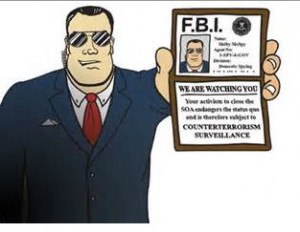
Lee will plea that he was entrapped by the FBI.

FBI Entrapment?