EU Slapping Tax Evasion Specialists Like Luxembourg

The Rocky Road to Globalization:  Tax codes vary widely from country to country.  International businesses are faced with a conundrum: In order to compete they must level their tax burden across the globe.  This has led to the location of all American companies like Caterpillar and Starbucks in Switzerland.  Luxembourg has been an attractive host to international companies. McDonalds and Fiat are now getting the heat.
Luxembourg is appealing a European Union decision that it made illegal fiscal deals with a Fiat Chrysler Automobiles NV unit, vowing to show that the bloc’s antitrust regulator failed to establish any illegal state aid.

It’s the first challenge to reach the EU courts since the European Commission’s precedent-setting decisions in October that the Italian carmaker and Starbucks Corp. benefited from favorable tax deals by Luxembourg and the Netherlands. Each company was ordered to pay as much as 30 million euros ($32.8 million) in back taxes.

The European Commission “used unprecedented criteria” for its decision that a tax ruling for Fiat in Luxembourg violated state aid rules and put “into jeopardy the principle of legal certainty,” the nation’s finance ministry said in an e-mailed statement Friday. “The commission has not established in any way that Fiat received selective advantages.”

The Grand-Duchy’s decision to appeal comes a day after the Brussels-based watchdog opened a probe into whether McDonald’s Corp. unfairly exploited a fiscal deal with Luxembourg to avoid tax on hundreds of millions of euros in profits for more than half a decade. The McDonald’s case is the third to focus on Luxembourg, adding to the Fiat case and an ongoing probe into tax rulings obtained by Amazon.com Inc.

Luxembourg and the fiscal deals that international companies have received over the years there came out into the open last year, when hundreds of documents were leaked showing that more than 340 companies such as PepsiCo Inc., Ikea Group and FedEx Corp. transferred profits to the country through tax arrangements.

“The vast majority of EU member states use tax rulings to provide legal certainty for the taxpayer,” the finance ministry said, adding it “is strongly committed to tax transparency and the fight against harmful tax avoidance.”

Luxembourg

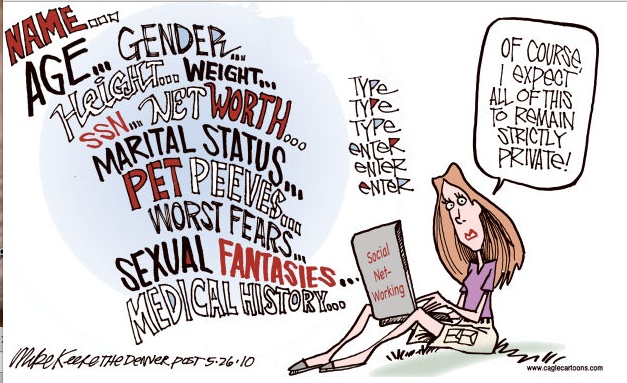
Entreprenuer Alert: Privacy in the Social Media

Europeans are concerned about privacy and particularly young people in the US tend not to be.  Providing security on the internet is a good and growing global business.

Facebook will stop tracking browsers of Facebook pages in Belgium who are not signed into a Facebook account, seeking to comply with a court ruling last month ordering it to do so or face daily fines.

The company’s action means Belgians will have to log into Facebook before they can see Facebook pages, forcing them to create and sign into an account if they want to view the pages or related content.

Previously non-users could view public Facebook pages from sports teams, celebrities, tourist attractions and businesses without needing to log into Facebook. As a result of the changes registered Facebook users in Belgium who attempt to log in from an unrecognised web browser will be forced to comply with some added security steps, the company said.

At issue is Facebook’s use of a so-called “datr” cookie, which it places on users’ browsers when they visit Facebook or click a Facebook “Like” button on other sites, allowing it to track the activities of that browser.

Facebook says the tiny bit of software code only identifies browsers, not individuals, and helps Facebook to distinguish legitimate visits from those by attackers.

“(Removing the cookie) will cause a marginal privacy hit. That will decrease the privacy of Belgian users,” Facebook chief security officer Alex Stamos said last month.

Facebook is appealing the ruling.

Belgium’s data protection regulator took the US company to court in June, accusing it of trampling on EU privacy law by tracking people without a Facebook account without their consent.

Facebook plans to appeal against the court ruling but, in complying with the order, expects it will no longer face a €250,000 (£177,000) daily fine.

The company has argued that Belgium has no authority on this issue, since it has its European headquarters in Ireland and as such should be policed solely by regulators there.

Belgium’s privacy regulator said the fact that the Brussels court had ruled meant it had jurisdiction over the company. The changes will be implemented as soon as the regulator serves Facebook with the order, expected sometime this week.

Social Media Privacy

Draghi Hints and Backs Off More QE

The Rocky Road to Globalization:   Draghi, the head of the European Central Bank didn’t do exactly what the world thought he would.  The euro rose against the dollar, and currencies around the world also adjusted.  When George Soros made his money betting on currency fluctuations, he was one of the few people who followed these ins and outs.  Now everyone knows and reacts.

The European Central Bank unveiled a package of measures to tackle too-low inflation, from a cut in the floor for interest rates to an expansion of its bond-buying program by at least 360 billion euros ($390 billion). Investors were unimpressed.

The Frankfurt-based ECB will extend quantitative easing by six months until at least March 2017 at the current rate of 60 billion euros a month, and broaden the assets purchased to include local and regional debt, ECB President Mario Draghi said on Thursday. The Governing Council earlier reduced its deposit rate by 10 basis points to minus 0.3 percent.

The fresh stimulus coincides with a shift in global monetary policy, with the ECB adding stimulus as the U.S. Federal Reserve prepares to start its process of normalization. Even so, financial markets reacted with skepticism, sending the euro up as much as 2.6 percent and equities and government bonds down in a sign that Draghi’s measures fell short of expectations.

“The expectations were too high, and this was the minimum he could do,” said Marco Valli, chief euro-area economist at UniCredit SpA in Milan. “I think this was a mix of Draghi being held back by the conservatives, but also him wanting to keep some powder dry in case more is needed.”

Draghi

Udanchoo or Yahoo has No Value?

Key points of note re intrinsic value estimates  Udanchoo is a Hindu phrase for flyaway or disappear

Venkat Subramaniam writes: I have calculated the intrinsic value of the operating assets using a DCF method, with source information from company financials (please see at appendix for the intrinsic value calculation for Alibaba, Yahoo Japan, and Yahoo’s Core Business).

The debt, cash, and non-operating assets have been taken from the most recent earnings reports available.

I have applied a 2% discount to Alibaba and Yahoo Japan’s intrinsic value to account for the fact Yahoo Inc’s stake is trapped inside a corporate structure and cannot easily be crystallised. In the Yahoo Inc Consolidated column, I have added up the net value of equity based on Yahoo Inc’s share of equity (15.4% for Alibaba, 35.5% for Yahoo Japan, and 100% for the Core Business).

The value of employee stock options has been calculated using information available from the company financials, and using Black Scholes method.

In conclusion – my value of intrinsic value for the Alibaba and Yahoo Japan business is comparable with the Market Cap for those business; and, after adding Yahoo’s Core Business value, it appears that the market is pricing a 32% discount to intrinsic value. This discount needs to be compared with the estimated tax liability in order to identify any mispricing in the Market.  Yahoo’s Value

Yahoo! ????

Too Big to Jail? Jail the Little Guys?

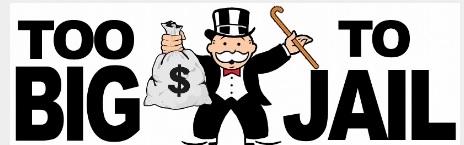
Bankers too big to jail, so jail the small players?

Matt Levine writes: Richard Choo-Beng Lee, who cooperated with prosecutors in their long-running investigation of insider trading at and around SAC Capital Advisors, was sentenced to 21 days in jail, which is not a particularly long sentence as insider-trading sentences go, but which was still rather a shock to him since other insider-trading cooperators have normally avoided prison. I guess now that the Newman decision has more or less killed thehedge-fund-insider-trading crackdown, there is less reason to make cooperation appealing.

In related news, “The Securities and Exchange Commission’s case against hedge fund billionaire Steven Cohen is moving forward again, after prosecutors Monday withdrew their request for a two-year freeze imposed while they pursued criminal insider trading charges against his employees.” That case is a civil failure-to-supervise case connected with insider trading, and one fact that may be relevant to SAC’s supervisory culture is that Richard Choo-Beng Lee is one of two SAC Capital traders named Richard Lee who pled guilty to insider trading and cooperated with the government.

Meanwhile in England, poor Tom Hayes is appealing his barbaric 14-year prison sentence for Libor manipulation. “Hayes ‘Didn’t Invent’ Libor Rigging, Lawyer Says in Appeal Fight,” is the Bloomberg headline, and while I am sympathetic, no one appeals a murder sentence on the grounds that he didn’t invent murder.

In Switzerland, Hervé Falciani, a former HSBC private bank employee who leaked secret documents led to revelations “that HSBC’s Swiss banking arm turned a blind eye to illegal activities of arms dealers and helped wealthy people evade taxes,” was sentenced to five years in prison for his troubles. “He is currently living in France, where he sought refuge from Swiss justice, and did not attend the trial.”

And in Brazil, is Andre Esteves too big to jail? I mean, he’s in jail, but that is creating nervousness at his investment bank, BTG Pactual, and in the Brazilian financial system more generally.

Too Big to Jail

Chan Zuckerberg Maxing Out?

TNe consequences of the Zuckerberg birth announcement.

Matt Levine writes:  The Chan Zuckerberg Initiative, to which Mark Zuckerberg and Priscilla Chan have pledged to donate 99 percent of their Facebook stock, is not a charitable foundation, but just an LLC. That is, it’s just a pot into which Zuckerberg and Chan can put their money, and out of which they can give money to charities, or for-profit investments, or political advocacy, or whatever.

One upshot of this is that they won’t get a tax deduction for putting money into that pot, because it is not a charitable foundation. This is of course not at all important to them, because they don’t have that much taxable income (Zuckerberg is paid $1 a year, and most of their wealth is in unrealized capital gains). Also, they are planning to give away 99 percent of the shares that make up the bulk of their fortune, and giving away 99 percent of your money to shield yourself from income taxes on the other 1 percent is economically nonsensical.

But a surprising number of people are making a claims like this: There’s an almost overnight financial benefit, too: The Facebook founder will deduct the fair value of his gift to his foundation from his taxable income in the year he makes the donation. A donor like Zuckerberg could realize a tax benefit equal to about one-third of the value of his gift.

Nope! No foundation, no tax benefit.

Elsewhere, Dylan Matthews has some ideas for what Mark Zuckerberg should do with his money, including giving it to his college roommate or spending it on monetary policy lobbying. (These are mostly not jokes, though who’s to say what a joke is really.)

David Auerbach asks, Can We Trust the Hacker Philanthropists?
Here’s the truth: No matter how good their intentions, the net result of most such efforts has typically been neutral at best, and can sometimes be deeply destructive. The most valuable path may well be to simply invest this enormous pool of resources in the people and institutions that are already doing this work (including, yes, public institutions funded by tax dollars) and trust that they know their domains better than someone who’s already got a pretty demanding day job. That may not be as appealing to the cult of disruption within the tech echo chamber, but would be exactly the kind of brave and unexpected move that might offer Max a great example of how to engage with the real world that the rest of us live in.

stork-1

Lessons from Iceland’s Economic Recovery?

The Rocky Road to Globalization

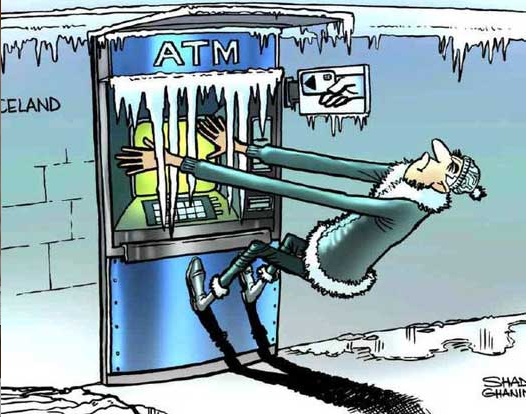
Iceland recovered from the 2008 financial crisis by taking certain measures.  Is there anything to be learned from their example?

Karen Hammer writes:  Iceland has rebounded after the 2008/9 crisis and will soon surpass pre-crisis output levels with strong performance in tourism and fisheries. Debt ratios are on a downward path and balance sheets have broadly been restored. The financial sector is back on track though with some important items remaining on the docket.

In an interview with IMF Survey, Peter Dohlman, IMF Mission Chief for Iceland, explained what sets Iceland apart from other countries having experienced the financial crisis.

IMF Survey: Iceland was in a state of collapse in 2008 but is now back on its feet and has become a success story. Can you give us a sense of Iceland’s economic picture today?  

Dohlman: Overall, macroeconomic conditions in Iceland are now at their best since the 2008/9 crisis. Iceland has been one of the top economic performers in Europe over the past several years in terms of economic growth and has one of the lowest unemployment rates. A particular bright spot for Iceland has been the booming tourism industry, which has also contributed to a strong current account surplus.

Other indicators of Iceland’s successful trajectory are its low inflation, stable exchange rate, and ready market access. Iceland’s strong balance of payments has allowed it to repay early all of its Nordic loans and much of its IMF loans while maintaining adequate foreign exchange reserves.

There are of course some important remaining vulnerabilities and risks. Public and external debt ratios are still high, though on a downward sustainable path. The prospect of funds exiting quickly and disrupting external stability in the absence of capital controls is still a potential and important vulnerability. Downside risks emanate from significant wage pressures and an uncertain external environment, including risks of slower demand and deflationary pressures from trading partners.  IMF Survey Iceland’s Recovery

Iceland's Recvoery


Entrepreneur Alert: Streaming Media Content

Delivery of media content is a wide open field for entrepreneus:

Greg Miller writes: If you’re a Star Trek fan, CBS just made your day. It announced that it’s bringing back a Star Trek television series.

But there’s a catch…

In a sign of the changing times in the TV industry, the only way to see the new series will be to subscribe to CBS All Access – the company’s paid video streaming service that costs $5.99 a month.

As you may know, the video streaming market is huge – and growing. It certainly qualifies as a disruptive force, as it’s a direct threat to incumbent cable companies, with viewers increasingly “cutting the cord” on their cable programming.

At the same time, though, it’s also a huge opportunity for cable companies because many of them not only own the programming, they also provide the internet connections that enable streaming to reach homes. And nobody wants to cut that cord!

But as the streaming industry grows, it presents a challenge to other streaming companies, content producers, and consumers’ wallets.

Before blockbuster franchises like Harry Potter and Twilight, Star Trek was the original franchise. Indeed, for a time in the 1990s, Star Trek was even called the franchise within Paramount Studios.

When Viacom Inc. split up its company in 2014, the franchise split. Paramount kept the movie rights and has since produced two successful Star Trek films. CBS Television kept the TV rights, and it’s getting back in the game.

But CBS’ decision to only stream the new series is a direct shot at two parties:

Cable Companies: Any high-profile programming that isn’t available on cable is a direct threat to cable. After all, if the shows you want to watch are increasingly available elsewhere, why give your money to a cable company, which you probably hate anyway.

Streaming Content

Streaming Content

Carbon Emissions in Developing Countries

The Rocky Road to Globalization

Can we make the same carbon emissions demands on developing countries that we make on mature economies?

Karl Ritter and Seth Borenstein write:  Attempts to inscribe a long-term goal to phase out carbon emissions in an envisioned global climate pact are facing pushback at U.N. talks from big developing countries including India and Brazil.

Negotiators from both countries said Wednesday they favor sticking to the already established goal of limiting global warming to 2 degrees C (3.6 degrees F) above pre-industrial times — a level that scientists say could avoid the worst impacts of climate change.

The United States and other members of the Group of Seven wealthy countries earlier this year endorsed a “decarbonization of the global economy over the course of this century.”
Brazil’s lead negotiator Antonio Marcondes told The Associated Press that there was no need to come up with a new joint climate goal.

A joint Brazilian-German declaration in August that backed a “decarbonization of the global economy” while noting that some countries will need financial and technological help to make the transition to cleaner energy.

The long-term goal is one of the issues that split the larger group of developing countries in the climate talks. Oil-rich Saudi Arabia opposes wording calling for a phase-out of carbon emissions, while small island nations that face an existential risk from rising seas are among the strongest advocates. China has largely stayed silent..

Speaking at a NATO conference in Brussels, U.S. Secretary of State John Kerry said he thought the climate talks “got off to an encouraging start” with 150 world leaders — the biggest ever gathering of heads of state and government — attending the opening day. Kerry is expected to join the meeting next week.

However, the talks have made little progress after the leaders left.

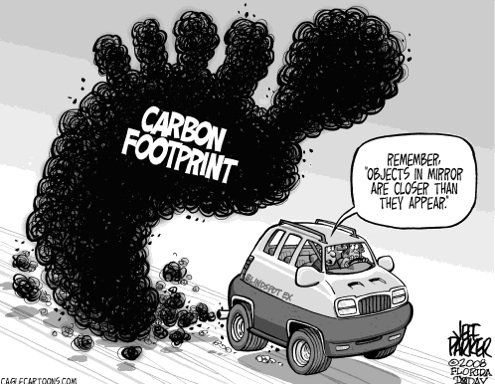
Carbon Footprint

Response to Terrorism in the US

Terrorism in the US.  Reports that San Bernadino shootings involved people with terrorist contacts.  Here is a letter from an agency in Northern California which has a similar mission to the San Bernadino agency:

It is with a very heavy heart I reach out to all of you in response to the horrific events that have unfolded and continue to unfold around the senseless shootings that happened today at the Inland Regional Center in San Bernadino, CA.

At this very early stage of this awful news we don’t know much more than what we see on television news and on the Internet.

But what we do know is hard to imagine and very hard to understand.

By 3 p.m., police were reporting that three armed men attacked the facility earlier today and killed at least 14 people and injured another 17. How many more people may have been hurt we do not know. At the time of this posting, the situation in San Bernardino was fluid. News reports said police located the suspect vehicle and a gun battle ensued. One suspect was reported shot and killed, another was wounded and the third escaped and remained at large. A police officer also was injured in the shooting but his injuries were reported not life threatening.

As we hold those directly impacted by this tragedy in our thoughts and prayers, we all know that there is a larger and deeper ripple effect then what could ever be conveyed in news coverage.

The Board of Directors and your Leadership team are committed to providing the safest environment possible for each of you and the individuals we serve.  If you have questions or find yourself or those individuals we serve in need of extra support during this time, please contact myself or your direct supervisor.

Our thoughts and prayers go out to the victims of today’s tragedy and their families and all of our colleagues in San Bernardino with whom we share a commitment to helping people with disabilities live rewarding and independent lives.