Do Women in Finance and Women in Politics Go Hand in Hand

Women candidates kicked ass in the recent US elections. From hog castrator, National Guard lieutenant colonel, and former Hardee’s biscuit-maker Joni Ernst’s rout of Bruce Braley in Iowa, to that funny thing that happened in Utah, where Mia Love, the Mormon daughter of Haitian immigrants, became the first black Republican female elected to Congress.

Like women in business, women in politics may soon become routine and not noteworthy at all.  But there are differences specific to women in both finance and politics.  These are worth noting and do not often appear in resumes for the Miss America contest.

Katie Bennan writes:  1.  Women wait to be asked.  2.  Women tend to be civilzed and graceful (think Elizabeth Warren).  3.  Women are cautious.  4.  Women are more interested in doing the job than getting it.  5.  Women have difficulty asking for money.  6.  Women try to play nice with others.  7.  Women have a better chance of winning when people know them better.

Women Politicians

Does Japan’s Abe Have Allies in the new US Congress?

William Pesek writes:  The Trans-Pacific Partnership trade deal, which has stalled because Japan has been unwilling to open up its auto and agricultural setors, now has a chance to be passed. Devaluation of the yen will probably not be welcomed by the Republic Congress.

Going easy on agriculture will not please Republicans.  This will put Abe in the hot seat with certain constituencies and make his life difficult as he tries to loosen labor markets, get more women in the workforce and strengthen Japan’s corporate governance.

Will the Prime Minister’s own party which is financed by agriculture go along wtih a comprehensive trade pact?

Rice Growing in Japan

No Free Lunch. Eat Bitcoins.

Matt Levine writes, capturing the fundamental spirit of investment and financier:  Trendon Shavers, alias “pirateat40,”1 ran a bitcoin fund called “Bitcoin Savings and Trust.” BCS&T was apparently a Ponzi scheme. We knew that; the Securities and Exchange Commission brought a civil case against him last year, which resulted in a $40 million judgment. But other people knew it before the SEC did. Individual-2, for instance, had a pretty good idea:

In or about early July 2012, SHAVERS and another participant on the Bitcoin Forum (“Individual-2”) made a bet as to whether BCS&T was a Ponzi scheme. Specifically, Individual-2 alleged that SHAVERS was operating BCS&T as a Ponzi scheme. SHAVERS denied that allegation and placed a bet with Individual-2 that BCS&T was not a Ponzi scheme.

That actually happened! They found another person (Individual-1) to serve as escrow agent, they each escrowed 5,000 bitcoins with him, they specified the terms of the bet (if Shavers failed to meet a withdrawal request within 14 days, he would be deemed to be running a Ponzi), and the bet paid off less than two months later. This is how the bitcoin legal system operated:

On or about August 30, 2012, Individual-1 declared Individual-2 the winner of the bet, and wrote:

I hereby declare the bet decided, in favor of [Individual-2] . A withdrawal request made on August 15[,] 2012, is still outstanding as of today, Aug[ust] 30[,] 2012, which triggers default as specified in the contract, via “late by at least 14 calendar days, in disbursing either any regularly-scheduled interest payment, or any withdrawal request, by a valid account holder of [BCS&T]” clause.

In private communication, pirateat40 [i.e., SHAVERS] has agreed with this assessment and conceded the bet.

The appeal of bitcoin is that it doesn’t require trust in people or institutions. You don’t have to believe that people are honest, or that governments will keep them honest. You can just exchange bitcoins with them and trust in the cryptography.

That works great for giving people bitcoins in exchange for drugs or whatever. It works less great for investment management: If you give money to someone to invest for you, and want to get it back, you have to either trust her to give it back or have some enforcement mechanism to make her give it back. In that bet, you can see the bitcoin forum groping toward a bitcoiny solution to that problem, with the carefully specified bet and the escrow agent. It’s not quite pure cryptography,2 but it is a very bitcoiny and libertarian and charming gesture at private regulation.

It did not especially work, though, insofar as Shavers took the bet and nonetheless continued to operate what sure looks like a Ponzi.

The actual pitch was completely impenetrable, just some mumbo-jumbo about bitcoin arbitrage and lending.5 And, similarly, when Shavers shut down his scheme in August 2012, he explained it impenetrably:

The decision was based on the general size and overall time required to manage the transactions. As the fund grew there were larger and larger coin movements which put strain on my reserve accounts and ultimately caused delays on withdraws and the inability to fund orders within my system. On the 14th I made a final attempt to relieve pressure off the system by reducing the rates I offered for deposits. In a perfect world this would allow me to hold more coins in reserve outside the system/ but instead it only exponentially increased the amount of withdrawals overnight causing mass panic from many of my lenders.

c. BCS&T was allegedly primarily in the business of lending Bitcoin to “various investors or lenders” for a fixed period of time. A small percentage (about 10%) was used by SHAVERS to “buy[] and sell[] [B] itcoin [] locally.”

…

g. In or about July 2012, SHAVERS lent about 202,000 Bitcoin to a borrower he identified as “The Big One” and those 202,000 Bitcoin were never returned. SHAVERS has no record or proof that he (SHAVERS) made this loan to “The Big One,” nor does SHAVERS know who “The Big One” is.

h. In or about August 2012, SHAVERS shut down BCS&T, redeemed recent investors, and kept some investor Bitcoin in order “to be able to trade so [he] could make [Bit]coin[] to pay them back.”

700,000 bitcoins were worth around $6.4 million; at the time Shavers shut down BCS&T, they were worth around $9.5 million.     When the SEC got its judgment, they were worth $280 million, though the court went easy on him and only required him to pay $40 million.10 Now they’re worth around $240 million.
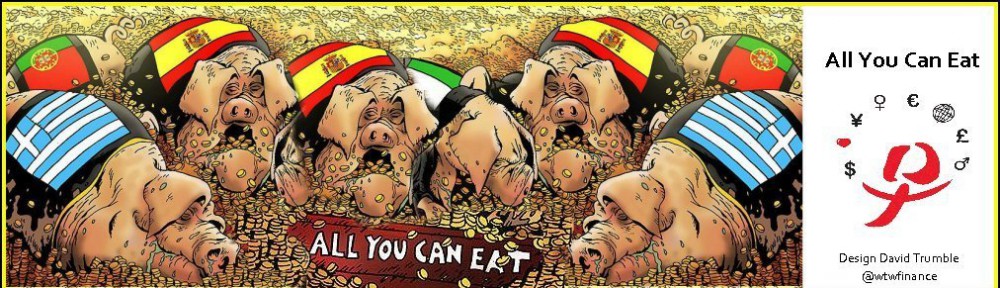
  • Don’t do anything with people you meet on Internet forums!
  • Don’t go on Internet forums!
  • Don’t go on the Internet!

Bitcoin Ponzi Scheme

Unemployment Rate Dips in US

Employers added 214,000 jobs in October, fewer than expected, though the unemployment rate fell to 5.8 percent, the lowest since July 2008.

The report showed 31,000 more jobs in August and September, giving the labor market a nine-month streak of more than 200,000 jobs a month, the Bureau of Labor Statistics said Friday, the longest such streak since 1995.

Voters showed Democrats their frustrations with the economy this week, sending a Republican majority to the Senate and giving Speaker John Boehner (R-Ohio) a boost in his membership in the House.

“Over and over again voters have said jobs and the economy are their top priorities,” Republican National Committee Chairman Reince Priebus said in a statement Friday. “The president said his economic policies were on the ballot, and voters clearly believe we can do better. So now is the time to get to work — so we can get more people back to work.”

Construction jobs were up 12,000 in October while manufacturing rose 15,000, good signs for the growing economy.

W-T-W.org, Women and Finance advocates an infratstructure program in the US to provide jobs for those who don’t qualify for current opportunities and to give pollitiicans time to figure out how to match jobs with qualified candidates.

Infrastructure Jobs

Water and Abandoned US Mines

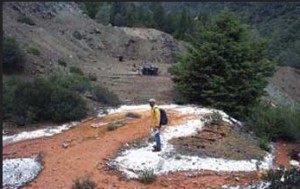
Hundreds of thousands of abandoned mines litter the West: gold, silver, lead, copper. Some are left from the California gold rush; some were abandoned just a few decades ago.

Today, acidic water and heavy metals from mines slowly leach into groundwater, lakes and streams. Corrosive water destroys aquatic ecosystems. Fish – the ones that don’t die – become loaded with arsenic or mercury. People swim in contaminated lakes. They hike over contaminated soil, breathing in dust laced with lead and arsenic. There are about 500,000 abandoned mines in the U.S., contaminating tens of thousands of miles of waterways..

The worst get federal Superfund money for cleanup. The rest are left to the states, private organizations and nonprofit conservation groups to clean up.  The waste site sits untouched, and acid continues to drain into nearby water.

The proposals to encourage clean up have failed for various reasons. Mostly, according to Steve Moyer of the water conservation group Trout Unlimited, it’s that no one really cares.But for locals living near abandoned mines, it is a priority. In the Sierra Nevada, which provides 60 percent of California’s water, mercury from the days of the gold rush co flowing into the Sacramento River. ”

In many cases, what happens when a group tries to clean up contaminated water is that it’ll install a sort of treatment system downstream from where contamination flows in. The system filters the toxic water and releases water that’s, say, 90 percent cleaner. But under the Clean Water Act, the cleanup group is considered responsible for the 10 percent of contamination that’s left. That puts the group at legal risk – it could be considered a polluter under the law.

In 2012, the Environmental Protection Agency issued a clarification of protections for cleanup groups. But Leon Szeptycki, a lawyer at Stanford University specializing in water quality and restoration, said the EPA guidance doesn’t include enough detail.

One of the biggest concerns is how long a group would be on the hook after installing a treatment system, he said. Many good Samaritans are local groups with limited funding.  They may have the money to install a treatment system, but not necessarily to maintain it for decades to come. At what point can the group walk away? Is it liable for poor-quality water if the system breaks down in 10 years?

This uncertainty in the memo leaves organizations hesitant to test the policies. So nothing gets done.

Contamination of the Sacrameno River

What do Putin and Rouseff Have in Common?

Russia and Brazil are struggling.  Trouble has been brewing for a while. High inflation and big currrent account deficits meant exports were too cosrtly; their currencies topped the list of those likely to tumble. The Russian rouble, has fallen far.  The central bank scaled back its expensive and futile efforts to prop the currency up, leaving it floating almost freely.

Brazil and Russia are in really bad shape. The largest emerging economies after China, together they have the heft of Germany. In both countries the currency is sliding. The real hit new lows in November after data revealed the budget deficit reached a record in September. The rouble is dropping faster, down 27% in a year and 10% in the past month. Both face stagflation: bubbly prices coupled with growth rates likely to be below 1% this year.

Some of their pain comes from abroad. Brazil’s main trading partners are slowing (China), stagnant (the euro area) or tanking (Argentina). Not only are export volumes down; the prices of things Brazil sells—iron ore, petroleum, sugar and soyabeans—are dropping as global demand falters. Russia is feeling the slowdown too, as energy prices fall. It is one of the world’s biggest producers of oil and natural gas. Its big five energy firms employ close to 1m workers. Exports worth $350 billion flowed through pipelines to Europe and Asia in 2013. As prices drop, Turkey’s gain is Russia’s loss.

But Brazil and Russia’s problems have domestic roots too. Since the 1990s Brazil has tended to aim for a primary surplus (before interest payments) of close to 3% of GDP—enough to begin reducing its debts. But Dilma Rousseff, the newly re-elected president, has played havoc with Brazil’s public finances.

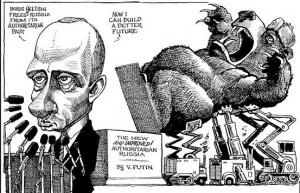
Russia’s self-inflicted wounds are even more severe. Vladimir Putin’s invasion of Ukraine led to American and European sanctions that have been gradually tightened since they were imposed in July. The rules limit Russian firms’ access to American debt markets. They also ban American firms from selling kit or advice to Russia’s energy giants. This prevents western oil firms from helping Russian ones develop oil- and gasfields. Mr Putin’s retaliation—import tariffs on Western goods—has pushed up domestic prices further.

There could be worse to come. The drop in commodity prices looks set to last. Meanwhile, in order to crimp inflation and stem the slide in their currencies the central banks in both countries raised their rates last month: they stand at 11.25% in Brazil and 9.5% in Russia. At the same time, worried finance ministries are keen to bolster their books. In Brazil, fuel-tax hikes are being mooted, and tax breaks on car purchases may be scrapped. In Russia a rule that caps the budget deficit at 1% of GDP may require austere fiscal policy.

Banks could prove vulnerable as public-sector spending cuts hit incomes and high interest rates make loans hard to service. In Russia things are particularly bad: non-performing loans are rising, and savers are draining the banks of roubles.

Bond markets could be another flashpoint. Both have big foreign-exchange reserves: despite losing around $100 billion in the past year, Russia has close to $370 billion. But they also have big dollar debts that become harder to serve as their currencies fall. Pessimists see tumbling currencies, bond-market routs and even bank runs.

Russia's Problems

How Goes the Business of Cannabis?

Put politely, the cannabis business in the US is finding its footing.

Drug dealers aren’t what they used to be. In Colorado, which in January became the first place in the world fully to legalise cannabis, buying a joint feels more like visiting a trendy craft-brewery than a drug den. Dispensaries along Denver’s “green mile” are packed with young, bearded men earnestly discussing the merits of strains with names like “Bio-Jesus” and “Death Star”. Some varieties claim to be inspirational, while others say they promote relaxation, or “couch-lock”, as the tokers call it.

Colorado’s pot industry expects to rack up sales of $1 billion this year. Across America the market is reckoned to be worth about 40 times that much. Most of it is still illegal, of course. But slowly, entrepreneurs are prising it out of the hands of crime gangs. Nearly half the 50 states permit the sale of marijuana to medical patients, which in practice may include anyone willing to fake a back problem. This week Oregon and Alaska joined Colorado and Washington in legalising it for recreational purposes, too. If other countries legalise, as Uruguay already has, it could open up a global cannabis market worth perhaps $100 billion a year (by the best guesses, which are stabs in the dark).

Who will corner that market? In Colorado a gold rush of excitement has seen hundreds of tiny firms sprout up. Just as everyone in San Francisco seems to be designing an app, everyone in Denver has an idea for a canna-business. Pot-friendly ski-chalets, taxi services and wedding planners are taking orders. Non-smokers can sign up for cannabis cookery courses. For the truly lazy, there is the option of lying back and being rubbed down with weed-infused massage oil.

Despite the boom, no big force has yet emerged. Even Colorado’s biggest retail chains, such as LivWell, Strainwise and The Clinic, have fewer than ten branches each. No firm has much more than about 7% of the cultivation or retail market, reckons Mike Elliott of Colorado’s Marijuana Industry Group. At first sight this fragmentation is odd. Cannabis-farming benefits from economies of scale just as any other form of agriculture does. And you might think that when taking a mind-altering and potentially harmful substance people would prefer a trusted brand over a small upstart, as they overwhelmingly do with cigarettes.

What would it take to build a Marlboro of marijuana, then? Most of the obstacles are regulatory. Until recently Colorado’s dispensaries were obliged to grow at least 70% of the cannabis they sold, and cultivators had to retail at least 70% of what they grew. The idea was to make it easier to keep track of the drugs—“from seed to sale”, as the state government puts it—and avoid creating excess supply, which could feed the black market. But one consequence is that firms have been unable to specialise. Some companies are good at farming but not at selling; others have nice storefronts but lower-quality products. No company has grown as fast as it might have, were it able to focus on one thing.

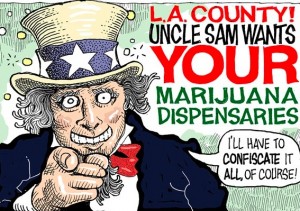
Cannabis businesses have been financially hamstrung, too. Getting a bank account is difficult, since even local banks must obey regulations laid down at the federal level, at which cannabis is still outlawed. About one-third of the industry is completely unbanked, according to Mr Elliott.

The federal ban also makes it hard to do business in more than one state.

It may not be long before these obstacles fall. Even without inspiration from a drag of Bio-Jesus, it is not hard to imagine a future in which the federal ban is eased, now that voters in so many states have backed liberalisation. The innovative pot entrepreneurs in places like Denver would welcome that.  But should they?  Alcohol after the end of Prohibition, and also tobacco came to be dominated by a few giant corporations.

Would household names really consider selling cannabis? They already have. In 1969 a Philip Morris executive wrote to the Justice Department, requesting a sample of marijuana for testing. In 1970 British American Tobacco put together a blueprint for a “cannabis-loaded cigarette”. Cannabis is certainly controversial. But then so is lung cancer. It may well be that the executives best placed to make a mint from marijuana, once it is fully legal across America, are the Marlboro men themselves.

Cannabis

Swiss Gold Referendum Approaches

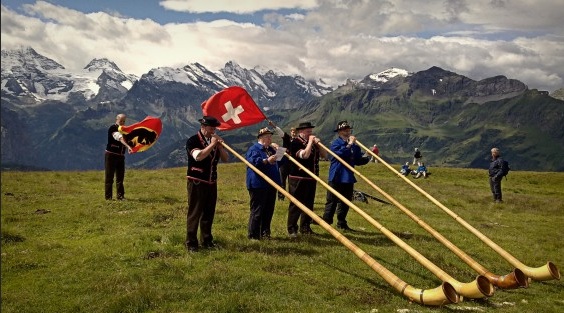
Save Our Gold Movement in Switzerland is getting about 40% of the Swiss vote in opinion polls.  Although some people have concluded that Switzerland is a business, not a country. the gold initiative represents an income switch inside Swtizerland:

Income to Swiss exporters and banks who profit on the relatively weak franc would go to the Swiss households, wage earners and low income families.  Purchasing power increases when the CHF increases.

Low income groups are rather in favor of the initiative, while high income earners are against it. In particular, the income groups under 5000 francs are in favor. Switzerland imports a big part of its food and basic necessities from its neighbors. the German discounters Aldi and Lidi have a strong presence in Switzerland.  A 10% stronger franc would imply far lower living costs for the low income groups.  On the other side, entrepreneurs and high wage earners would have losses on Swiss stocks, when the SNB can no longer manipulate the FX rate. Logically the latter group is against the gold initiative.

Swiss Gold

US Probes Putin Allies for Money Laundering

Prosecutors in the Eastern District of NY are investigating members of Putin’s inner circle for  money-laundering.   Did billionaire Russian gas trader and Putin associate Gennady Timchenko transfer funds related to allegedly corrupt deals in Russia through the U.S. financial system? The Justice Department is helping the investigation.

The prosecutors are investigating transactions in which Gunvor Group, a commodities firm founded by Timchenko, bought oil from Russia’s Rosneft and sold it to third parties.

The report said the transactions predated U.S. sanctions against Russia introduced in March on Timchenko and others over the Ukraine crisis. Timchenko is also co-owner of Russia’s No. 2 gas producer Novatek.

Transfers of funds related to the transactions could constitute illegal money laundering if the funds were found to have originated from illicit activity such as, for example, irregular sales of state assets such as oil, the newspaper said.

The newspaper cited one source as saying the probe was also examining whether any of Putin’s personal wealth was connected to allegedly illicit funds.

The U.S. Treasury has said Putin has investments in Gunvor and may have access to Gunvor’s funds. Both the company and the Kremlin have strenuously denied those allegations.

“When it comes to President Putin, he does not and never has had any ownership, beneficial or otherwise in Gunvor. He is not a beneficiary of Gunvor or its activities, directly or indirectly,” Gunvor said.

money laundering

Is the US Government’s Investigation of Foreign Banks a Diversionary Tactic?

US regulators are re-upping their case against Standard Chartered, a British bank.  They are doing this under US domestic laws which forbid trading with Iran.   These laws do not apply to foreign banks, so the case is a false one.  Nonetheless, shares in the bank fell precipitously when the US announced its new investigation.

British politica leaders have refused to get involved.  Some think that the bank has no choice but to move back to Shanghai where it began in 1858.

US regulators will not touch a US banker like Jamie Dimon, who until recently was the President’s personal banker among his many roles.  They are trying to defend themselves to US citizens cangry at banks by attacking foreign banks like Credit Suisse and Deutsche Bank.  Meanwhile Bank of America, JP Morgan Chase and Citibank are sailing through with no criminal charges lodged against them.  Fines which seem huge to ordinary citizens are just the cost of doing business for big banks.

Fining Big Banks