Press Suppressed in Egypt

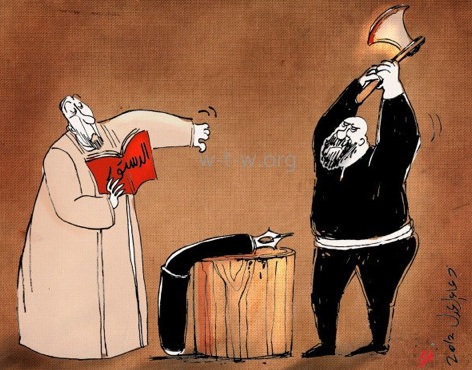
Louisa Loveluck writes about cartooning in Egypt.  Egypt’s cartoonists have traditionally been among society’s most searing political critics. Straddling the line between journalism and satire, they can express what others can’t. “The cartoon is a weapon,” says Anwar, the pen behind last week’s cartoon. “All artists have the gun – they just need to know when, where and whom to shoot.”

Yet his trenchant image stood out for its rarity. After three years of revolutionary tumult, and the fall of two presidents, Egypt’s subversive cartoonists are mostly taking another tack. Gone are the irreverent depictions of the leader of the day. And dissenting media outlets have been forcibly closed, or have ceased publication of their own accord, wary of voicing criticism of Egypt’s popular new leader.

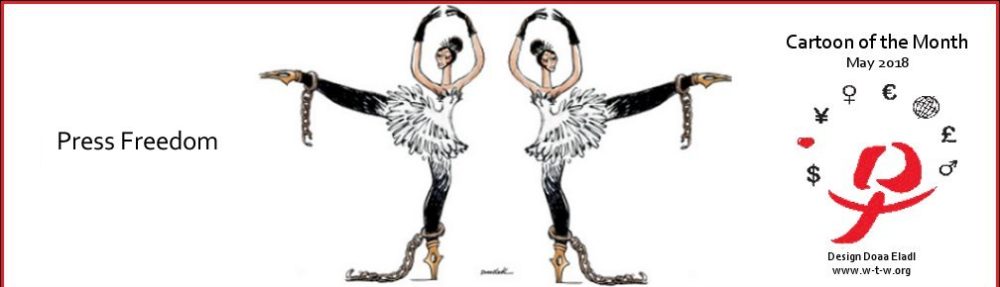
“There are periods in history that are not suitable for serious criticism,” says Doaa El Adl,  another cartoonist at Al-Masry Al-Youm. “You can criticize, but you must not bring down the system – these people who chant against the military regime don’t understand that the only option is the Muslim Brotherhood.” 

Most media are firmly on board. On Oct. 26, leading newspaper editors convened to issue to a statement supporting “all measures taken by the state in combating terrorists and protecting national security.” A week earlier, Sisi had called on Egyptians to rally in the face of terrorism following two militant attacks on soldiers in the restive North Sinai region left 33 dead. It was the deadliest day for the Egyptian army in decades.

Egypt’s new leadership, which came to power after a military coup, casts itself as the bulwark against a political trend that indulged Islamic fundamentalism and dreamed of turning the country into a theocracy. That tilt, and the popularity of the July 2013 coup, makes cartooning a perilous profession for those who like to poke fun at those in power.

Amr Selim, an elder statesman of Cairo’s cartooning scene, says the space for dissent has shrunk. And like Ms. Adel, he sees his work as a patriotic duty: “Not everything is perfect, but Egypt must move forward,” he says.

Things changed under the interim junta that followed. Amid a febrile atmosphere, cartoonists and journalists pushed the envelope, learning by trial and error what the authorities of the day deemed acceptable. The results were popular, often spreading across social media like wildfire. Some received threats for their criticism of the army.

Pressure comes from Egypt’s feared security forces. Last month, the editor-in-chief and a reporter from Al-Masry Al-Youm’ were hauled before state security prosecutors and interrogated for fourteen hours after the paper declared it would publish investigation records into alleged fraud in the 2012 presidential election. A print run of the paper was also recently pulled over an interview it featured with an Egyptian spy.”

But just days later, the newspaper published his image of the shuttered office on the inside page. And on Thursday, it was Adel’s turn to send another shot across the bows. In her cartoon, a journalist edges along a tightrope labeled “the margin of freedom.” Below, waits the hand of authority, its fingers poised to flick and send him spinning.
Press Freedom in Egypt

EC Downgrades EU Economy

The European Commission cut its growth forecasts for the eurozone and the wider European Union.  The Commission predicts that the eurozone will grow by 0.8% in 2014 and 1.1% in 2015. In the spring, which is when the Commission last published such estimates, it revised up its growth forecasts for 2014 to 1.2% and to 1.7% for 2015.

Today’s downgrade confirms that the economic recovery that began to emerge earlier this year in Europe is losing momentum. Weak growth over the coming years is expected to make only a small dent in unemployment in both the eurozone and across the EU.

Growth in 2014 and 2015 will be stronger outside the eurozone in 2014. The EU economy as a whole will grow by 1.3% in 2014 and 1.5% in 2015.  By comparison, the Commission estimates that the United States economy will grow by 2.2% in 2014 and 3.1% in 2015.

The Commission presented its autumn economic forecasts, based in part on draft national budgets and forecasts submitted to the Commission by eurozone governments in mid-October.

The Commission will use its latest forecasts to assess to what extent the draft national budgets comply with eurozone budget rules that set limits on public spending and debt. It is expected to publish the opinions by mid-November.

Pierre Moscovici, the European commissioner for economic and financial affairs, presented the forecasts together with Jyrki Katainen.  Katainen admitted that the “economic and employment situation is not advancing fast enough”. Both he and Moscovici stressed the need for greater investment, without letting up on fiscal consolidation and structural reforms.

Some eurozone economies will enjoy strong growth in 2014. Luxembourg and Malta are predicted to register growth of 3%, while Ireland is expected to grow by 4.6%

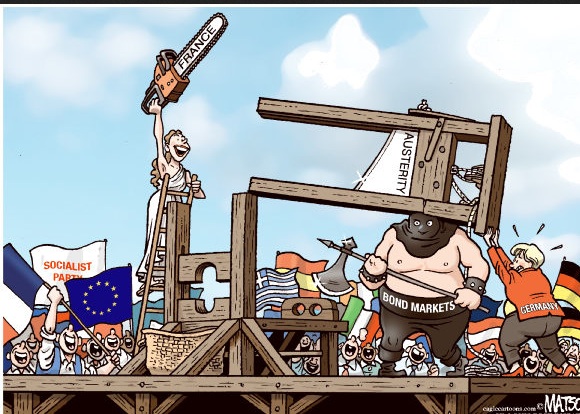
Austerity the Answer?

QE in Japan

The Bank of Japan (BoJ) stunned the financial markets by unexpectedly expanding its programme of quantitative easing. The bank’s existing measures, a “different dimension” of easing from past efforts, were already daringly bold. Now it will swell Japan’s monetary base at an even faster pace, by around ¥80 trillion ($712 billion) each year, up from ¥60 trillion-70 trillion currently. To do so, it will hoover up still larger quantities of Japanese government bonds (JGBs).

The bank’s action is also an admission of partial failure thus far. Its bond-buying has succeeded in sparking some inflation, yet its goal of achieving price rises of 2% a year by around April 2015 remains a distant possibility. Along with the government, it badly underestimated the dampening effect of a hike in the consumption tax in April this year, which caused the economy to shrink by 1.7% in the second quarter.

Economists had started to question Mr Kuroda’s oft-stated commitment to banishing Japan’s entrenched deflationary psychology. Mr Kuroda admitted that matters had reached a “critical point”, as the bank’s efforts were losing momentum.

Now a fresh round of no-holds-barred QE will immediately boost Mr Abe’s economic plan. The Nikkei stock index—a vital gauge of success for the government—rose to its highest level in seven years on the news. The yen lurched further downwards, which will help import inflation.

As well as buying an additional ¥30 trillion of JGBs a year, the BoJ will also purchase more risky assets in the form of exchange-traded funds and investment trusts in Japanese property.

A motivation for Mr Kuroda—in addition to visibly slowing inflation and weak growth—may have been an intensifying political debate over whether or not Mr Abe should again raise the unpopular consumption tax from 8% to 10% in 2015.

But this latest round of QE is not without its detractors. In April 2013 the BoJ’s nine-strong policy board voted unanimously in favour of its radical new monetary drive, this time it revealed a rare split.

QE in Japan

Norway’s Investors Look Hard at China

Yngve Slyngstad runs the world’s biggest sovereign wealth fund and travels around China for a week once a year.

Understanding what’s poised to become the world’s largest economy is crucial for Slyngstad as he manages a fund that Norway predicts will reach $1 trillion in less than three years. He’ll be in China this month, visiting Beijing and other cities.

Growth in China is slowing and the lack of transparency is making it hard for investors to understand exactly why.

Slyngstad, who last year visited Shenzhen, Hangzhou and the Shandong province, is looking for investments to channel billions of dollars in Norway’s oil cash. He has been lobbying the Chinese government to allow the fund a bigger quota than the $1.5 billion it’s permitted to place in Chinese A shares.

Norges Bank Investment Management, which runs the fund as part the central bank, owned 1.3 percent of global stocks at the end of last year.

Figuring out how to invest in China is just one of many hurdles. Slyngstad said one of the main worries now is how monetary policy will affect his investment decisions. Continued turmoil in the EU and distortions in credit markets also cause concern.

Slyngstad said the fund is now “less invested in” credit markets after excess liquidity distorted prices. He’s adjusting the portfolio even after corporate bonds were the fund’s best performing asset class in the third quarter.

The financial crisis — during which the fund has bought up cheap securities everyone else was selling — has challenged truths about investment, monetary policy, the economy and the financial markets, he said. It has showed that the financial industry has the capacity to heal itself, with or without the help of regulators, according to Slyngstad.

The power of the crisis could be called “Schumpeterian creative destruction,” said Slyngstad, who has studied German philosophy.  “Crisis within the financial sector also serves a purpose,” he said. “You have to be careful about something that without a crisis looks stable, but may also turn stagnant.”.

A discussion on broadening the asset mix of the fund is coming “no matter” what, and a tipping point could be when it has reached 4 percent in real estate, Slyngstad said. The fund has so far snapped up properties on Times Square in New York,  the Avenue des Champs-Elysees in Paris, Regent Street in London as well as San Francisco, Washington and Zurich among other cities.

“That will be a natural touch point,” he said. “Both for the real estate question, and for the real assets question.”

Norway's Investments

AIG Against the US

Lawyer David Boies has a shot at an upset win in the trial of Maurice “Hank” Greenberg’s $25 billion bailout case against the U.S. government, a turnaround from the weak odds he was given just a month ago.

Boies, representing Greenberg and other AIG shareholders, has had a series of evidentiary rulings go his way since the trial began Sept. 29 in Washington.

Beyond the money at stake, Justice Department lawyers are also fighting to prevent a verdict that the Federal Reserve acted illegally by charging a high interest rate and demanding equity as a condition for the loan. Such a ruling could limit the tools available to the government in a future economic crisis.

In their defense, the three top designers of the bailout, former Treasury Secretary Henry Paulson, ex-Federal Reserve Chairman Ben Bernanke and Timothy Geithner, the former Treasury secretary who was president of the Federal Reserve Bank of New York in 2008, all testified that the U.S. rescued AIG to avert the catastrophic damage that would have occurred if the insurer went bankrupt.

The heart of Starr’s argument is that however noble the government’s aims, it used power it didn’t have to take over AIG and further harmed shareholders by failing to pay just compensation.

As an example of how shareholders’ due process rights were violated, Boies highlighted the more favorable treatment troubled investment banks including Goldman Sachs and Morgan Stanley.

U.S. Court of Federal Claims Judge Thomas Wheeler frequently overruled government objections to Boies’s questions and handed him beneficial evidence rulings.

In a skirmish over the so-called Doomsday Book, the New York Fed’s compendium of confidential legal opinions on its emergency powers, Wheeler said he was inclined to grant broad access to Starr.

Wheeler rebuked Justice Department lawyers several times for attempting to rely on hearsay testimony, introducing exhibits in violation of trial rules about redactions, and dragging out proceedings by reading lengthy passages from documents.

The case going to trial at all was a victory for Boies and Greenberg, because the judge’s refusal to dismiss it was a rejection of the notion by some legal experts that the lawsuit was without merit.  .

Wheeler in July 2012 wrote that he agreed with Starr’s argument that the only consideration for a loan under the Fed’s emergency powers can be an interest rate set by the Board of Governors — not a demand for equity.  In the same 2012 ruling, Wheeler wrote that he didn’t buy a government assertion that authority for demanding equity came from the “incidental powers” section of the Federal Reserve Act, which deals with unspecified actions needed “to carry on the business of banking.”

Boies’s position that the U.S. didn’t have authority to demand equity was bolstered by testimony from Bernanke, who told Boies that he didn’t read the word ‘rate’ in the emergency-powers section of the Federal Reserve Act to include equity.

The government countered with testimony from the general counsel for the Federal Reserve Board of Governors. Alvarez said he concluded that the board could empower a reserve bank “to extend credit and in giving that authorization can set whatever limits and restrictions and rules the Federal Reserve Board believes is appropriate,” including demanding equity..

Geithner testified he barely looked at the Doomsday Book because much of its counsel for the Fed was formulated during the Great Depression.

If guidance for the future is Wheeler’s goal, it may nonetheless have little impact, said Philip Wallach, a fellow at the Brookings Institution.  Regulators faced with a crisis will do what they think is necessary and worry about the consequences later.

Bailing Out

Japan Spreads its WIngs

A weak domestic econmoy has encouraged Japanese businesses to exapnd abroad.  Japanese investment in Southeast Asia doubled to $24 billion last year.

Jaan focused on the automotive and electronic sectors of Thailand, Malaysia and Singapore during the 1980s and 90s.  japan moved its focus to China’s cheap laobor market at the end of the century.  But now relations between Japan and China have soured and Southeast Asis looks good again.

QE and newly created money under Shinzo Abe’s policy has left Japan with money to invest abroad.  But if this policy changes, that market will dry up.  Abe wnats Japanese firms to invest more at home.  A weak yen makes it possible to do this.  Canon is trying to shift production back to Japan, but Mitsubishi is building a new plant in Indonesia.  Impovements in corporate governancce have forced Japanese firms to look for profits they overlooked in the past.

Japan risks becoming a rentier economy, living off profits made in other countries and failing to getbroad-based wage growth at home.

Japan Builds in Southeast Asia

Deutsche Bank Struggles

Deutsche Bank is in trouble, some of it its own making.  Its history is in many ways the history of big banks in the 20th going into the 21st century.  To sum up:

1.  About 25 years ago DEutsche Bank started its transformation from a small German lender to a global investment bank, trading bonds, currencies and commodities (FICC).

2. DB offered issuing of bonds, hedging of foreign exchange risks to its corporate clients, mostly mid sized colmpanies in Germany.

3.  Gobal markets gave DB a chance to speculate for its own account and DB shares traded at twice the vallue of tangible DB assets.

4.  The outsized FICC business becomes a liability andthe hgiher the ahreof cinome from trading, the lower the share price.

5.  European banks argue that they need a trading floor to serve corporated clients.

6.  Low interest rates and bond market stability make corporate clients less prone to juggle their accounts

7.  All the big banks have been subected to big fines including DB.

8.  Post recession regulation is a big drag on big banks.  Rules imposed on domestic lenders in the US will be extended to foreign banks.  Regulators in the US have called DB reprorting, “low quality, inacurate, and unreliable.

Deutsche Bank Struggles


Anti-Competition and Tax Breaks in the EU

Joaquín Almunia steps down as ‘competition” commissioner.  Many European politicians have objected to his anti-trust efforts, particularly against Google.  He also tried to investigate tax favoritism for big corporations who promised to bring jobs to countries in exchange for low tax rates.  Among the companies he targeted: Apple in Ireland, Starbucks in the Netherlands, Amazon and Fiat SpA in Luxembourg.

The Google case has caused the most furor.  Almunia has said that it should not be a poitical football, but his efforts to come to a peaceful resolution with the company have come to naught.

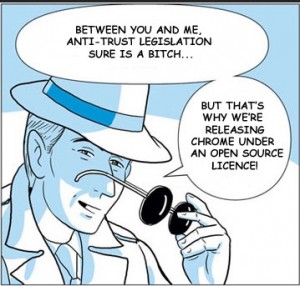
Search engine favoritsm for consumers who subscribe to many Google products is being challenged as anti-competitive. In the US too people are beginning to realize that there is no free lunch.  Products you use for free from Google, Facebook, Twitter and Skype also subject your personal data to wide dissemination.

Google


Looking Forward to the End of Sanctions in Iran

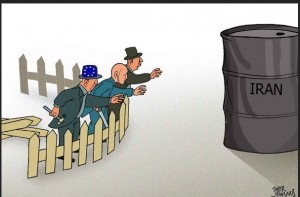
The prospects of sanctions against Iran ending and the opening up of that market are enticing to entrepreneurs and business people the world over.  Familiar faces are returning to the country.  Peugeot, which once had 20% of the car market, is coming back.

Sanctions have depressed the GDP by 25% in the last three years. Iran has $1.8 billion in purchasing power and is by that measure 18 on the world list.  The population is well-educated.  Its oil and gas reserves are huge.

The Teheran stock exchange is seond biggest in the Middle East.  Turkey’s stock exchange is 50% owned by foreigners; Iran’s 0.1%.

Among attractive investments for foreigners are manufacturing and retail.  The country has a need also for bankers.

Iran’s oil reserves are the world’s largest and yet it has only 1% of the world market.

At first, entreprise in Iran will be cramped by their limited capacity to handle foreign capital.  Privitization and economic reforms have to happen.  Many important areas of the economy are controlled by the Revoutionary Guard, part army and part intelligency agency.  Its presence has been expanded in business over the past several years.

End of Iran Sanctions?


Women from Warriors to Politicians in the US

Kristina Wong writes:  A record number of female veterans are running for Congress this year, as both parties make a play for the women’s vote.

Only five female military veterans have ever served in Congress, including Reps. Tammy Duckworth (D-Ill.), a lieutenant colonel in the Army National Guard, and Tulsi Gabbard (D-Hawaii), an Army National Guard captain.Both are expected to win reelection, and 11 other female military veterans are vying to join them.  They include five Republicans, four Democrats, and one each from the Libertarian and Independent Green Party.

Veterans help the Republicans push back against what Democrats say is a GOP “war against women.”  In 2012, ten female veterans received a major party nomination — eight Democrats and two Republicans. Two Democrats — Duckworth and Gabbard — won. This year, Republicans alone have a chance of matching that number.

Their top two contenders are Joni Ernst, a lieutenant colonel in the Iowa Army National Guard running to succeed retiring Sen. Tom Harkin (D-Iowa); and Martha McSally, a retired Air Force colonel and the first female fighter pilot to fly in combat and command a fighter squadron. She is running against Rep. Ron Barber (D) in Arizona.

Republicans say while they put a big focus on recruiting women candidates, they did not purposely recruit female veterans.  They do make good candidates.  They approach campaigning in a very disciplined way, they take the process very seriously, and are some of the hardest workers as far as campaigners.

If elected, Ernst and McSally would enter Congress as it assumes oversight over the administration’s war strategy against the Islamic State in Iraq and Syria.  Ernst, who ran convoys in the Iraq War in 2003 and currently commands the largest battalion in the Iowa Army National Guard, supports tougher actions against ISIS, including increased airstrikes and, if necessary, the use of U.S. special operations forces on the ground.

McSally, who flew A-10 fighter jets in the Afghan War, also supports putting a “limited” numbers of advisers on the ground to increase the effectiveness of airstrikes.

Next year, each military service will have to present plans on how to integrate women into every military job available — including special operations, or else explain why they cannot serve in a particular capacity.

Ernst has spoken out about being sexually harassed in the military. Veterans are apparently less afraid to buck their parties on votes. For example, he said, Duckworth and Gabbard both recently cast votes in September against the president’s proposal to arm and train Syrian rebels.

A roster of the 11 female veteran candidates include several women who have broken glass ceilings in the military.  For example, Libertarian Donna Dunn, a former Marine, who is running for a House Indiana seat, was the first woman to serve as the Sergeant of the Guard at Camp Pendleton.

And Republican Wendy Rogers, a retired Air Force Lieutenant Colonel running for an Arizona House seat, was one of the Air Force’s first 100 female pilots.