Getting Brazil Out of Recession?

Marc Sergio Lima writes:  Brazil’s budget deficit unexpectedly widened to a record in September, prompting the government to say it won’t meet its fiscal target as a possible credit downgrade looms. Swap rates rose.

The deficit widened to 69.4 billion reais ($28.4 billion), more than twice the 31.1 billion reais.  The gap is the biggest since December 2001, and for the first time ever, Brazil posted a primary deficit for the first nine months of the year, totaling 15.3 billion reais.

Fresh off the closest election win since the return of democracy,  President Dilma Rousseff  faces the challenge of pulling Brazil out of recession, slowing above target inflation and preventing a further deterioration of fiscal accounts that threatens the country’s investment grade status. This week the central bank surprised analysts with a interest rate increase, marking the first measure in an effort to regain investor confidence. Now the government has to cut spending.

“The credit rating firms have made it clear that the fiscal dynamics are very bad and a downgrade will happen if there isn’t a clear, very strong and credible signal the government will reverse spending increases,” Santos said in a phone interview from Sao Paulo. “It remains to be seen if the government will be able to do so.”

In March Standard & Poor’s downgraded Brazil’s credit rating to one level above junk, citing a slowdown in economic growth and a deterioration in fiscal accounts. Moody’s Investors Service signaled it could cut Brazil’s credit rating to one level above junk when it lowered the outlook to negative last month.

The primary surplus, which excludes interest payments, narrowed to 0.61 percent of gross domestic product in the 12 months through September, compared with a 1.9 percent target for 2014.

The cost to protect the nation’s debt securities against non-payment for five years dropped yesterday as investors interpreted the central bank move as a sign Rousseff is willing to unwind policies that fanned inflation and boosted the budget deficit.

Brazil’s economy entered recession after gross domestic product shrank 0.6 percent in the second quarter in the biggest quarterly contraction since 2009. That followed a revised 0.2 percent drop in the first three months of the year.


Dilma Rousseff

Hezbollah Sanctions?

Juan Pecquet writes:  European officials, not the Lebanese, are the ones raising sharp questions about Hezballlah sanctions legislation that unanimously passed the House in July.  European officials are worried about crippling Lebanon’s economy even as Beirut’s bankers say they’re OK with the House-passed Hezbollah sanctions bill.  The legislation has stalled in the Senate partly as a result, but the bill’s backers are confident they can address any concerns.

Lebanese bank officials in  contrast have said they can live with the new restrictions, especially after a lengthy “findings” section that could have cast the country’s financial sector in a negative light was cut from the bill.

Concern is not as much with the American financial institutions as it is with some of the European financial institutions — and the pushback is coming primarily from that entity.

The EU has been reluctant to break ties with the Shiite militia — it labeled Hezbollah’s so-called military wing a terrorist organization only last year under rising US pressure — and has not blacklisted the group’s bank accounts and assets. Countries such as France insist on maintaining open channels with the most powerful political force in Lebanon.

“We are in contact with working-level staffers of Congress on a very regular basis to exchange on many foreign policy issues,” a French diplomatic source said. “Lebanon is one of the issues discussed, as are Africa, Ukraine, Syria, Iraq or Ebola to name just a few over the last few months.”

The British government did not respond to a request for comment.

Joseph Gebeily, president of the Lebanese Information Center in Washington, said Hezbollah relies on the European financial sector in part because it actively avoids Lebanese banks.  “Hezbollah’s image is important to Hezbollah. They don’t want to be seen as doing damage [to the Lebanese banking sector],  Even Hezbollah parliamentarians can’t open an account.”

Quotas for Women in Japan

Abe’s plan to require businesses with 300-plus employees to establish targets for hiring women and getting them into management positions is a good start. But the policy is rife with escape clauses. Formal and binding quotas akin to Norway’s would have more teeth. Tokyo should at least start mandating leadership roles at the public-sector level and expand from there.

Abe is looking to Norway for guidance:  Norway introduced a 40% quota for female directors of listed companies in 2006, to come into force in 2008.  Non-complying firms could theoretically be forcibly dissolved, though none has in fact suffered such a fate. Since then gender quotas for boards have been imposed in Belgium, Iceland, Italy, the Netherlands and Spain (though with less severe sanctions: non-complying firms must generally explain in their annual reports why they fell short and what they plan to do about it). The European Commission is considering imposing quotas across the EU. Malaysia has imposed a 30% quota for new appointments to boards, and Brazil a 40% target, though only for state-controlled firms. The governments of several other countries, including Australia, Britain and Sweden, have threatened to impose quotas if firms do not appoint more female directors voluntarily. So why are gender quotas becoming more common?

One reason is a growing impatience with the glacial pace of voluntary change: women are the majority of all graduates almost everywhere in the developed world, but make up a smaller share of the workforce the further up the corporate ladder they go. Another is that Norway’s quota law has not been the disaster some predicted. “As a principle, I don’t like quotas,” Ider Kreutzer, the former chief executive of Storebrand, an insurance group, told the Financial Times the year after the law came into force. “But I have not been able to find any big problems with the legislation in practice.” Some had worried that they would actually decrease diversity by forcing companies to dive for the same small pool of eligible women, nicknamed the “golden skirts”. In fact, Norway still has more “golden trousers”—male directors are twice as likely to sit on more than one board. Nor did it obviously lead to less qualified boards: female Norwegian board members are more likely to have a degree than male ones.

Whether you think robust measures to increase the share of women in senior management are a good thing in the first place depends partly on how convinced you are that diversity in management is important. It might improve performance by mirroring the diversity of customers—or, as our Schumpeter columnist recently argued (though about cultural rather than gender diversity), it might increase conflict, worsen communication and reduce workplace trust. Easier to dismiss is the still-common objection that quotas are anti-meritocratic: that is more true of the status quo. Oodles of research demonstrates that women are evaluated less positively than identically qualified men when applying for stereotypically male jobs, such as leadership roles. One study found that a commitment by hiring committees to shortlists with at least 25% women helped to remove anti-woman bias.

Over time, advocates of quotas hope that a sudden large increase in the number of women in leadership will change attitudes.

Gender Equality for Japan?

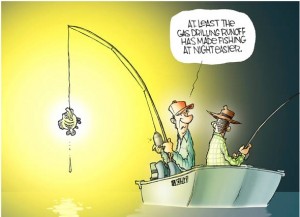
Nostalgia for Fracking in Europe

Pollarizing important issues is not helpgul.  Where fraacking is concerned, there are risks.  They can be controlled by careful geological assessments of the areas in which fracking is proposed and also by avoiding densely populated areas.  The US has been more measured in its response than Europe has.  Facing a cold winter, and cut off or Russian gas supplies as retaliation to sanctions, Europeans are now wondering if they have approached this volatile issue in a measured way.

Fracking remains almost taboo in Europe. France has banned it, with Environment Minister Segolene Royal calling it a “very dangerous technique” and the benefits of shale gas a “mirage.” Germany said in July it would ban fracking at depths of less than 3 kilometers (1.9 miles), which effectively outlaws the practice for most companies. A July joint report by Scientists for Global Responsibility and the Chartered Institute of Environmental Health said U.K. rules governing shale-gas exploration don’t do enough to safeguard public health.

While environmental considerations remain an obstacle to shale-gas developments in Europe, the energy-cost benefits achieved in North America are unequivocal:   As a result, European companies look longingly across the ocean at the burgeoning energy independence of the U.S., and complain that Europe’s drive toward a greener future puts them at a competitive disadvantage.

Whatever progress had been made in providing for Britain’s energy future has ground to a halt. The sad fact remains that, as coal-fired power stations continue to be phased out, little is coming forward to replace them.  The U.K.’s National Grid agreed this week to pay three of the country’s utilities to keep three power plants running this winter as it tries to avoid brownouts. The buffer of extra capacity the country has to meet peak demand will shrink to 4.1 percent, from 6.7 percent in June. Three years ago, the cushion between supply and electricity demand was as high as 15 percent.

The rapid shrinkage of this ‘safety zone’ highlights the pressure that our energy infrastructure is under. The grid is being continually squeezed and this winter is going to be significantly less comfortable than previous years.  Following the March 2011 meltdown at Japan’s Fukushima Dai-Ichi installation, Germany shuttered nine of its nuclear power plants and said it would close the remaining eight by 2022. France, which relies on nuclear energy for about three-quarters of its power, aims to reduce that to 50 percent by 2025. The U.K.’s winter power worries are exacerbated by the closure of four of Electricite de France’s nuclear reactors in Britain since August for safety investigations.

Some progress on adding supply is being made. This month, the U.K. won approval from the European Commission for the nation’s first nuclear project in two decades, a 24.5 billion pound ($23 billion) power station at Hinkley Point in southwest England, to be built by Electricite de France. The government is providing bond guarantees to finance the plant.

None of the current methods for powering homes and businesses is perfect. Burning coal is dirty and bad for the environment; the shale lobby hasn’t convinced either the public or lawmakers that fracking doesn’t cause earthquakes and poison the water supply; and nuclear power produces toxic waste that endures for centuries.

European governments are beginning a new conversation about energy security.To Frack or Not to Frack

How to Measure a Bank’s Solidiity?

Matt Levine writes:  Ever since about mid 2008, when everyone had a massive panic about bank capital, there has been a community of people who wanted to ignore the Basel Committee on Banking Supervision, and their “Tier One Ratio” (based on equity divided by “risk weighted assets” or RWA). Instead, people like Anat Admati or Andy Haldane have suggested that we should just take the equity in the balance sheet, and divide it by the assets to get a “leverage ratio” without any of this complicated risk weighting stuff.

Are they right? In my opinion, yes to the extent that they want to look at the leverage ratio, but very much no to the extent that they want to get rid of risk weighting. It’s true that risk weighted assets and the Basel framework have gone badly wrong in the past and even contributed to some failures. But to take that as a reason for throwing the whole system away is not helpful.

MYTH — Leverage is a “simple” and objective calculation

FACT — Only if you think that calculating a bank balance sheet is simple and objective

MYTH — Leverage is a more conservative standard than RWA

FACT — Unless you make major adjustments to the “simple” leverage ratio, it misses whole categories of risk.

MYTH — Leverage ratios can’t be “gamed” by the banks.

FACT — Leverage ratios are very often gamed

MYTH — Risk weighted asset calculations are always fudged and faked by the banks

FACT — No evidence has been found of this despite a dozen studies

There are two, related, legitimate reasons why the leverage ratio is a big step forward.

First, it acts as a checksum. Most of the things that a bank might do to fool the risk-weighted asset ratio would have the effect of making the balance sheet bigger and the leverage ratio worse. Most of the things that a bank might do to fool the leverage ratio would have the effect of piling up tail risks and making the risk-weighted assets ratio worse. It’s comparatively difficult to think of measures which can fool both ratios at the same time.

Second, and related to this, it helps to avoid “corner solutions”. What you don’t ever want to do in banking is to create the impression that a particular line of business has a zero capital requirement.  If you have more than one ratio, you have much less chance that any activity is going to get a very low capital charge.

Leverages are useful but not simple.  Leveraging

No Simple Answers

No Simple Answers


Calpers Pulls Out of Hedge Funds

Calpers puling out of hedge funds.  Are hedge funds toxic?

Mohamed A. El-Erian writes:  The decision of the California Public Employees’ Retirement System to pull out of its hedge-fund investments continues to attract lots of attention, and understandably so. Calpers is the largest U.S. pension fund and is among those that continue to seek a relatively high rate of return to help pay the health and retirement benefits of millions of public employees. It is also highly respected.

The observers who analyzed the Calpers withdrawal focused on three drivers cited by the institution itself: cost, complexity and scale.

The cost argument is the most straightforward. Most hedge funds still try to apply a “2 and 20” model in which they charge their investors a fee of 2 percent of assets they manage and keep 20 percent of the gains above a specified level. For this, clients have access to the ability to leverage, customize derivatives, and to take long or short positions on particular securities.  As such, these investments have the potential to generate positive (or “absolute”) returns regardless of cycles and market conditions.

Fees.  The 2 percent fee is harder to sell to investors in a world of lower expected returns.  It becomes even harder when clients also face the challenge of continuously identifying top-performing managers to invest with.

Managers.  The selection of an investment manager is a complex science, as well as an art. I Only a small number of firms (such as the Baupost Group under the leadership of Seth Klarman) have been able to maintain consistently superior performance over time.

Scale.  For hedge funds to make a material difference, Calpers needed to invest significant dollars in a space where incremental returns could easily have zero-sum characteristics — meaning a loss for every gain.

All these elements speak to a broader historical phenomenon. The use of hedge funds became popular in the last decade as many institutional investors sought to replicate the “endowment model” first pursued by foundations and universities. This model seeks to go where others aren’t, taking advantage of the long-term nature of the investible funds (“permanent capital”).

But the resulting migration, which has been considerable in recent years, has inevitably eroded its potential for generating revenue — as have the increasingly “winner takes all” outcomes that now dominate some particularly enticing investment destinations.

Outperforming others by diverging from the consensus becomes a lot more difficult if the consensus is joining you. That is what occurred to Calpers and other investors that had looked to hedge funds as a reliable source of superior absolute returns.

This is all the more reason that investors have to do an even better job in their selection of managers. While the result is likely to be lower growth in the overall allocations to hedge funds, the substitutes should not be limited to traditional public markets.

Given today’s realities, investors many may need to develop greater in-house expertise to invest opportunistically in a bigger range of one-off single assets — particularly those done directly.

In that way, they can take advantage of the coming disposal of assets by the restructuring European banks, of the enormous need for infrastructure development, and of the opportunity to better match demand and supply in the more stable emerging economies.

Calpers Cuts Hedge FUnds

Hillary Clinton Flubs a Line

Hillary Clinton’s gaffe does not take her out of the running for President of the US in 2016.  But it shows a weakness.  Joe Biden, another candidate, utters innocent gaffes. He may be dyslexic.  This hardly disqualifies a decent man, with broad foreiign policy experience from running.  In our opinion, the press should lay off his small errors.

Mrs. Clinton’s gaffe about businesses not originating jobs was more sinister.  She seemed to be groping for a phrase some of her political competition uses.  She missed the mark.

A Yale University economiist concluded a decade ago that 2.2 percent of the total present value of social returns to innovation are captured by innovators (although profits to these innovators start out somewhat higher and then decrease rapidly over time.  In other words, nearly 98 percent of the value of technological innovations accrues to consumers (through lower prices and increased productivity) rather than to the inventors themselves.

People who make jobs, enterpeneurs and business people, are to be sure doing this in a country that makes it possible by supporting creativity, risk-taking and effort.  We lead the world in this quality, which is rare and  valuable.  Look at a state like Texas today.  Because it supports this spirit, jobs are plentiful and people are profiting across the board.

Class warfare is not a useful possture from which to improve the economy and create jobs and train people to fill them.

Hillary Cinton Gaffe


LinkedIn Cracked the Chinese Market

How is Linked in different from all the other social media sites?

Katie Benner writes:  LinkedIn is the first U.S. company to enjoy Internet success in China. The country is at the center of one of the professional networking site’s fastest growing regions and represents one of its biggest opportunities. While LinkedIn has only 5 million members in China (if you combine its English and Chinese language sites) the country is home to more than 100 million professionals who are potential future members.

Last quarter, LinkedIn’s chief executive officer, Jeff Weiner, mentioned the positive effect that China has had on his company’s bottom line. Fueled by China, LinkedIn’s revenue from its Asia Pacific division grew 64 percent last quarter, faster than from its operations in any other part of the world. Investors hope to see that growth continue when the company reports earnings today, and in the future.

Most discussions of LinkedIn’s success inevitably focus on the fact that the company cooperates with the Chinese government and censors content from its Chinese users — a discussion that intensified when LinkedIn started blocking some of its users’ posts earlier this year.

Some critics have made much of the fact that LinkedIn tries to paint its so-called “professional content” — stories about management techniques and earnings and best practices that it features alongside resumes and job postings — as uncontroversial. Therefore, the argument goes, there isn’t much on the site to warrant the attention of censors.

Content isn’t the core reason LinkedIn has made strides in China. It’s been successful there because it’s the only foreign Internet company that offers something that a Chinese rival just can’t replicate — a direct connection between the world’s biggest companies, the world’s most respected universities, and bazillions of networking-starved Chinese who want to use the site’s services.

LinkedIn is a window onto, and in some cases a passport to, the middle class, white-collar professional world that Chinese citizens have craved ever since they traded in their Mao suits for Levis in the 1980s.

The world is watching to see how LinkedIn deals with censorship and the Chinese government. But that’s not the only way to gauge why it’s been successful at courting Chinese users and dodging Chinese hardliners. LinkedIn meets the aspirational needs of a generation hungry for opportunity and simply copying its content strategy won’t translate into duplicating its success.

LinkedIn in China


Phone Companies Tracking Customers

Wired and Forbes report earlier that the two largest cellphone carriers in the United States, Verizon and AT&T, are adding the tracking number to their subscribers’ Internet activity, even when users opt out.

The data can be used by any site – even those with no relationship to the telecoms — to build a dossier about a person’s behavior on mobile devices – including which apps they use, what sites they visit and for how long.

MoPub, acquired by Twitter in 2013, bills itself as the “world’s largest mobile ad exchange.” It uses Verizon’s tag to track and target cellphone users for ads, according to instructions by devleopers posted on its website.

Twitter declined to comment.  Who is Tracking You

Phone Companies TrackingPhon


Geithner Surprisingly Frank in AIG Court Papers

Jeff Gerth writes about papers Timothy Geithner, Obama’s first secretary of the treasury, wrote which has cropped up as part of an ongoing legal case concerning AIG and the bailout.  With the SEC focused on insider trading, which Geithner descibes as disgusting but not the cause of the financial crisis, and poor supervision of the various institutions that bundled subprime mortgages, the aftermath of the crisis has still not be dealt with.

Weak remarks from Wiliaim Dudley, head of the New York Fed which Geithner ran before he went to the White House, illustrate how ineffective supervision of Wall Street was and is.  Specific criticisms are summaried in Geithner’s notes.  Timothy Geithner Talks About the Financial Meltdown, Somewhat Frankly

Geithner’s points: Illegal stuff was hard to prove, supervision was weak. Government relief programs were tepid and corporate wrongdoers have not been punished.

Geithner to the Rescue