Gold Prices Head South

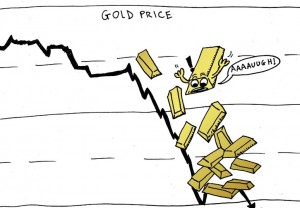
Barry Ritholtz writes:  Why the precious metals and many of the mining companies are struggling isn’t a great mystery. The U.S. dollar is at multiyear highs and gold prices tend to move inversely to the currency. Further, the economy continues to improve, which is rarely a positive for the catastrophe metal. The financial crisis is fading from memory, and now is six years in the rear-view mirror. Why the soft yellow metal continues to trade softly is obvious; less so are the many reasons why some investors remain overweighted in this underperforming asset class.

The idea that the world is ending and the accompanying demand for guns, canned food, bottled water and gold, is having difficulty attracting new adherents in an era of falling unemployment and rising wages. Indeed, many of those who hold those views are having a hard time reconciling their misplaced faith with reality. Regardless of your thoughts on the Wall Street bailouts and the Federal Reserve’s balance sheet — and I have been a loud critic of the former and an informed observer of the latter — the general backdrop has been one of improvement.

Gold Price

Russian App FireChat Powering Hong Kong Protests

Leonid Bershidsky notes that Firechat was devleoped by Stanislav Shalunov.  His quest to find ways to use bandwidth more efficiently and may be  just the beginning of a technological path that could change the way we understand connectivity.

Bershnidsky writes:  The Russian’s work had exciting implications for BitTorrent, the peer-to-peer file-sharing service that was facing problems with broadband operators for using too much bandwidth. BitTorrent acquired a small company that Shalunov had founded, and by 2011 it was using his flexible protocol for 95 percent of its traffic. Apple, too, adopted it to send updates to users of its software. The torrent app and the system updates could now run in the background without slowing the user’s usual Internet activity. “A typical connection on the Internet may only be utilized perhaps 50 percent,” Shalunov explained to Fast Company magazine last year. “This basically gives you a free factor of two for how much traffic you can carry on those same connections.”

FireChat Powering Hong Kong Dissidents?


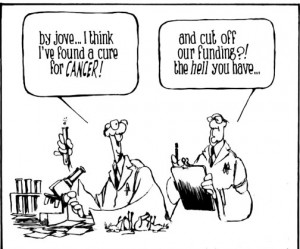
Exorbitant Pharma Costs in US

Economist Robert Reich writes:  Drug companies pay the makers of generic drugs to delay their cheaper versions. These so-called “pay-for-delay” agreements generate big profits for both the proprietary manufacturers and the generics. Taxpayers pay.  The tactic costs us an estimated $3.5 billion a year.

Europe doesn’t allow these sorts of payoffs, but they’re legal in the United States because the major drug makers and generics have fought off any legislative attempts to stop them.

Pharma Costs in the US

Pharma Costs

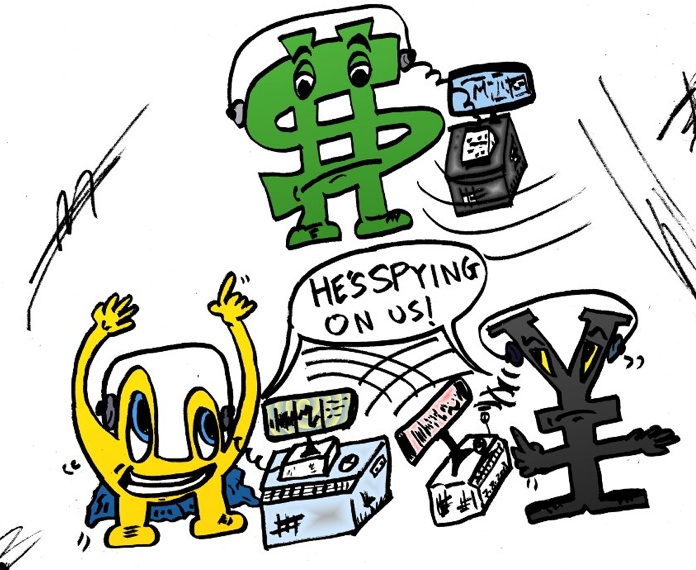
Dollar Gains on Yen

  • US dollar has gained 7% against yen since August
  • Japan PM Abe uneasy with sudden yen weakness
  • Incremental rise in Japan’s sales tax possible

​On September 19th USD/JPY reached highs of 109.46 not seen since early 2008, after one of the busiest weeks in currency markets all year. The greenback has gained almost 7% against JPY since August, a move that can be pinpointed to have begun on August 28th when the gross domestic product figure for the US came in at 4.2% in the second quarter, compared to the -2.1% that had been printed in the previous quarter.

Dollar Gains on Yen

Swiss Lead World in Financial Assets

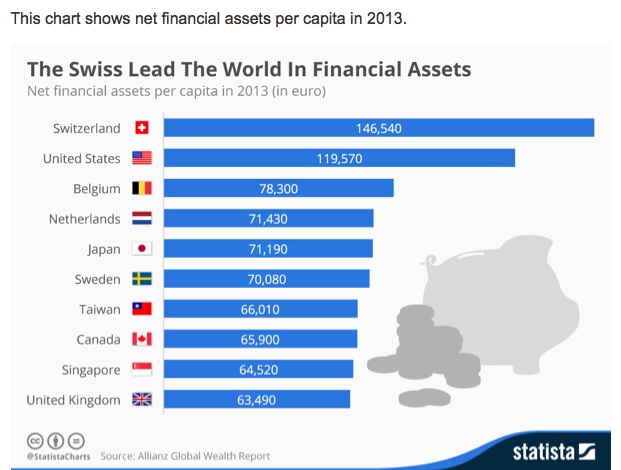
Global financial assets now stand at a record €118 trillion. Swiss households hold the greatest slice of this wealth, with net financial assets per capita of €146,540 when real estate assets are excluded. The United States and Belgium are in second and third place with net per capita financial assets of €119,570 and €78,300 respectively.

Assets

Women CEOs’ Salaries Lag Behind Men’s in Non Profit Orgs

New Guidestar report suggests that women CEOs of non-profits are paid less than men.  The report found that for the 14th year in a row, median compensation for female CEOs lagged behind that of respective male CEOs by up to 23 percent depending on the organization size. It also found that only 17 percent of organizations with budgets larger than $50 million had a female CEO, compared to smaller organizations with less than a million dollar budget, the majority of which have women CEOs.The report found that for the 14th year in a row, median compensation for female CEOs lagged behind that of respective male CEOs by up to 23 percent depending on the organization size. It also found that only 17 percent of organizations with budgets larger than $50 million had a female CEO, compared to smaller organizations with less than a million dollar budget, the majority of which have women CEOs.  Non Profit Salaries

Salary Issues Remain

Argentina’s Bonds

Joseph E. Stiglitz and Martin Guzman write:   In the midst of the ongoing dispute between Argentina and the “vulture funds” that hold its bonds, a broad consensus has emerged concerning the need for sovereign-debt restructuring mechanisms (SDRMs). Otherwise, US Federal Judge Thomas P. Griesa’s ruling that Argentina must pay the vultures in full (after 93% of other bondholders agreed to a restructuring) will give free rein to opportunistic behaviors that sabotage future restructurings.   Argentina’s Bonds

Argentina's Bonds

Harvard’s Launch Lab Launched

Just three years after Harvard University opened its Innovation Lab,  a space for students to develop startup ideas, there’s a new annex for alumni businesses located right across the street. The Launch Lab is intended to support not only recent grads who may be growing companies they started when they were students, but also alumni several years out who are working on new ventures. Both the Launch Lab and the Innovation Lab are in the former WGBH television complex on Western Avenue in Allston. I stopped by earlier this month to have a look…

Jodi Goldstein calls the 3000-square foot facility a “prototype for the future,” and says the goal is to “prove to the university that there’s demand for an entrepreneurial ecosystem here in Allston.” (The current sign at the entrance to Launch Lab, right, is also a prototype. The permanent one hasn’t yet arrived.) To be eligible for admission into the Launch Lab, only one person on a startup’s team has to be a Harvard alumnus. Right now, the price is $200 per desk, per month. That’s less than other local “coworking” spaces like CIC or Workbar, which charge about $350 per month. “We had some generous donors who are helping to subsidize this,” Goldstein says, adding that about half the operating costs of the Launch Lab are expected to come from rent, and half from donors. Harvard brought on a former Workbar staffer Alison Baldygar to help run the Launch Lab.

Goldstein says that before Harvard even began broadly publicizing the plans for Launch Lab, “we got about 50 applications.” The space can fit about 15 startups, she estimates, or 55 people total. Tenants began moving in earlier in September.  The common thread is that these are first-time entrepreneurs looking for coworking space.” The Launch Lab’s first-floor digs are in a Harvard-owned commercial building that is right next door to the university’s future site for an expanded School of Engineering and Applied Sciences.

There are already 14 businesses working out of the space; the largest, with about 10 employees, is Censio.  The company plans to use a smartphone app to monitor your driving habits — with your permission — to enable insurance companies to offer you a lower rate if you exhibit save driving habits. (IE, no excessive speeding, slamming on the brakes, etc.) Former Zipcar chief executive is serving as the company’s interim chief executive, and the startup has already raised some early funding from General Catalyst and Bain Capital Ventures.

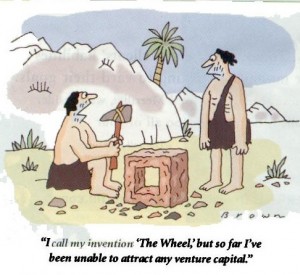
Venture Financing


Why Women Leave High Tech Jobs

Why do women leave good high tech jobs? It’s not the math.  Many women said that it wasn’t motherhood alone that did in their careers. Rather, it was the lack of flexible work arrangements, the unsupportive work environment, or a salary that was inadequate to pay for childcare. As Rebecca, a former motion graphics designer, put it, “Motherhood was just the amplifier. It made all the problems that I’d been putting up with forever actually intolerable.”    Why Women Leave High Tech

Women in High Tech

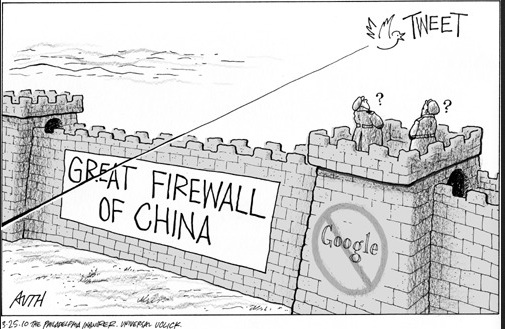
China’s Great Firewall Overcome

 Zach Toombs writes:  For China, online censorship is no longer just about cutting off a flood of information from international news outlets. Now, it’s about plugging a billion little leaks in the Great Firewall. And that’s proving an increasingly difficult task.

In managing the thousands of pro-democracy protesters in Hong Kong’s financial district, some of the censors’ tried and true tactics still work.  Several sudden drops in mobile connectivity in Hong Kong over the past few days, suggesting a police shutdown of mobile networks.

But the growing popularity of VPNs, WeChat, and other workarounds has long put a strain on the Great Firewall. And now a massive effort to push information about what’s happening in Hong Kong onto China’s mainland is making that more apparent, and more relevant, than ever.

Protesters have fallen back on apps like FireChat, which allows chatting with others nearby even without an Internet connection – perfect for the densely packed HK protests.

Monday’s shuttering of Instagram resolved an especially touchy issue for the Communist Party: the sharing of mass protest photos that could very well remind mainlanders of 1989. But the decision to kill the app, which was very popular in China, also might have backfired on Beijing. Interest in VPNs, providing safe passage over the Great Firewall, has spiked in the last week.

Those one or two million people who do know the story coming out of Hong Kong might not know the true story. While a total media blackout is a losing fight for Beijing in the smartphone age, the Communist Party has another tool at its disposal: spin.

Hong Kong and the mainland share little modern history. And loyal state-run outlets have tried especially hard this week to frame the protesting Hong Kongers as lacking patriotism as well. It’s a message that resonated with much of the mainland on the week of China’s National Day this past Wednesday.  Tthe Umbrella Revolution’s cause is not about economics directly. It’s about democracy. And while images and information from the protesters carry loud and clear to the West, for now they’re just poking holes in the Great Firewall and hoping their message is heard, unfiltered, on the other side.

Twitter Beats the Firewall