Legalizing Marijuana in Mexico; How it Impacts the US

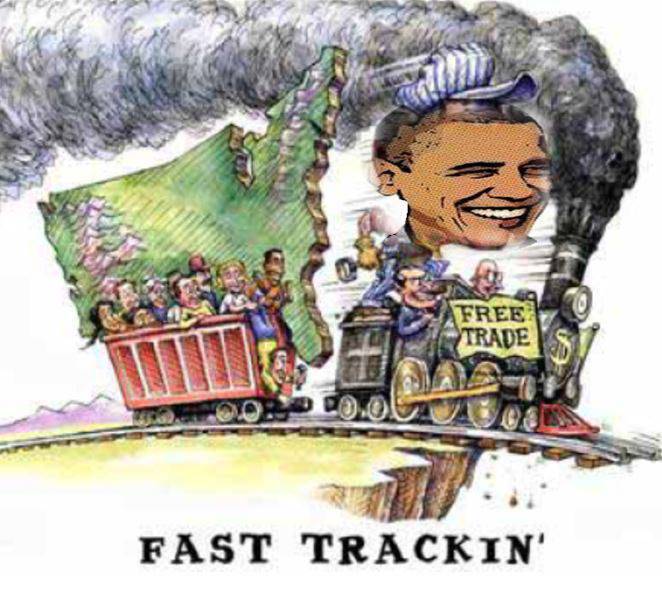
The Rocky Road to Globaization

Mexico may soon enter an elite club composed of Holland, Portugal, Uruguay and Colorado, Oregon and Washington state: It’s on the verge of excluding marijuana from the destructive war on drugs. But will the United States stand in its way?

On Nov. 4, Mexico’s Supreme Court voted by a wide margin to declare unconstitutional the country’s ban on the production, possession and recreational consumption of marijuana. A group of citizens had banded together in a so-called cannabis club (named SMART, for the initials in Spanish of its full title) and requested permission to grow and exchange marijuana among themselves; the government’s health agency (the equivalent of the U.S. Food and Drug Administration) denied them permission; the group sought a writ of habeas corpus, and went all the way to the Supreme Court, which granted them the writ and ordered the agency to legalize the club and allow it to function.

This decision does not entail an across-the-board decriminalization of recreational marijuana. For the moment, it applies only to the group that sought permission. But the court’s ruling may eventually extend to everyone seeking to grow or consume the drug.

Absent injury to third parties, the court resolved that, under the constitution, every individual has the right to enjoy life as he or she sees fit, and that secondary legislation — like prohibiting marijuana — cannot curtail that right.  Legalizaing Marijuana in Mexico


Can China Buy a Relationship with Taiwan?

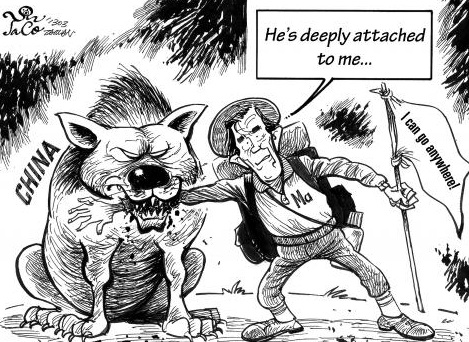
China Tries to Co-op Taiwan with economic incentives.

Austin Ramzy writes:  For the past eight years, the Chinese government has showered its former enemies in Taiwan with economic gifts: direct flights, commercial deals, even an undersea water pipeline. Trade is up more than 50 percent, and mainland tourists, once barred from traveling to the island, now arrive in droves, nearly four million last year alone.

In Taiwan last year, large protests broke out against an agreement to expand trade with the mainland, and the governing Kuomintang, or Nationalist Party, which favors closer ties with China, has plummeted in popularity and is widely expected to lose the presidency and possibly the legislature in January elections.

Now, the Chinese president, Xi Jinping, has agreed to meet the president of Taiwan, Ma Ying-jeou — the first meeting between the leader of the Republic of China, the government that fled to Taiwan after losing a civil war in 1949, and the leader of the People’s Republic of China, established on the mainland by Mao’s victorious Communists.

The encounter, scheduled to take place on neutral ground in Singapore on Saturday, will be trumpeted by both sides as a milestone in cross-strait relations. But it also seems to be an implicit acknowledgment by Mr. Xi that the Chinese effort to woo Taiwan with economic benefits alone has been unsuccessful — and that Beijing’s dream of unification with the island is as distant as ever, despite a long courtship.

“Xi Jinping is at a loss,” said Parris Chang, president of the Taiwan Institute for Political, Economic and Strategic Studies, a think tank in Taipei. “He doesn’t know what to do.”

Jonathan Sullivan, an associate professor at the School of Contemporary Chinese Studies at the University of Nottingham, described the decision to meet Mr. Ma as “a Hail Mary pass with time expiring.”

“Beijing has finally realized that the partner it has been working with on Taiwan, the K.M.T., is heading for disaster,” Professor Sullivan said, referring to the Kuomintang by its initials.

Mr. Xi is breaking with long-established policy by agreeing to meet Mr. Ma. But it is unclear how much further the Communist leadership is able or willing to go to win over the 23 million people of Taiwan, who polls show are uninterested in unification and increasingly anxious about the self-governing island’s dependence on the much larger Chinese economy.

Tsai Ing-wen, the leader of the pro-independence Democratic Progressive Party, is widely favored to become Taiwan’s new president. So far, she has not been subjected to the sort of vitriol that the Communist Party has heaped on some of the D.P.P.’s past candidates, an indication that Beijing may be receptive to working with her.  Can China Buy a Relationship with Taiwan

China and Taiwan.

Bitcoin No Future. Blockchain Future?

Bitcoin not destined for a big future, but the blockchain technology probably is.

Leading figures from the financial industry have expressed their views on the future of digital currency. Jamie Dimon, CEO at JP Morgan, and the head of the International Monetary Fund (IMF), Christine Lagarde, both claimed the cryptocurrency is unlikely to be widely used in the future.

“There will be no real-time, non-controlled currency in the world. There is no government that is going to put up with it for long,” Dimon said while speaking at the Fortune Global Forum 2015 in San Francisco.

He also noted the bitcoin market will not reach global expansion, as it will be stopped by the government. “It’s kind of cute now, a lot of senators and congressmen will say, ‘I support Silicon Valley innovation’, but there will be no currency that gets around government controls,“ Dimon said.

“It’s just not going to happen. You are wasting your time. When the Department of Justice calls and says, ‘it’s an illegal currency and it’s against the laws of the land, and if you do it again, we will put you in jail’, it’s over,” he added.

Still, Dimon noted that JP Morgan believes in the potential of the blockchain, a technology underlying bitcoin. The bank is now investigating the blockchain and its applications. “Blockchain is like any other technology. If it is cheaper, effective, works, and secure, then we are going to use it.

According to Dimon, bitcoin will not be able to compete with the US dollar. “The technology will be used, and it could be used to transport currency, but it will be dollars, not bitcoins.” he said.

One of the areas which, according to Dimon, could be enhanced with the use of the blockchain is the loan market, as it involves a lot of paperwork that could be avoided. Meanwhile, the technology is unlikely to bring significant improvements to such areas as stock market, he said.

Christine Lagarde doesn’t think bitcoin can pose any threat to traditional currencies as well, The Telegraph reported. Moreover, she says that the cryptocurrency could not be trusted. “Many of you in the [financial] industry are actually worried that those technologies are going to massively disrupt the current industry,” she said at a conference in New York.

“Pause for a second. As long as those new technologies are going to abuse and take advantage of the yield for anonymity, I think the banking industry has quite a few good days ahead of it; as long as it takes ownership of those issues of capital and culture in order to restore trust, without which no trade, no transaction, no business can take place,” she stated.

However, the adoption of bitcoin is steadily growing. Although there are fears that bitcoin is utilized for criminal purposes due to its anonymity, its price escalated to almost $500 on Wednesday, showing more than 100% increase over the past month.

Bitcoins Future?

Guessing About the US Fed’s Interest Policy

The New York Fed reports:  By now it is common knowledge that over the past two years the primary source of stock buying have been corporations themselves (recall Goldman’s admission that “buybacks have been the largest source of overall US equity demand in recent years”) with two consecutive years of near record stock repurchases. However, now that a December rate hike appears practically certain following the “pristine” October jobs report, suddenly the question is whether the recent strong flows into bond funds will continue, and generously fund ongoing repurchase activity.

The latest fund flow report from BofA puts this into perspective:  The increase in interest rates is starting to impact US mutual fund and ETF flows.

More concerning for corporations than even fund flows, which will surely see even bigger outflows now that both yields are spreads are set to blow out making debt issuance far less attractive to corporations whose cash flows continue to deteriorate, is what the NY Fed reported as activity by Primary Dealer, i.e., the most connected, “smartest people in the room” who indirectly execute the Fed’s actions in the public markets, in the most recent week.

As the charts below show, the Primary Dealers aren’t waiting for the December announcement to express how they feel about their holdings of both Investment Grade and Junk Bond (mostly in the longer, 5-10Y, 10Y+ maturity buckets where duration risk is highest).

Indeed, as of the week ended October 28, Primary Dealer corporate holdings tumbled across both IG and HY, plunging to the lowest level in years in what can only be called a rapid liquidation of all duration risk.

Investment Grade Bonds:


And Junk Bonds:


Why would dealers be liquidating their corporate bond portfolios at such a fast pace?

For junk, the obvious answer is that with ongoing concerns around rising leverage, not to mention yields being dragged higher by the ongoing pain in the energy sector, this may be merely a proactive move ahead of even more selling.

But for IG the answer is less clear, and the selling likely suggests fears that any December rate hike will see spreads blow out even further, and as a result dealers are cutting their exposure ahead of December.


Entrepreneur Alert: Cuba

The Rocky Road to Globalization

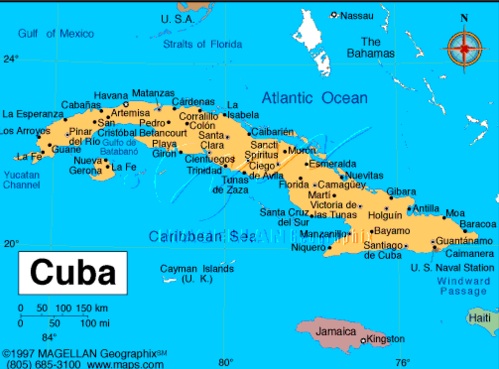
About 50 American businesses came to Havana for a trade expo, many of them intrigued but still unclear how to make money in a Communist-ruled country of 11 million people who have little purchasing power.

With detente raising hopes that full commercial ties could be restored, U.S. companies are being drawn to Cuba. But it is a market whose attraction defies convention, given that foreign businesses complain about the island’s bizarre dual-currency system, rigid labor market and opaque legal guarantees.

One U.S. company that is in line to open the first American factory in Cuba in more than half a century is interested in the island only because its co-founder was born here.

Alabama-based Cleber LLC says it has been approved by the Cuban government to assemble tractors at the special development zone surrounding the port of Mariel. But because of the continuing U.S. trade embargo, Cleber would need special U.S. permission to open shop.

“We can open businesses anywhere in the world. Cuba is special on a personal basis,” said Saul Berenthal, a Cuban-American who left the island in 1960, the year after Fidel Castro’s rebels came to power.

U.S. President Barack Obama and Cuban President Raul Castro agreed last December to end Cold War-era animosity and restore diplomatic relations, but the embargo remains in place as only the U.S. Congress can lift it.

Obama has permitted some commerce, such as telecommunications, and allowed U.S. companies to sell to Cuba’s nascent private sector, adding to existing limited business.

The newcomers can look at the experience of privately held shipping company Crowley Maritime Corporation, which has been making losses or breaking even in Cuba for 14 years.

Jacksonville, Florida-based Crowley entered Cuba in 2001, after Washington started allowing food sales to Cuba, largely because Jay Brickman fell in love with Cuba in 1978, when his boss Thomas Crowley first sent him to Cuba to investigate business opportunities.

Brickman, now vice president of government services for Crowley, said he expects profits soon under the market-friendly changes from the U.S. and Cuban governments.

“Is it worth it, only in a business sense? No,” Brickman said from the annual Havana International Fair. His reward has been many friendships and a book he authored, he said.

As Crowley and European, Canadian and Latin American investors can attest, uncertainties hang over the business climate.

“How guaranteed is your investment? Are you sure that you can make profits? Are you sure that there will be no confiscation of your industry?” Brickman said.

There are U.S. companies with a firm business plan. Sprint Corp signed an agreement with Cuba’s state telecoms monopoly Etecsa on Sept. 25 and added an agreement on roaming services on Monday.

Others are global giants that see every market as worthy of capturing. Among the visiting U.S. companies this week were PepsiCo, American Airlines, Boeing, Cargill and Caterpillar.

U.S. businesses at the trade fair appeared united in opposing the embargo. Congressional advocates of the embargo argue it should remain in place to pressure Cuba on human rights.

“It’s not fair for our politicians to be blocking us from at least exploring the opportunity,” said Michael Maisel, international liaison for Commonwealth Packaging Company. “At that point, we take the risk, but at least let us get to that point.”
Cuba Opportunities

Oil Prices and Oil Production

Oil production and oil prices worldwide.

Doc Moncal writes:  How long can Saudi Arabia operate their country in the red on $45.00 bbl oil before cutting production to increase their profit margins?ay  With oil prices in the $40-50 range, it sounds like Saudi Arabia will be able to continue on its current course for about 3-5 years, depending on the efforts they undertake to cut expenditures and raise outside funds via debt.

Oil Prices

The key focal point for analysts keen on assessing the financial stress in the Saudi Arabian government is measuring the country’s foreign currency reserves. From a peak of $737 billion in August 2014, they have fallen to $672 billion in May 2015, or at a rate of $12 billion per month. That rate was partially impacted by generous grants to the population by King Salman immediately upon assuming the throne, but continued low oil prices, ongoing government expenditures and the Yemen war effort are taking its toll on the country’s foreign currency reserves. Based on the monthly reserve decline rate, the government would have 47 months before reaching the 2009 low level of reserves, meaning it would happen in early 2019.

The IMF reported on breakeven oil prices and years of fiscal reserves for MENAP nations in October with similar conclusions of KSA requiring oil prices just above $100 to balance its budget and fiscal reserves of slightly over 5 years based on $50 oil:

Saudi Arabia has many options to improve its financial situation (cutting fuel subsidies, delaying large capital expenditures, reducing defense spending, austerity measures, and issuing debt, among others). Of course, all of those options carry with them risks of damage to the economy and potential civil unrest.

An economic argument to be made for KSA to curtail oil production. At 10.3 MMbopd of production at $45, the kingdom stands to generate $169 billion over 1 year. At 9 MMbopd at $60, oil revenue would climb 17% to $197 billion.

Almost certainly a reduction of over 1 MMbopd would lead to a significant ($10+) increase in oil prices, especially given the decline in US production and the still ongoing shake-up among US producers, the massive CAPEX reductions made in 2015 and set to go further in 2016, and smaller disruptions in Brazil and Libya currently ongoing.

Granted, the Saudis would give up some market share in cutting production, most likely to Iran, Russia, and other Gulf states. But the ability of those countries (or any country besides Saudi Arabia) to significantly increase production to make up for such a decline and meet increasing oil demand (expected to rise over 1MM bopd next year) is negligible. The billions of dollars of investment required are simply not forthcoming.

Oil Production

Global Warming and Cooling Means…

Variations in global warming and cooling do not contradict overall warming data.

Journal of Glaciology has found the Antarctic ice sheet is expanding because accumulated snowfall is outpacing melting glaciers.  This has drawn sharp criticism from many climate scientists. While it does not contradict the science on global warming, it has pried open a long-standing debate about how warming is effecting the largest ice mass on the planet.

This is representative of some general problems in interpreting climate data:  (1) The increase in the overall average temperature of the planet does not mean that some areas cannot be cooling.  Over the last two centuries temperatures in the arctic have risen about twice the rate of the global average.  That fact means that there must have been areas on earth that have seen temperature rises less than average, or maybe even decreasing.  (2) Temperature changes, particularly non-uniformly distributed changes, will likely produce changes in participation, both amount and distribution.  This second consideration means that the antarctic could have a greater amount on annual ice melt because of rising temperatures offset by an increase in the rate of ice accumulation due to more snowfall.  So Antarctica could be warming and increasing ice cover at the same time.  And then there is an increase in sea ice in the water surrounding Antarctica which further complicates the overall picture.

African Development: Infrastructure Key?

The relationship between manufacturing, development in emerging nations and ‘growth’ in developed ones is a challenging issue.

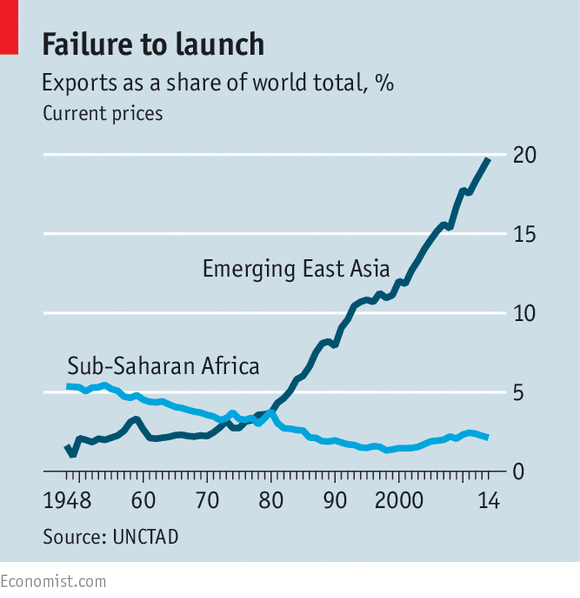
From the Economist:  Over the past 15 years sub-Saharan African economies have expanded at an average rate of about 5% a year, enough to have doubled output over the period. They were helped largely by a commodities boom that was caused, in part, by rapid urbanisation in China. As China’s economy has slowed, the prices of many commodities mined in Africa have slumped again. Copper, for instance, now sells for about half as much as it did at its peak. This, in turn, is hitting Africa’s growth: the IMF reckons it will slip to under 4% this year, leading many to fret that a harmful old pattern of commodity-driven boom and bust in Africa is about to repeat itself. One of the main reasons to worry is that Africa’s manufacturing industry has largely missed out on the boom.

The figures are stark. The UN’s Economic Commission for Africa (UNECA), which is publishing a big report on industrialization in Africa next month, reckons that from 1980 to 2013 the African manufacturing sector’s contribution to the continent’s total economy actually declined from 12% to 11%, leaving it with the smallest share of any developing region. Moreover, in most countries in sub-Saharan Africa, manufacturing’s share of output has fallen during the past 25 years. A comparison of Africa and Asia is striking. In Africa manufacturing provides just over 6% of all jobs, a figure that barely changed over more than three decades to 2008. In Asia the figure grew from 11% to 16% over the same period.

Many countries deindustrialize as they grow richer (growth in service-based parts of the economy, such as entertainment, helps shrink manufacturing’s slice of the total). But many African countries are deindustrializing while they are still poor, raising the worrying prospect that they will miss out on the chance to grow rich by shifting workers from farms to higher-paying factory jobs.

Premature deindustrialisation is not just happening in Africa—other developing countries are also seeing the growth of factories slowing, partly because technology is reducing the demand for low-skilled workers. Manufacturing has become less labor intensive across the board.

Yet deindustrialization appears to be hitting African countries particularly hard. This is partly because weak infrastructure drives up the costs of making things.

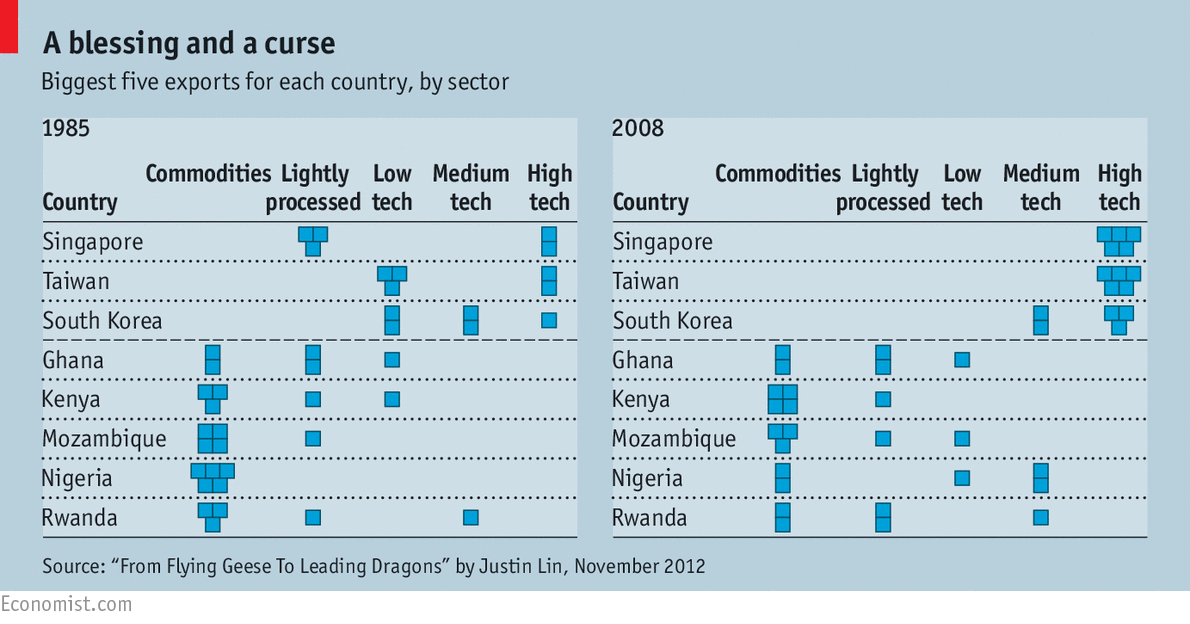
Africa’s second disadvantage is its bounty of natural riches. Booming commodity prices over the past decade brought with them the “Dutch disease”: economies benefiting from increased exports of oil and the like tend to see their exchange rates driven up, which then makes it cheaper to import goods such as cars and fridges, and harder to produce and export locally manufactured goods.

Africa’s final snag is its geography. East Asia’s string of successes happened under the “flying geese” model of development, where a “lead” country creates a slipstream for others to follow. This happened first in the 1970s, when Japan moved labour-intensive manufacturing to Taiwan and South Korea. But Africa seems to have missed the flock.

Ethiopia has bucked this trend.  Tanzania, where manufacturing output has grown 7.5% annually from 1997-2012, is wooing Chinese and Singaporean clothing firms and started building its first megaport and industrial park last month. Rwanda has attracted investment from Helen Ai, the woman behind Ethiopia’s most successful shoe firm. Her garment factory plans to hire 1,000 workers by the end of the year.

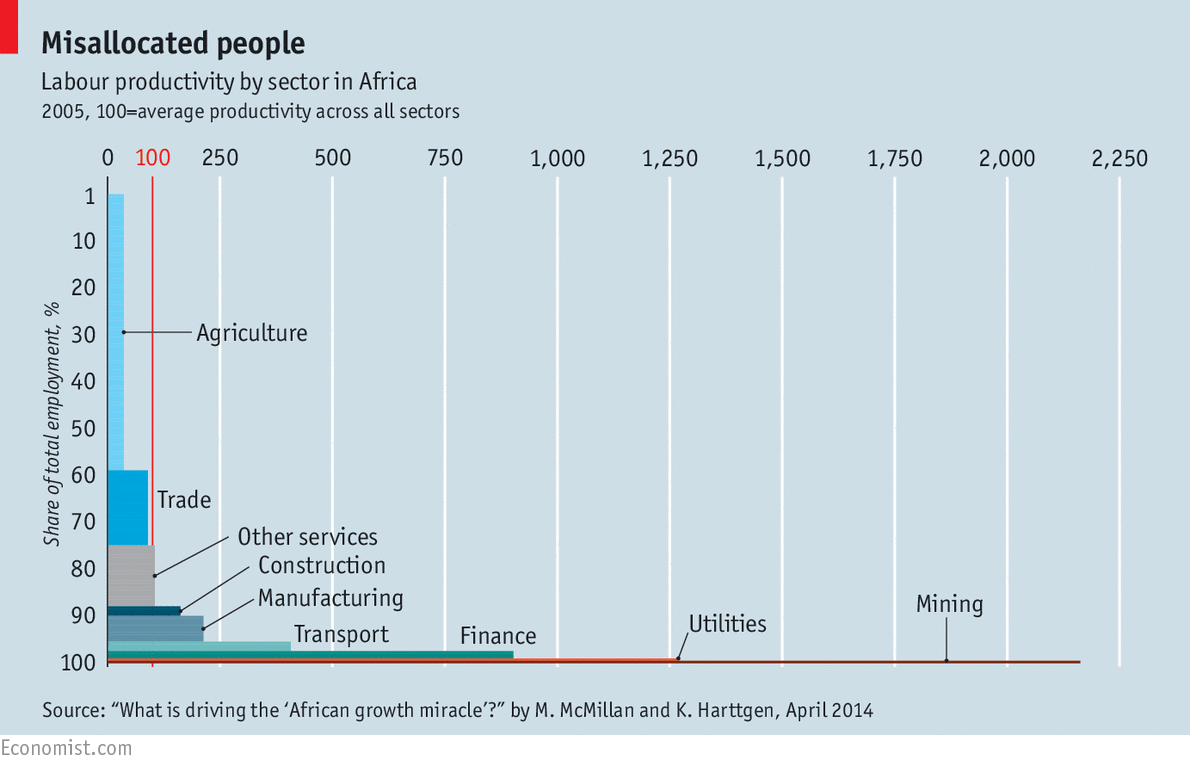
Nonetheless, factories are not creating nearly enough jobs for the millions of young people moving into cities each year. Most of them end up in part-time employment in low-productivity businesses such as groceries or restaurants, which are limited by the tiny domestic economy; Africa generates only 2% of the world’s demand. To grow fast, African countries need to shift workers into more productive industries. Their governments need to provide the infrastructure and the incentives for manufacturing firms to set up. Without determined action, they risk another lost decade as the commodity bust deepens.


State Dept. Keeps Keystone Pipeline in the Pipeline

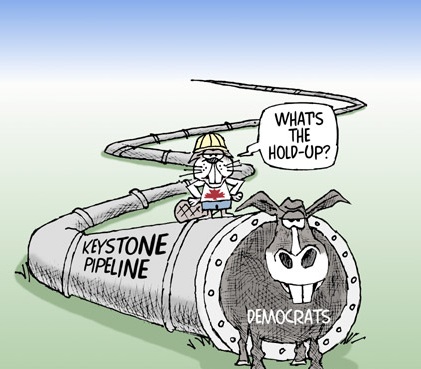
The State Department rejected TransCanada’s request to pause the review of the Keystone XL pipeline, after the company sought it earlier this week. The proposal from the company was seen as an effort to stall the process until after President Obama’s administration, as he is expected to reject it. 

TransCanada Corp’s request to the State Department for a delay was seen by many as an attempt to postpone the decision until after President Barack Obama left office and a new president more friendly to the plan took over in 2017.

The White House declined to comment on the State Department’s decision.

Keystone Pipeline