Tusk Appointment in EU a Reason for Optimism?

Ian Hansen writes: The recent choice of Polish prime minister Donald Tusk as the next president of the European Council is an auspicious sign.

The selection process that brought him to power remains more about expedience than merit. Yet, replacing Herman Van Rompuy with Tusk as “president of the presidents” suggests the Council will have more determined leadership to enact Europe’s agenda. Tusk’s political style and already strong European connections can help drive the Council to more united policies on critical issues.

Just as Belgium has not solved its long-term problems, the eurozone and greater EU still face a grave economic future for failing to remedy structural problems. From the eurozone crisis to the crisis in Ukraine, examples abound of the EU not taking unified action until it is too late.

The press describes Tusk as a soft-spoken and humorous man with a shrewd ability to defeat rivals while achieving political success. He is the only founder of his ruling center-right Civic Platform (PO) party still in the party. With strong political acumen and experience leading a rising European power and strong relationships with key European leaders, one can envision Tusk developing the president’s role from Van Rompuy’s backdoor facilitator part into a more powerful agenda-setting role.

Unlike Federica Mogherini, Tusk was unanimously named to his position by his European counterparts. French concerns over Tusk coming from a non-euro country and British concerns over EU migration even faded away as a result of Tusk’s positive working relationships with Francois Hollande and David Cameron. Yet, the most vital relationship and Tusk’s closest is with Angela Merkel.

Extremely pragmatic, both leaders have been repeatedly described as allies and confidantes as their countries have grown stronger while becoming more interlinked in recent years. Merkel even urged Tusk to consider the office of president before he truly became a candidate. Thus, while Tusk’s appointment was a symbolic win for Poland and other new EU members, it was also a win for Germany.
From ‘Merkozy’ to ‘Tuskel’

This matters immensely because Tusk’s ability to coalesce a strong negotiated position with the support of the indispensable Merkel would quickly and forcefully cement EU policies. While “Merkozy” talk once dominated the EU, decreasing French influence and uncertainty over the British role means a theoretical “Tuskel” could move Europe forward with policies aligned around a central European view.

For instance, Merkel, Tusk, and the new President of the European Commission Jean-Claude Juncker have all acknowledged the importance of keeping the UK in the EU. Their appreciation of the UK’s role in Europe, which is not universally shared within Europe, greatly increases the likelihood of passing reforms amenable to British voters before a possible in/out referendum by 2017.

Donald Tusk


Economic Impact of Turkey’s Ambivalence on Middle East Wars

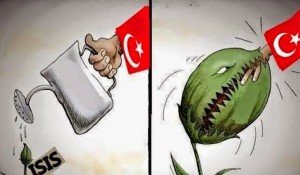
The Turkish government has not recognized the true nature of the Islamist group. It may already have been too late, however, with foreign policy tactics beginning to become contaminated with apprehension. Corruption, ineptitude and chaos within Turkey’s security apparatus no doubt also played a role, all of which made it more difficult to control the border.

Now, Ankara is facing an extremely difficult situation. Providing care to the masses of refugees costs billions of euros and weighs on the country’s already weak economy. Social tensions are on the rise with poor Turks in the region envious of the relatively good care received by the refugees and concerned about increased competition for jobs. Well-off Syrians have also driven up rents in the cities.

 The government’s biggest fear is of terror attacks. “Tourism is one of the most important economic sectors,” he says. “If a bomb goes off in a hotel and a couple of vacationers die, it’s over.” The fear is certainly well-founded. Several hundred Islamic State fighters come from Turkey and, in contrast to jhihadits from elsewhere,  they can move about freely in their home country.

Like Ahmet, a 21-year-old from Istanbul who fights for the Islamic State. “We are everywhere in Turkey, in Istanbul, in Ankara, in Gaziantep,” he says. It is impossible to confirm such claims, but Western intelligence agents believe that the Islamic State actively tries to recruit young men in Turkey. One intelligence agent who asked not to be identified says that warnings have been delivered to Turkey for years. “But the government always insists that it has the radicals under control.”

Ahmet was recruited two years ago in Istanbul by a precursor group to the Islamic State. Even then, he was full of admiration for the older boys at the Koran school who spoke about their dreams of joining the jihad. He says he has already been in Syria twice and is planning to return soon to fight “to the end.” His final battle, he says, is rapidly approaching.

Turkey and ISIS


Atlanta Prosecutes Teachers Who Helped Students Cheat

Prosecutors outlined the case against a dozen former principals, teachers, and administrators accused of orchestrating a massive cheating conspiracy in 2009 in Atlanta public schools, as the high-profile trial got under way.

Prosecutors had brought charges against 35 individuals in the case, one of the most sweeping and widespread cases of cheating to come to light in US public education. Most of those individuals have pleaded guilty and won’t go to trial. According to the charges, educators allegedly used a variety of schemes to inflate students’ test scores, including erasing incorrect answers, telling children to change their answers, and opening sealed exams ahead of time to coach students on the answers.

It’s a case that has received widespread attention both because of the nature of the charges and the fact that it seemed to have emanated from the very top – former Atlanta superintendent Beverly Hall is one of the defendants, though her trial has been delayed while she deals with a health issue  – as well as the questions it raises about the possible negative incentives from the culture of high-stakes standardized testing.Prosecutors on Monday outlined the case against a dozen former principals, teachers, and administrators accused of orchestrating a massive cheating conspiracy in 2009 in Atlanta public schools, as the high-profile trial got under way.

Test Cheating

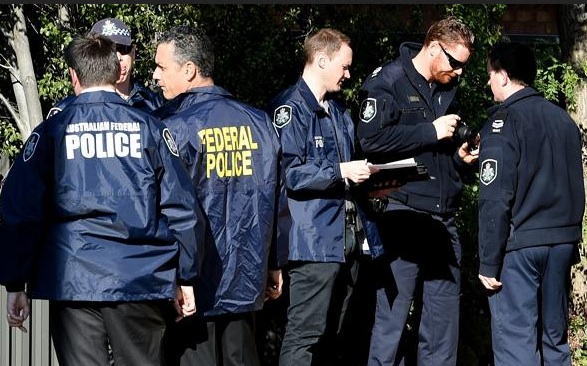
Australians Arrest ISIS Financier

Melbourne raids follow a heightened terror alert earlier in September and the tabling of new security laws in Australia’s parliament.

Security forces in Australia carried out a new round of anti-terror raids, resulting in the arrest of a 23-year-old man in Melbourne on suspicion of funding a US citizen to fight for Islamic State.

Hassan El Sabsabi, is accused of sending about $12,000 to a US citizen he met on social media, in order to help fund his travel to Syria, where IS and other jihadist groups are active. Mr. El Sabsabi was arrested today after an eight-month investigation by Australian police, which were tipped off by the FBI.Security forces in Australia carried out a new round of anti-terror raids today, resulting in the arrest of a 23-year-old man in Melbourne on suspicion of funding a US citizen to fight for Islamic State.

Arrests in Australia

Obama: My Dinner with Modi

As President Obama welcomes new Indian Prime Minister Narendra Modi to the White House for a private dinner, it will be more than US amends for having denied Mr. Modi a visa (and maintaining the ban for nearly a decade) over his handling of sectarian riots in India’s Gujarat state in 2002 when he was chief minister.

It represents an opportunity for both Modi and Mr. Obama to address – and they hope, advance – key issues to both countries. Here are five of those issues:

Economic issues: Modi met with CEOs of Fortune 500 companies in New York, and clearly the US and India are doing business and want to do more business. But talks at the top on this subject have failed in the past.

Relations with China: Modi has expressed his interest in economic relations with China, but is fearful of incursions on the border. He wants increase US-India security ties.

Counter-terrorism: The US wants help from India in stemming local recruiting by terrorist organizations. India wants help with Pakistan.

Climate change: Obama has made this a priority. Modi says that the economic costs of addressing climate change should be borne by wealthy countries.

Indian-Americans. A rousing rally from this group greeted Modi at Madison Square Garden. Modi would like them to help build India. Obama would like their votes for Democrats.

Obama and Modi Dine

Obama, Unquestionably Bright, Started at Zero in Economics and Appears to Have Learned

Juan WIlliams writes: President Obama may be “on to something” with his statements that echo President Ronald Reagan’s famous question that asked voters if they are better off than they were four years ago.

Reuters has confirmed the president’s claims on the economy, and it’s lasting longer than average.  “‘On Obama’s watch, 5.1 million jobs have also been added to payrolls, the S&P/Case-Shiller national home price index is up about 17 percent and the S&P 500 stock index has more than doubled while hitting all-time records,'” Williams quotes the report as saying.

According to a Kiplinger economic outlook, Williams says, the nation’s economy “looks better than was previously thought, setting the stage for more sustained growth in coming months.”

In addition, Williams notes, the unemployment rate has been lower for the past five months than during the last five years, and is now at 6.1 percent. Meanwhile, the Dow Jones industrial average is near an all-time high, now regularly closing at over 17,000 points.

Consumer confidence is also up, said Williams, to its highest point in nearly seven years.
Obama said on CBS’ “60 Minutes” Sunday that he plans to spend the weeks before the November midterm election campaigning for Democrats on his economic record, and that he would put it “against any leader around the world in terms of digging ourselves out of a terrible, almost unprecedented financial crisis.”

Obama admits that Americans aren’t feeling the recovery, and blamed that on incomes and wages that are not increasing. That problem can be addressed through Democratic policy, said Obama.

The president’s job approval, when it comes to the economy, has a negative ranking, with RealClearPolitics showing that 55 percent of Americans disapprove of the president’s handling of the economy, with 40 percent approving.  The economy is the top issue to voters, Williams said, so Democrats will need to work to turn the negative numbers around.

Americans have a low opinion of the economy because median household incomes have fallen by some $2,100 during the president’s first term in office, according to Census Bureau figures.

But if the midterms turn into a referendum on which party can boost middle class wages, the Democrats may hold the Senate.

Obama and the Eonomy


Rene Pape, the World’s Great Bass, in Recital in New York

Pape is a natural. With a large voice that flows easily and a perfect instinct for the phrase, for dynamics and for drama he is one of the most gifted singers performing today. He is completing 2014 in performances in Macbeth and the Magic Flute and also Tristan and Iseult. No one will ever forget his Gurnemanz in Parsifal.
There was a moment in Parsifal when Pape sang about the annointment of the new King. He said, “I was so moved that I was shaking…it took me several minutes to calm down.” Everyone felt the tension in the air. Pape wa not talking about his singing, but about his reaction to Wagner’s music.
In his selection of songs, it was clear that he was listening and delivering the music of Beethoven and Dvorak, of the composers and their intention. He was not commenting on his own singing.
His program was brave and daring. Beethoven songs which began the afternoon were based on the poetry of Gellert and are a variety of addresses to God. In his commanding presence, and complete attention to emotional implication, Pape showed us how far he can extend dynamic range. Other singers try to pull off the whispered phrase, but only Pape does it perfectly. The stars flickered in the sixth song, and Camillo Radicke accompanied in seamless rhythms.
Pape’s sense of humor is as graceful and compelling as his dramatic range. When applause erupted at an inappropriate place, he glared with a teasing good humor. Rattled by the unfortunate soprano who the Met keeps casting, Marina Poplavskaya, in a recent Faust production, he whispered in her ear so the entire Met audience could hear as she began Marguerite’s famous Jewel Song, “Diamonds are a Girl’s Best Friend.”
Pape is known to be indulgent of women, booze, cigarette, and let’s face it, life. He has said, “I suppose I should be more careful, but on the other hand, you will be good onstage if you live a real life. If you take yourself out of real life and overprotect yourself, you cannot make real music. It will always be fake.”
Pape’s low placement does not sound guttural. It does not wobble. His tones are totally focused. He smiles as he sings, but not because he is amused, but so he can facilitate his technique and keep his tone frontal. His perfect technique is used to produce tonal color as he wants it. He can make his notes round and dark or bright and open. He is relaxed because this is his voice, not one that is made up of many selected pieces, the fault of so many singers today. His vibrato is also natural and pleasing. With hiis superior technique, he explores expression in the service of musicianship.

Rene Pape, SuperbPape’s English is first rate. Songs from Shakespeare, by the late 19th century composer Quilter,were delightful. His final encore was a selection was from Camelot. His promise ‘never to leave’ was not kept, but enticed an audience that would never let this great lyric bass go. Pape loves blues and hard rock too. He is a musical polymath.

Draghi Acts?

Mohamed El Erian writes:  A bit more than two years ago, the European Central Bank performed an amazing magic trick: With the promise that he would do “whatever it takes” to hold the euro area together, ECB President Mario Draghi managed to bring Europe back from the brink of financial and economic disaster.

Now, Draghi is at it again. His pledge to do what’s needed to battle faltering growth and deflationary pressures has already moved markets, weakening the euro enough to have a positive effect on exports and fend off deflation. This time around, though, words won’t be enough: The ECB will have to follow through on Draghi’s promise.

Back in July 2012, the ECB didn’t have to follow Draghi’s words with action: The mere knowledge that the central bank was ready to commit its vast resources to defending struggling governments from market pressures was enough to restore calm. Over the ensuing two years, the governments’ borrowing costs fell to record lows, capital started flowing back into embattled countries such as Italy and Spain, and even Greece managed to sell new bonds to investors at surprisingly low yields.

Draghi’s latest promise is focused more on reinvigorating a European economy that has been running far too close to recession and deflation. A few weeks ago, he indicated that the central bank was prepared to take extraordinary stimulus measures, similar to the bond-buying programs on which the U.S. Federal Reserve and the Bank of England embarked much earlier. The ECB made a small initial step by cutting interest rates and announcing a limited plan to buy asset-backed securities and covered bonds.

If the ECB wants the effect of its first steps to last, it will have to do a lot more, and very soon. Still, there’s no guarantee the measures will work as intended.

Europe will not capture the benefits of a weaker currency unless the ECB announces this month a large program to expand its balance sheet by purchasing a broad set of bonds in the marketplace. Absent such an announcement, the euro will likely appreciate. And while aggressive action will improve the growth and inflation outlook at the margin, it’s not likely to be enough to materially change Europe’s economic prospects. For that, Europe needs more than monetary stimulus. It needs governments to do a better job of supporting ECB actions by pursuing pro-growth structural reforms aimed at improving labor and product markets, better coordinating fiscal policy and eradicating remaining pockets of excessive indebtedness.

Unfortunately, there’s little indication that this will happen anytime soon.

Draghi

Does Income Inequality Hurt State Tax Coffers?

Kim Rueben writes;  Standard and Poor’s got a lot of attention last week for a study that concluded that rising income inequality is damaging state tax revenues. State tax revenue growth has slowed in recent decades and income inequality has grown, but the story is far more complicated than S&P suggests.

Factors effecting state tax revenues irrespective of the change in income distriution:

1.  More of what we are buying is tax free.

2.  Taxes have been reduced on the rich.

Some states are beginning to counter those trends. We’ve seen a recent return to higher top rates in California, New York and other states. At the same time, however, some states such as Kansas are cutting their statutory rates. Many of those changes are so new they are not reflected in the S&P data.

Three decades ago both the federal and most state codes were indexed and inflation rates fell. As a result, the phenomenon known as bracket creep became a less valuable source of tax revenue.    S&P’s Conclusions on State Tax Revenue and Inequality

Inequality and Taxes

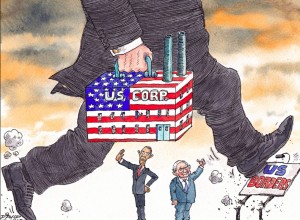
US Treasury’s Anti-Inversion Measures

Howard Gleckman writes: Treasury could not change that threshold, though Congress could (and bills have been introduced to do so). However, Treasury did block several techniques firms have used to manipulate the ownership test. For instance, the U.S. firm can no longer reduce its value by paying shareholders a big dividend in advance of a deal. Similarly, the new foreign parent can no longer inflate its size by counting passive assets not used in its regular business.

Treasury also attempted to stop several common post-inversion techniques firms use to avoid paying tax when they bring back to the U.S. pre-merger foreign profits that are sitting in overseas affiliates. For instance, the new rules aim to block a practice known as “hopscotching” where an old foreign subsidiary lends money to the new foreign parent which in turn either distributes  the proceeds to U.S. shareholders or invests in the U.S., bypassing the U.S. firm. This allows the funds to come to the U.S. tax-free.   Treasury and Inversion

Inversion