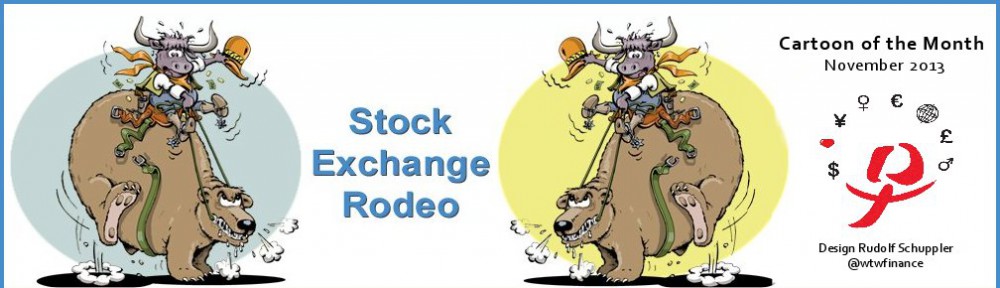
Goldman Warns: “Too Big To Jail.”

The US has not yet had the guts to insist on an admission of criminal guilt from the big banks, but they are close to just such a plea with Credit Suisse and BNP Paribas.

At the annual meeting of Goldman Sachs in Irving, Texas, the CEO expressed concern about the impact of criminal pleas on the economy.  Of course, the minute Bear Sterns bought a mortgage company, that grew geometrically to feed its bundlers in New York, Goldman followed suit.  In Texas, of course.

Too Big to Jail

Engaging Shareholders in Active Ownership

The long-term health of pension plans, and the retirement security of participants and families who rely upon them, are threatened by conflicts of interest on Wall Street and in the boardroom, a corporate backlash that seeks to weaken the accountability of executives to shareholders, and outright corporate fraud.  Advisory groups who are not named as fiduciaries for pension funds have cropped up to help the share.  CtW Investment organized a vote against excessive compensation for the executives of Chipotle and won.  Yet this may be a pyrrhic victory because the Board does not have to abide by the vote.

Executive Pay

Criminals Launder $140 Billion A Year Through Sports Betting

Andreas Frank writes: The report, compiled by the ICSS
ICSS and the Sorbonne University in Paris, said that 80% of global sports betting was being carried out on illegal markets, placing it beyond the reach of regulators and investigators.  Manipulation takes place in a growing sports economy, which now accounts for 2% of the global GDP.   The transnational sports-betting market is estimated with wagers worth between €200 – 500 billion, more than 80% of which is illegal.

Criminals are using betting on sports events to launder $140 billion each year, exposing a lack of effective regulation that allows match-fixing to spread.

The findings assume:  Asia and Europe represents 85% of the total legal and illegal market.  Europe makes up 49% of the legal market, whilst Asia makes up 53% of the illegal market.  Legal sports betting currently delivers only €4 billion of official tax revenues for countries.  More than 8,000 legal operators offer sports betting – 80% are in territories with a low rate of tax and few inspections.

The internet has led to an unprecedented expansion of sport betting offers, with online betting now representing 30% of the global market.  The sports betting market has been transformed into a multi-billion dollar industry with betting exchanges, live betting, betting on more low-profile events and derivative betting formulas, as well as higher return rates for bettors.

Soccer and cricket were identified as the sports most threatened by criminals seeking to rig the gambling market but tennis, basketball, motor racing and badminton were also affected, according to the report.

A number of soccer leagues have been hit by match-fixing scandals in recent years and three Pakistani cricketers were jailed for a plot to deliberately bowl no-balls during a test match against England at Lord’s in 2010.

Practical solutions will help combat match-fixing and illegal betting.  These include creating a sports betting tax to finance investigations into match-fixing and illegal betting.  Players, coaches and administrators must be prohibited from betting on competitions and matches within their sport.

Protecting the Integrity of Sport Competition – The Last Bet for Modern Sport
SportbettingCorruption Reports

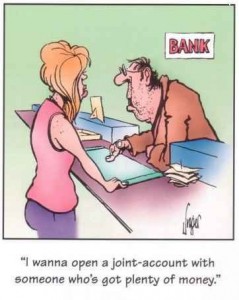
Misuse Of A Girl’s Bank Account

When lottery email scam turns into murder!

A gang of five, who used to cheat people through lottery email, killed one of their own “aged 15-17 years”. The gang was using the girl’s bank account for collecting money. How did the bank allow a minor girl to operate the account? Where were the KYC norms?

With banks becoming ‘hyper active’ in creating awareness about not to share bank account numbers and passwords with anyone, the criminal minds are, more often, found using ‘lottery’ route to dupe people. Unfortunately, the loss in such lottery scam messages is not limited to money alone. As the recent incident from Pune points out, these criminals even killed their own accomplice as she wanted to leave the gang.

According to a report from Mid-Day, on 7th May the police found body of 17-year old Rani Singh in a red suitcase abandoned at Talegaon railway station near Pune. Police arrested three people, Rahul Ravindra Barai, Ershan Ali Khureshi and Santosh Jugdar from Mumbai and after the probe found that they, including Rani belonged to a five member gang and were involved in cheating people. “Recently, Singh, the victim who was also a member of the gang, had told them that she planned to leave the group. Angry with her for defecting, the trio killed her on the orders of the gang leader,” the report says.
When lottery email scam turns into murder

Chipotle Executive Pay Under Attack

A small group of nuns who held shares of JP Morgan Chase brought Jamie Dimon to his knees.  Now the CtW investment group, which oversees $250 billion dollars in union pensions funds, has gotten the shareholders in Chipotleto vote down excessive executive packages.  While the vote at the annual shareholders meeting is not binding, the company board has said that they will take the vote seriously.

Chipotle

Inequality Insurance?

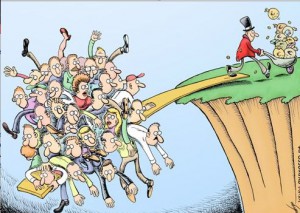
Yale economist Robert Schiller writes:  Inequality insurance would require governments to establish very long-term plans to make income-tax rates automatically higher for high-income people in the future if inequality worsens significantly, with no change in taxes otherwise. I called it inequality insurance because, like any insurance policy, it addresses risks beforehand. Just as one must buy fire insurance before, not after, one’s house burns down, we have to deal with the risk of inequality before it becomes much worse and creates a powerful new class of entitled rich people who use their power to consolidate their gains.

To be truly effective, increases in wealth taxes – which fall more on highly mobile retired or other affluent people – would have to include a global component; otherwise, the rich would simply emigrate to whichever country has the lowest tax rates. And the unpopularity of wealth taxes has impeded global cooperation. Finland had a wealth tax but dropped it. So did Austria, Denmark, Germany, Sweden, and Spain.
Increasing wealth taxes now, as Piketty proposes, would strike many people as unfair, because it would amount to imposing a retroactive levy on the work carried out to accumulate that wealth in the past – a change to the rules of the game, and its outcome, after the game is over. Older people who worked hard to accumulate wealth over the course of their lifetime would be taxed on their frugality to benefit people who didn’t even try to save. If they had been told that the tax was coming, maybe they would not have saved so much; maybe they would have paid the income tax and consumed the rest, like everybody else.

Income Inequality

New York Times Chief Fired Because…

We will never know exactly why Jill Abramson, the first woman to lead the New York Times editorially, left the company abruptly.  Some say fights in the newsroom.  Others, that she was disgruntled at being paid less than men in the same job.

What we do know is that the Times was having a difficult time transitioning to the digital age.  In the worst of times women are brought in to lead companies.  Mary Barra at General Motors.  Carly Fiorina and Meg Whitman at Hewlett Packard.

The flack over the dismissal would be far more shrill if a male editor of color had not been logically available to take over.  Who else but a person of color or a woman wanted to President of the US when the US, as Timothy Geithner has recently pointed out, was a flaming plane trying to land?

Women Executives


Hundreds Of Billions Of Pounds Laundered Through UK Banks Each Year

Andreas Frank reports: Hundreds of billions of pounds of international criminal money is laundered through banks and their subsidiaries every year, according to the National Crime Agency’s latest analysis of the serious and organised crime threats faced by the UK.

The analysis has suggested that high transaction volumes, the developed financial services industry and political stability have made the UK’s financial system particularly attractive to money launderers.

The NCA said that most proceeds of UK serious and organisedhttp://www.frank-cs.org/cms/images/70_Pointer.jpg
crime were laundered through UK banks, wire transfer companies and other regulated businesses, including money service businesses.

National Crime Agency director general Keith Bristow said: “To relentlessly disrupt serious and organised crime as effectively as possible, we need to take informed decisions about how law enforcement co-ordinates and targets its resources. This assessment is the most detailed and broad-ranging crime threat analysis ever produced by law enforcement.

“The assessment, and the response to it, is owned by the whole of law enforcement, including police forces and other national agencies, as well as Whitehall departments, local government, industry partners and the third sector. It helps us maximise our collective impact in order to cut serious and organised crime.”

One of the key themes of the coming year is an increase in the use of denial-of-service attacks, and technology ransom demands. The UK’s networked systems are said to be at particular risk and this economic crime is expected to continue over the next three years.

Currently, says the NCA, organised crime accounts for economic losses of around £24bn per year. Cybercrime has increased over the past two decades and represents increasing threats.

The report says: “Over the last two decades, the internet and digital communications technology have steadily increased their penetration into all sectors of UK society and business. More and more government and public services are going online and it is likely that attempted cyber attacks against government services will increase.

“In much the same way as criminals – including serious and organised criminals – have in the offline world, they identify and exploit any advantage they can to perpetrate their crimes.”

The NCA said that a handful of cybercrime risks would have the most impact over the three-year period, and said that the threat of data hauls, denial of service attacks and network disruption were all likely to increase.

Note: Mr. Frank commends the UK for undertaking this study and for facing a serious problem which remains unaddressed in most of the civilized world.
NCA National Strategic Assessment of Serious and Organised Crime 2014
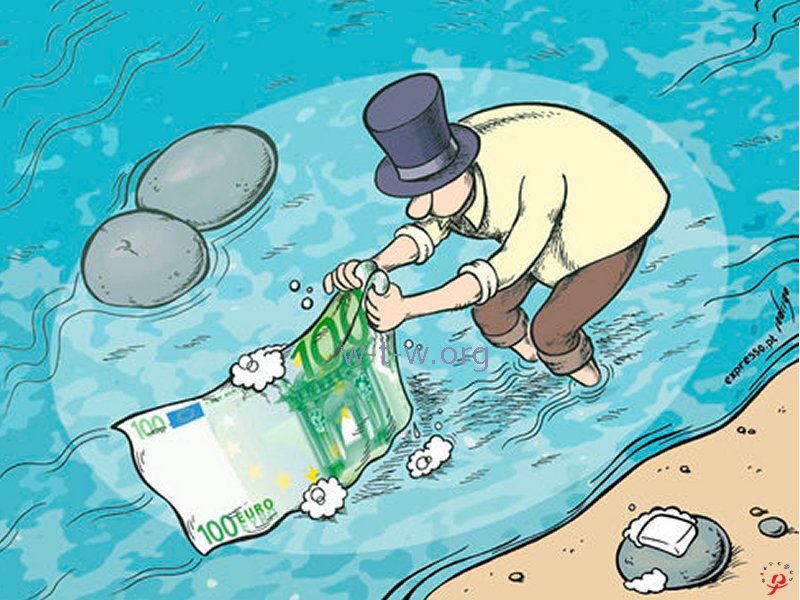
Rodrigo de Matos  www.w-t-w.org/en/rodrigo-de-matos/ http://rodrigocartoon.weebly.com/

Rodrigo de Matos

Corruption Reports
 

Medicare Fraud Money Pumped Into Cuban Banks

Our correspondent Andreas Frank writes:  A Miami man has been arrested in an unprecedented money-laundering case that alleges some part of $238 million gained from Medicare fraud was secretly pumped into the Cuban banking system.  Caribbean Transfers. is suspected of bankrolling a Florida check-cashing business that prosecutors say cashed checks for Medicare fraud offenders and transferred the dirty dollars through Canada to Cuba.

The revised indictment alleges that as much as $238 million in stolen Medicare proceeds were laundered in the scheme, but it does not say how much was believed to have ended up in Cuba’s national bank. The indictment further alleges that the Perez brothers laundered some of those dollars through Caribbean Transfers’ bank accounts in Canada and other locations.

The initial indictment, which made national headlines, alleged that $70 million in tainted Medicare profits were laundered by 70 healthcare operators through the Naples check-cashing business of Oscar L. Sanchez, who has pleaded guilty and is serving a 4 ½-year prison sentence.

Prosecutor Ron Davidson has alleged that about half of that amount was transferred through Canada into Cuba, and described Caribbean Transfers as a sort of offshore Western Union. The company, which closed its doors in 2012, claimed it specialized in remittances to Cuba, the Dominican Republic and other countries.

Caribbean Transfers, meanwhile, has claimed that it did nothing wrong but acknowledged that money from the Medicare fraud had “contaminated” its legitimate remittances to the island.

Caribbean Transfers has not identified the remittance company, but sources close to the investigation say it was La Bamba, which also cashed checks. La Bamba owner Juan René Caro is serving 18 years in prison for making false reports of money transfers.

Caribbean Transfers said it does not operate in the United States, but added that the money from the Miami remittance company “contaminated” its own legal transfers of money to the island.

“Our company does not steal, does not defraud and does not move the money of fraudsters to Cuba. What we do is to transfer the money of families to Cuba,” the statement said. “You can ask the more than 150,000 clients who have received our service of remittances to Cuba if at any time they have not received the assistance that is sent to them.”

The statement said that the documentation needed to prove that the accusations against Jorge Perez de Morales are false is being prepared and that it will be presented “before the proper authorities” when it is ready.

Cuban Banks

Banco di Brescia Offers A Social Bond

Banco di Brescia announced the issuance of a Social Bond for a total amount of 10 million euro the proceeds of which will be donated in part  to ActionAid in support of the project “I eat everything. It is the local food and healthy.”

ActionAid is an independent international organization committed for more than 40 years to fight against the causes of world hunger, poverty and social exclusion, to improve the living conditions of the communities in the southern hemisphere and to ensure respect for fundamental rights. ActionAid has its headquarters in Johannesburg and coordination of national affiliates in north and south of Italy. The organization develops numerous projects taking into account the unique needs and priorities of local communities.  It reaches 15 million people in collaboration with local organizations in nearly 50 countries in Africa, Latin America and Asia.

Banca di Brescia supports its community!  Bravo!

Supporting Local food